
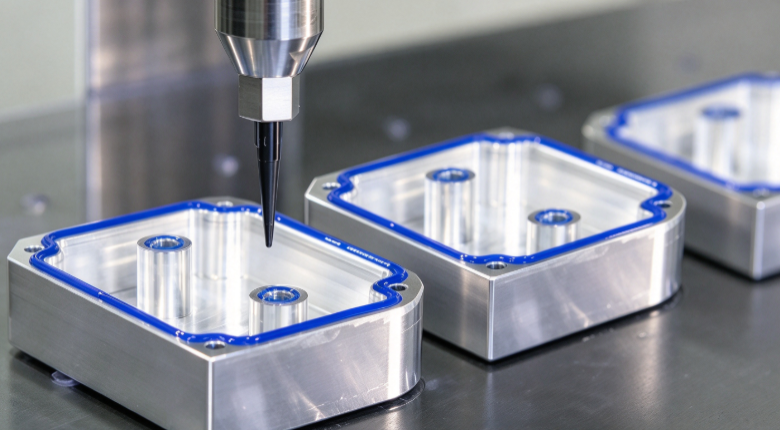
Housing sealing and thermal conductive adhesive dispensing are important processes in electronics manufacturing, automotive components, and new energy applications. Consistent adhesive placement helps improve sealing reliability, support thermal management, and maintain manufacturing quality.
However, conventional dispensing methods may be affected by workpiece positioning deviations, dimensional variations, and differences in assembly conditions. These factors can cause path deviations, uneven adhesive beads, incomplete coverage, or excess material.
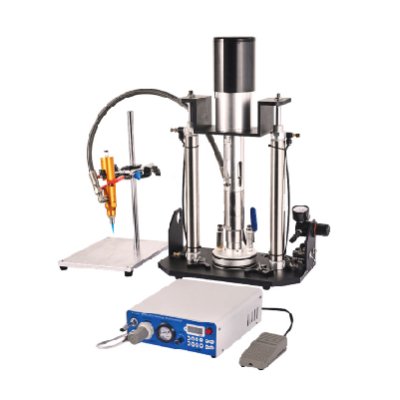
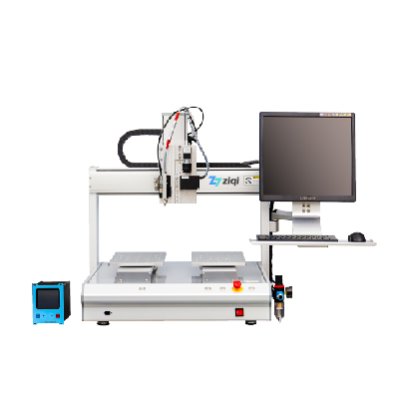
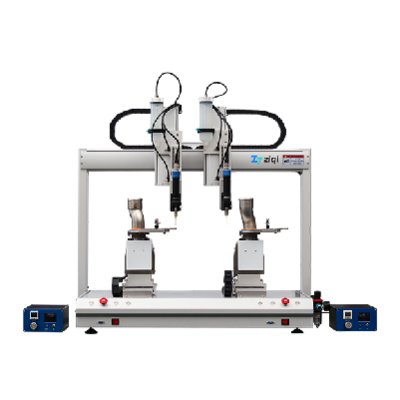
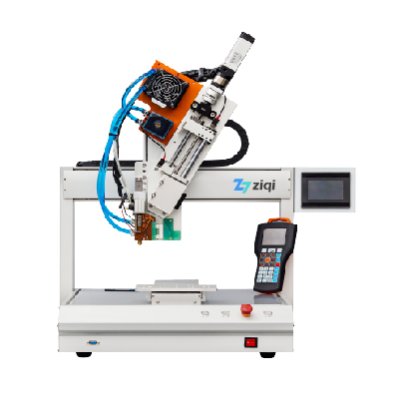
An inline vision-guided dispensing machine combines machine vision, programmable motion control, and automated adhesive dispensing to help address these challenges. Shenzhen ZiQi Technology Co., Ltd. develops automated dispensing solutions that can be configured for precision adhesive application, including housing sealing and thermal management processes.
How Does Vision-Guided Dispensing Improve Dispensing Accuracy?
A vision-guided dispensing machine uses an industrial camera and machine vision software to identify workpiece features and determine the required dispensing coordinates. When supported by the vision and motion-control configuration, the system can compensate for workpiece positioning deviations and adjust the programmed dispensing path.
For housing sealing, the machine follows the designated path along enclosure edges, joints, and contours. Controlled adhesive application helps improve bead placement consistency and reduce the risk of missed areas or excessive material. The final sealing performance still depends on the enclosure design, adhesive properties, curing conditions, and assembly quality.
For thermal conductive adhesive dispensing, the machine applies material to specified bonding areas or thermal interface regions according to the product design. Consistent material placement helps maintain the intended application pattern and can reduce the risk of missed coverage or unwanted excess adhesive.
However, dispensing accuracy alone does not determine thermal performance. Adhesive conductivity, bond-line thickness, surface preparation, contact conditions, and assembly quality also affect heat transfer. Actual process performance should therefore be verified through application testing.
The achievable positioning accuracy depends on camera resolution, lighting, calibration, motion-system performance, workpiece characteristics, and operating conditions. Equipment selection should be based on the actual tolerance requirements of the application rather than an assumed universal accuracy specification.
What Materials and Applications Can a Vision-Guided Dispensing Machine Support?
Depending on the selected dispensing valve, material delivery system, and machine configuration, automated dispensing solutions may support materials such as silicone adhesives, thermal conductive adhesives, and epoxy adhesives.
For housing sealing applications, the dispensing path can be programmed to follow the required enclosure edges and sealing contours. For thermal management applications, the system can apply adhesive to designated interface areas according to the component geometry and process requirements.
The dispensing system should be matched to the material's viscosity, flow characteristics, filler content, and dispensing requirements. Valve selection, dispensing pressure, movement speed, nozzle design, and material temperature can all influence the resulting bead shape and dispensing volume.
Depending on the equipment configuration, additional functions may include material suck-back control, offline programming, and dispensing recipe management. These functions can help manage different process requirements and workpiece designs, but their availability should be confirmed for the selected machine.
For battery PACK manufacturing and other new energy applications, automated dispensing can support housing sealing and thermal interface material application where these processes are required by the product design. The appropriate solution depends on the enclosure structure, adhesive specifications, production takt time, and quality requirements.
How Does Inline Automation Improve Production Efficiency?
Integrating vision-guided dispensing into an automated production line can reduce dependence on manual positioning and repetitive dispensing operations. When combined with suitable workpiece handling, positioning, and loading and unloading systems, inline automation can help improve process repeatability and production consistency.
Programmable dispensing paths also support different workpiece geometries and product variants. Where supported by the control system, recipe management and offline programming can help simplify product changeovers and reduce setup effort.
Vision guidance is particularly useful when workpiece positioning varies within the system's validated compensation range. For applications with highly repeatable positioning and stable fixtures, a fixed-path dispensing solution may also be suitable. The choice should be based on the required accuracy, process complexity, and overall production cost.
Automation does not eliminate every source of process variation. Adhesive viscosity, temperature, dispensing pressure, nozzle condition, workpiece tolerances, and curing requirements can all affect the final result. Stable production therefore requires appropriate equipment configuration, process validation, and routine maintenance.
What Should Manufacturers Consider When Selecting a Vision-Guided Dispensing Machine?
Selecting a suitable dispensing machine requires more than checking the positioning accuracy or motion-axis configuration. Manufacturers should evaluate the complete dispensing process, including the following factors.
·Workpiece geometry and positioning: Determine whether the product has complex contours, multiple dispensing surfaces, or positioning variations that require vision-based correction.
·Adhesive characteristics: Confirm the material type, viscosity, filler content, curing method, and compatibility with the proposed dispensing valve and material delivery system.
·Dispensing path and volume: Define the required bead width, dispensing volume, path geometry, and acceptable variation according to the application specifications.
·Production requirements: Evaluate cycle time, workpiece handling, changeover frequency, and the need to integrate the machine with an existing production line.
·Quality and process verification: Establish suitable inspection criteria and test the dispensing process using representative workpieces and the intended adhesive material.
These factors help determine the appropriate vision system, dispensing valve, motion platform, and automation configuration. They also help establish whether a standard machine or a customized inline dispensing solution is more suitable.
Why Choose a Customized Dispensing Solution from Shenzhen ZiQi Technology?
Different housing sealing and thermal adhesive applications require different combinations of positioning accuracy, dispensing volume, path geometry, material compatibility, and production speed. A suitable solution should be configured around the actual workpiece and manufacturing process rather than relying on a one-size-fits-all design.
Shenzhen ZiQi Technology Co., Ltd. develops automated dispensing equipment for industrial manufacturing applications.
Depending on project requirements and equipment configuration, a solution can be evaluated for vision positioning, programmed dispensing paths, material delivery, and production-line integration.
For manufacturers seeking to improve housing sealing or thermal conductive adhesive application, a vision-guided dispensing solution can help achieve more consistent material placement, reduce manual positioning, and support automated production.
To evaluate a suitable machine, manufacturers should provide workpiece drawings or samples, adhesive specifications, the required dispensing path, production targets, and applicable quality standards. These details help the engineering team assess the appropriate equipment configuration and determine whether application testing is required.
Looking for a customized vision-guided dispensing solution? Contact Shenzhen ZiQi Technology to discuss your workpiece, adhesive material, and production requirements.
FAQ
What Is a Vision-Guided Dispensing Machine?
A vision-guided dispensing machine uses an industrial camera and machine vision software to identify workpiece features and determine dispensing coordinates. Depending on the system configuration, it can compensate for workpiece positioning deviations and adjust the dispensing path to improve adhesive placement consistency.
Can a Vision-Guided Dispensing Machine Be Used for Housing Sealing and Thermal Adhesive Application?
Yes. Depending on the machine configuration and dispensing system, vision-guided dispensing can be used for housing sealing, thermal conductive adhesive application, and other precision adhesive processes. The appropriate solution depends on the workpiece geometry, adhesive properties, dispensing requirements, and production workflow.
What Is the Difference Between Vision-Guided Dispensing and Fixed-Path Dispensing?
Fixed-path dispensing follows predefined coordinates and is suitable for applications with stable workpiece positioning. Vision-guided dispensing identifies workpiece features and can correct dispensing coordinates when positioning deviations occur within the system's validated compensation range. The choice depends on positioning variation, process requirements, and production cost.
What Factors Affect the Accuracy of Vision-Guided Dispensing?
Dispensing accuracy depends on several factors, including camera resolution, lighting, calibration, motion-system performance, workpiece tolerances, and dispensing conditions. Adhesive viscosity, nozzle selection, and motion parameters also affect the final bead quality. Actual performance should be verified through application testing.
What Information Is Needed to Select a Suitable Dispensing Machine?
Manufacturers should provide workpiece drawings or samples, adhesive specifications, the required dispensing path, target production cycle time, and applicable quality requirements. This information helps determine the appropriate vision system, dispensing valve, motion platform, and automation configuration.