
As AI servers drive demand for advanced liquid cooling systems, manufacturers need reliable processes for producing liquid cooling manifolds and other precision components. Applying brazing paste accurately along designated joining areas is an important step in preparing metal components for brazing.
Manual brazing paste application can be challenging when workpieces feature complex geometries, multiple surfaces, and precisely defined joining paths. Vision-guided dispensing with rotary workpiece positioning offers a practical approach to automating this process.
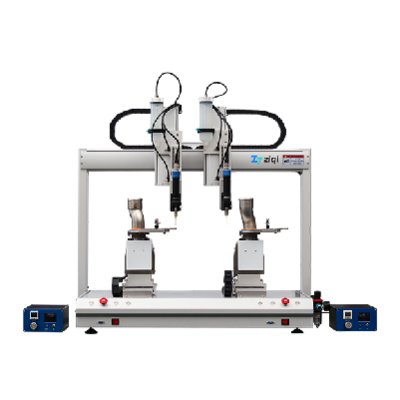
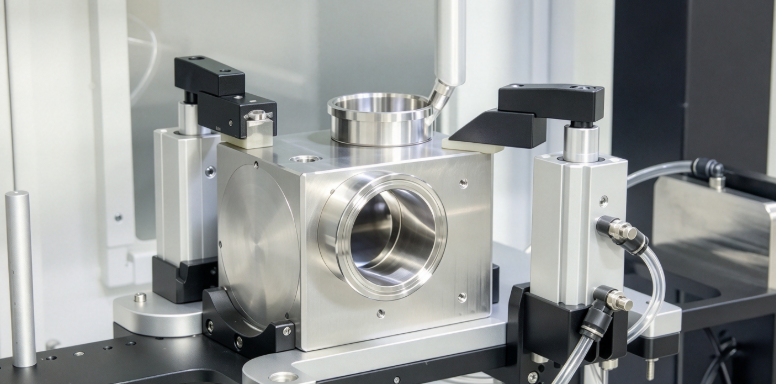
Shenzhen ZiQi Technology supplied two ZQ-CCD661YR vision-guided dispensing machines to a manufacturer in Thailand for brazing paste application on liquid cooling manifolds used in AI server cooling systems. Combining CCD vision positioning, programmed dispensing paths, and a rotary workpiece fixture, the machines are configured to support automated paste application across multiple surfaces.
This case illustrates how vision-guided dispensing automation can help manufacturers handle complex workpieces, reduce manual repositioning, and improve process consistency when applying brazing paste.
Why Is Brazing Paste Dispensing Challenging for Liquid Cooling Manifolds?
Liquid cooling manifolds can feature multiple faces, complex contours, and joining areas distributed across different surfaces. Applying brazing paste consistently to these locations requires suitable workpiece positioning, controlled material deposition, and accurate dispensing path alignment.
Common challenges include:
Complex dispensing paths
Joining areas may follow different directions or extend across multiple surfaces. Programming and executing the required paths can be more complicated than dispensing on a flat workpiece.
Workpiece positioning deviations
Small changes in how a component is loaded into its fixture may affect the alignment between the programmed path and the intended dispensing location.
Repeated manual repositioning
When joining areas are located on different faces, operators may need to turn or reposition the workpiece several times during manual processing.
Paste application consistency
The deposited paste must meet the requirements of the joining process. Results can be affected by paste properties, dispensing parameters, nozzle configuration, and workpiece geometry.
These challenges make automated brazing paste dispensing worth evaluating for manufacturers seeking more repeatable processing and reduced manual handling.
How Does the ZQ-CCD661YR Vision-Guided Dispensing Machine Work?
The ZQ-CCD661YR dispensing solution combines CCD vision positioning, programmed dispensing motion, and rotary workpiece handling to support brazing paste application on complex components.
CCD Vision Positioning
The CCD vision system identifies relevant features on the workpiece and determines the target position according to the configured vision program.
This information helps align the dispensing path with the intended joining area and can compensate for workpiece placement deviations within the system's configured correction range.
Vision-guided positioning reduces reliance on perfectly repeatable manual loading. Actual positioning performance depends on the vision setup, image recognition method, fixture design, and workpiece characteristics.
Automated Dispensing Along Programmed Paths
After the target position is identified, the dispensing machine follows the programmed path to apply brazing paste to designated joining areas.
Dispensing parameters can be configured and tested according to the paste's rheological properties, the required deposit geometry, and the production process.
Appropriate parameter settings are important for achieving the required paste coverage and deposition consistency. The final process must be validated using the actual material and workpiece.
Rotary Workpiece Positioning
The rotary fixture changes the workpiece orientation to bring different surfaces into the dispensing position.
This arrangement can reduce the need for repeated manual turning and repositioning when paste must be applied to joining areas on multiple faces.
Combined with vision-guided position correction, rotary workpiece handling provides a flexible approach to dispensing on components with three-dimensional geometries.
Key Benefits of Combining Vision Positioning and Rotary Handling
Vision positioning and rotary workpiece handling address two different challenges in automated dispensing: locating the target area and accessing the required surfaces.
Improved path alignment: CCD vision helps identify target locations and align dispensing paths with the workpiece, within the configured system capabilities.
Reduced manual repositioning: A rotary fixture can bring multiple surfaces into the dispensing position without requiring the operator to turn the component for every processing step.
More repeatable dispensing operations: Programmed motion and configured dispensing parameters help standardize the application process.
Greater flexibility for complex geometries: The combined configuration can accommodate suitable workpieces with multiple joining areas or different surface orientations.
The achievable accuracy, dispensing consistency, and cycle time depend on the machine configuration, workpiece geometry, paste properties, fixture repeatability, and process parameters. Application testing is recommended before production deployment.
Applications Beyond Liquid Cooling Manifolds
The same automation approach may be considered for other industrial components that require controlled material application along complex paths.
Potential applications include:
·Liquid distribution blocks with multiple joining areas.
·Metal components requiring brazing paste application before brazing.
·Industrial parts with multiple surfaces that need controlled dispensing.
·Other components requiring vision-based positioning and programmed material deposition.
The suitability of a particular dispensing machine depends on the workpiece geometry, material characteristics, required deposit pattern, and manufacturing process. Brazing pastes, adhesives, and other dispensing materials may require different valves, feed systems, and process settings.
Choosing a Vision-Guided Dispensing Solution for Liquid Cooling Components
When evaluating a vision-guided dispensing machine for liquid cooling component manufacturing, manufacturers should consider several technical factors.
Workpiece geometry: Determine whether the component has multiple surfaces, complex contours, or joining areas that require rotary positioning.
Vision positioning requirements: Define the target features, expected loading deviations, and required positioning performance.
Material compatibility: Evaluate the brazing paste's viscosity, particle characteristics, and dispensing requirements to determine a suitable material delivery system.
Dispensing path and coverage: Confirm that the programmed motion can access the required joining areas and apply the paste in the specified pattern.
Production requirements: Assess cycle time, loading and unloading procedures, process repeatability, and compatibility with the existing production workflow.
Application validation: Test the complete process using actual workpieces and brazing paste to verify the required deposition results under production-relevant conditions.
Matching the equipment configuration to these requirements helps manufacturers make more informed decisions when introducing dispensing automation.
Frequently Asked Questions
What is a vision-guided brazing paste dispensing machine?
A vision-guided brazing paste dispensing machine uses a camera-based vision system to identify target positions and align programmed dispensing paths with a workpiece. Depending on its configuration, it can compensate for certain workpiece placement deviations and support automated paste application.
Why use a rotary fixture for liquid cooling manifold dispensing?
A rotary fixture changes the workpiece orientation so that different surfaces can be brought into the dispensing position. This is useful when joining areas are distributed across multiple faces and repeated manual repositioning would otherwise be required.
Can the ZQ-CCD661YR dispense brazing paste before brazing?
The two ZQ-CCD661YR machines supplied for this Thailand project were configured for brazing paste application on liquid cooling manifolds. Suitability for a particular brazing paste depends on material compatibility, the dispensing system configuration, and the required application process.
Is vision-guided dispensing suitable for other liquid cooling components?
It may be suitable for liquid distribution blocks and other components with complex dispensing paths. Suitability depends on the workpiece geometry, target locations, material properties, and required process performance.
Looking for a Custom Brazing Paste Dispensing Solution?
If your manufacturing process requires brazing paste application on liquid cooling manifolds, liquid distribution blocks, or other complex metal components, a vision-guided dispensing machine with rotary workpiece positioning may be worth evaluating.
Shenzhen ZiQi Technology provides dispensing automation solutions tailored to workpiece geometry, material characteristics, and production requirements.
Contact our team to discuss your application, review your workpiece requirements, and evaluate a suitable dispensing machine configuration.