
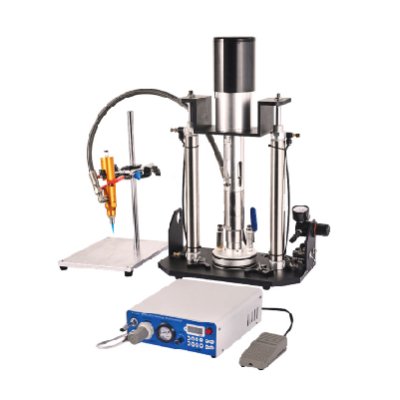
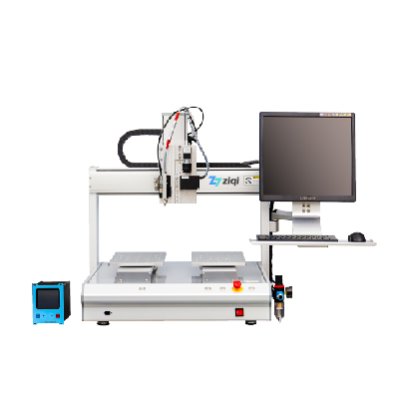
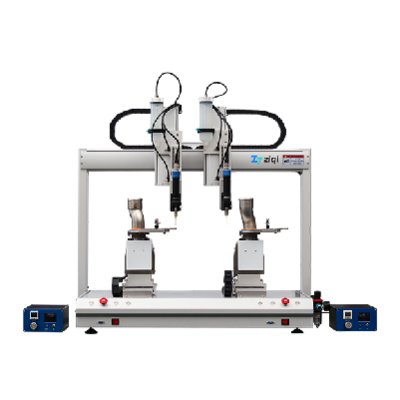
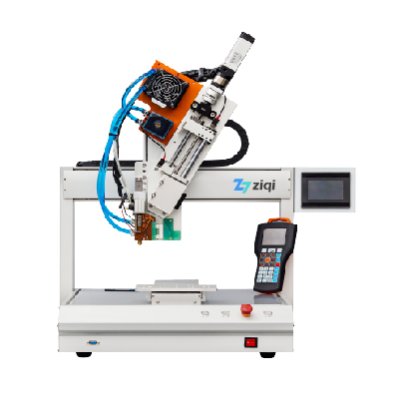
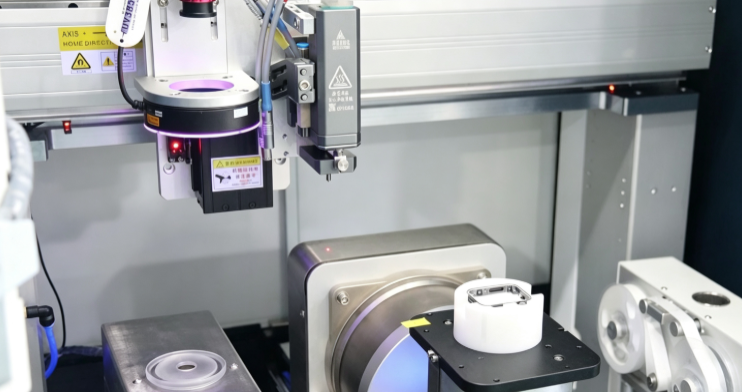
In automated manufacturing, accurate adhesive application is essential for maintaining product quality and production consistency. However, workpieces may vary slightly in position, orientation, or dimensions during production. These variations can make it difficult for conventional dispensing machines to follow the correct dispensing path.
A vision dispensing machine addresses this challenge by combining machine vision technology with automated motion control. It identifies the position of a workpiece, calculates positional deviations, and adjusts the dispensing path accordingly.
For manufacturers in the electronics, automotive, and consumer electronics industries, this technology can improve dispensing consistency, reduce manual alignment requirements, and support more flexible production processes.
What Is a Vision Dispensing Machine?
A vision dispensing machine is an automated system that uses an industrial camera and image-processing software to identify the position and features of a workpiece before dispensing.
After capturing an image, the vision system analyzes the workpiece and determines its position relative to the machine's coordinate system. The control system then uses this information to compensate for positional deviations and guide the dispensing process.
Unlike a conventional dispensing machine that relies on a fixed dispensing path, a vision system can adjust its path according to the actual position of the workpiece.
This makes it suitable for applications where workpiece positioning may vary or where dispensing paths need to align with specific product features.
How Does a Vision Dispensing Machine Work?
The dispensing process generally involves several steps.
Image Capture
An industrial camera captures an image of the workpiece placed in the dispensing area. Appropriate lighting helps the system obtain a clear image for subsequent processing.
Feature Recognition
The image-processing software identifies relevant features, such as product edges, holes, reference points, contours, or specific dispensing areas.
The recognition method depends on the workpiece structure and the application requirements.
Position Calculation
Based on the recognized features, the vision system calculates the workpiece's actual position and orientation.
It compares the detected position with the reference position to determine whether there are any positional deviations.
Coordinate Transformation and Path Compensation
The camera and dispensing mechanism operate within their respective coordinate systems.
Through camera calibration and coordinate transformation, the system converts the detected position into machine coordinates.
The motion control system then adjusts the dispensing path based on the calculated offset.
Automated Dispensing
After position correction, the dispensing machine follows the adjusted path and applies adhesive or other dispensing materials to the designated areas.
The final dispensing result also depends on factors such as the dispensing valve, material properties, motion control, and process parameters.
What Are the Key Advantages of a Vision Dispensing Machine?
Improved Positioning Accuracy and Consistency
A vision system can identify workpiece positions and compensate for certain positioning deviations before dispensing.
This helps the dispensing head follow the intended path more consistently, particularly when workpieces are not placed in exactly the same position every time.
Greater Flexibility for Complex Products
Vision dispensing can be used for products with different shapes, contours, and dispensing positions.
Depending on the vision configuration and software, the system can recognize specific product features and adjust the dispensing path accordingly.
This is useful for applications involving irregular product shapes or multiple dispensing locations.
Reduced Manual Alignment Requirements
With automatic image recognition and position compensation, operators may spend less time manually adjusting workpiece positions.
However, suitable fixtures and stable workpiece placement are still important for maintaining reliable production conditions.
Improved Production Efficiency
Automated positioning and path correction can reduce repeated manual adjustments and help streamline the dispensing process.
For production lines handling multiple product models, a properly configured vision system can also support product changeovers and improve manufacturing flexibility.
Reduced Material Waste
Accurate path alignment helps reduce the risk of adhesive being applied outside the intended area.
This may help lower material waste and reduce defects caused by incorrect dispensing positions. Actual results depend on the adhesive properties, dispensing parameters, equipment configuration, and product design.
Vision Positioning vs. Three-Axis and Five-Axis Motion Control: What Is the Difference?
Vision positioning and motion control perform different functions in a dispensing machine. They can work together, but they should not be considered the same technology.
Vision positioning identifies the actual position and orientation of a workpiece. It calculates positional deviations and provides correction information to the motion control system.
Three-axis motion control controls movement along the X, Y, and Z linear axes. It is commonly used for dispensing applications involving flat surfaces or relatively straightforward paths.
Five-axis motion control adds two rotary axes to the three linear axes. This allows the dispensing head or workpiece to change its angle and orientation, depending on the machine's mechanical configuration. It is useful for more complex three-dimensional dispensing applications.
A vision system primarily addresses workpiece positioning, while the number of motion axes determines how the dispensing mechanism can move.
A vision-guided dispensing machine does not necessarily require five-axis motion control. Similarly, a five-axis dispensing machine does not automatically include a vision system. The appropriate configuration depends on the product structure and dispensing requirements.
What Are the Typical Applications of Vision Dispensing Machines?
Vision dispensing machines are suitable for various precision manufacturing applications.
Electronics Manufacturing
In electronics production, vision dispensing can be used for PCB component fixing, electronic component bonding, and adhesive application around designated areas.
The vision system helps identify product features and align the dispensing path with the required positions.
Mobile Phones and Consumer Electronics
Applications include adhesive dispensing on mobile phone frames, glass panels, magnetic phone cases, and other precision components.
Vision positioning is particularly useful when dispensing paths need to follow product edges, grooves, or specific structural features.
Automotive Components
In automotive manufacturing, vision dispensing can support adhesive application, sealing, and bonding processes for selected components.
It can help align the dispensing path with the actual position of each workpiece.
Plastic and Metal Components
For plastic housings, metal parts, and other precision components, vision systems can recognize product features and adjust dispensing paths to accommodate certain positioning variations.
The specific application depends on the material, surface characteristics, product geometry, and dispensing process.
What Are the Limitations of Vision Dispensing?
Although vision dispensing offers greater positioning flexibility, it does not eliminate every production challenge.
The recognition result can be affected by lighting conditions, surface reflections, image contrast, camera installation, and workpiece characteristics.
For products with highly reflective surfaces, transparent materials, or unclear reference features, the vision system may require customized lighting, camera positioning, or image-processing methods.
In addition, vision positioning does not independently guarantee dispensing quality. Adhesive viscosity, dispensing pressure, valve performance, dispensing speed, and path settings also influence the final result.
For this reason, equipment configuration and process testing should be based on the actual workpiece and production requirements.
How to Choose the Right Vision Dispensing Machine?
Before selecting a vision dispensing machine, manufacturers should evaluate several important factors.
·Workpiece characteristics: Consider product dimensions, shape, surface material, and the availability of recognizable reference features.
·Positioning variations: Determine how much the workpiece position or orientation may vary during production.
·Dispensing requirements: Evaluate the dispensing path, adhesive application area, required consistency, and process complexity.
·Adhesive properties: Consider viscosity, curing characteristics, and material compatibility when selecting the dispensing valve and feeding system.
·Production requirements: Assess production volume, cycle time, product changeover frequency, and integration with existing production lines.
·Equipment configuration: Select suitable cameras, lighting systems, motion platforms, dispensing valves, fixtures, and control software according to the application.
For applications involving angled surfaces or complex three-dimensional paths, a multi-axis dispensing system may be appropriate. For applications mainly involving workpiece position correction on relatively flat surfaces, a vision three-axis system may be sufficient.
The best configuration should be determined through application evaluation and dispensing tests.
Customized Vision Dispensing Solutions from Shenzhen Ziqi Technology
Shenzhen Ziqi Technology Co., Ltd. provides automatic dispensing machines and customized automation equipment for industrial manufacturing applications.
Different products require different dispensing processes. Factors such as workpiece geometry, adhesive characteristics, dispensing paths, positioning variations, and production requirements all influence equipment design.
Depending on the application, a customized vision dispensing solution can integrate an industrial camera, image-processing system, motion control platform, and suitable dispensing valve to support automatic positioning and adhesive application.
The equipment configuration can be evaluated according to the customer's product samples and production requirements.
Whether the application involves electronic components, mobile phone parts, automotive components, or precision plastic and metal products, selecting the appropriate dispensing system is essential for achieving a stable manufacturing process.
Conclusion
A vision dispensing machine combines machine vision and automated motion control to identify workpiece positions and compensate for positioning deviations during dispensing.
It can improve path alignment, reduce manual adjustment requirements, and support more flexible production processes.
However, vision positioning is only one part of the overall dispensing system. The dispensing valve, adhesive material, motion control, fixtures, and process parameters must also be properly configured to achieve consistent results.
For manufacturers considering automated dispensing, evaluating the actual product and process requirements is the first step toward selecting a suitable vision-guided dispensing solution.
Frequently Asked Questions
What is the main purpose of a vision dispensing machine?
Its main purpose is to identify the actual position of a workpiece and adjust the dispensing path according to detected positional deviations. This helps improve path alignment and dispensing consistency.
Can a vision dispensing machine handle workpieces placed in different positions?
Yes. Within the recognition range and correction capabilities of the configured vision system, it can identify certain positional variations and compensate for them before dispensing.
Can a vision dispensing machine inspect dispensing quality?
Not necessarily. Vision positioning and dispensing inspection are different functions. If automatic inspection of the dispensing result is required, the machine needs an appropriate inspection system and corresponding software configuration.
Which dispensing valves can be used with a vision dispensing machine?
The valve selection depends on the adhesive material and dispensing requirements. Possible options include needle valves, screw valves, pneumatic dispensing valves, and jet dispensing valves.
What information is needed to customize a vision dispensing machine?
Manufacturers generally need to evaluate the workpiece drawings or samples, adhesive type, dispensing positions, required production capacity, and automation requirements. These details help determine the suitable vision system, motion platform, dispensing valve, and fixture configuration.