
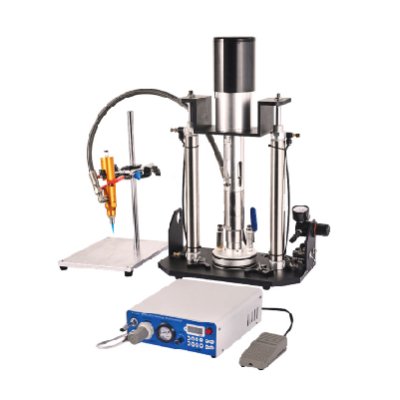
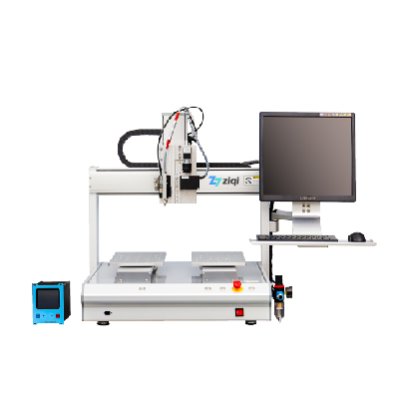
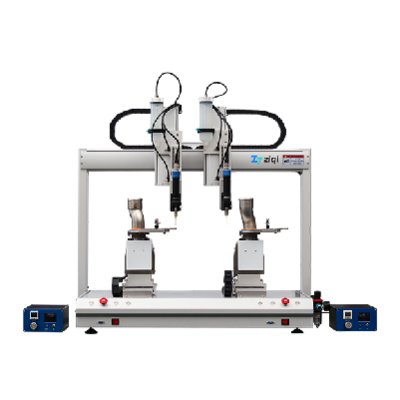
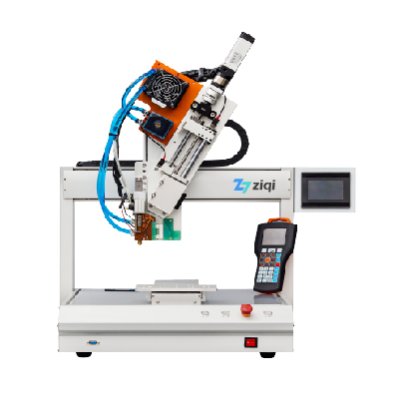
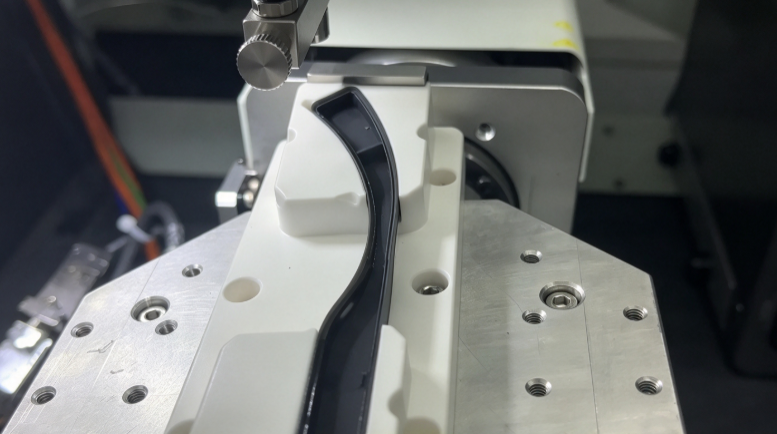
As AI smart glasses become more compact and integrated, precision adhesive dispensing plays an increasingly important role in their manufacturing. Depending on the product design, applications may include lens bonding, frame assembly, sensor module fixing, electronic component bonding, and structural sealing.
These applications often involve curved surfaces, narrow bonding areas, and complex three-dimensional structures. Choosing the right automated dispensing machine is essential for achieving consistent adhesive application, reliable bonding, and efficient production.
Here are four key questions to consider when selecting a dispensing solution for smart glasses manufacturing.
How Do You Choose the Right Dispensing Machine for Smart Glasses?
The right dispensing machine should be selected based on product geometry, adhesive properties, and production requirements.
Three factors deserve particular attention:
Product Structure and Dispensing Requirements
Evaluate whether the workpiece has flat, curved, or irregular surfaces. Consider the dispensing path, application angle, required accuracy, and available working space.
For example, curved smart glasses frames and complex temple structures may require multi-axis motion to reach different bonding positions and angles.
Adhesive Properties and Dispensing Performance
Different adhesives have different viscosities, flow characteristics, and curing requirements. The dispensing valve and material feeding system should be selected accordingly.
Sample testing should be used to evaluate adhesive line consistency, dispensing volume, positioning accuracy, and cycle time.
Production Volume and Equipment Flexibility
Consider whether the machine can accommodate different product models, dispensing programs, and fixture configurations. A suitable system should meet current production needs while allowing flexibility for future product changes.
What Are the Main Challenges of Adhesive Dispensing for Smart Glasses?
Smart glasses integrate optical components, sensors, batteries, and electronic modules into a limited space, creating several challenges for automated adhesive dispensing.
High-Precision Adhesive Application
Lens bonding and electronic component assembly require accurate adhesive positioning and controlled dispensing volume. Excessive adhesive may cause overflow, interfere with nearby optical components, and affect assembly quality.
Consistent Dispensing Quality
Adhesive lines need consistent width, height, and volume throughout production. Stable material flow and accurate motion control help reduce dispensing defects, material waste, and rework.
Complex Three-Dimensional Structures
Smart glasses often feature curved frames, narrow sidewalls, and irregular temple geometries. These structures may require adhesive application from multiple angles.
Conventional three-axis dispensing machines can handle many standard paths, but may require additional fixtures or repositioning for complex surfaces. Multi-axis dispensing systems provide greater flexibility when accessing these areas.
Why Use a Five-Axis Dispensing Machine for Smart Glasses Manufacturing?
A five-axis dispensing machine provides greater motion flexibility for adhesive application on complex three-dimensional components.
Depending on the machine configuration, its motion system may combine X, Y, and Z linear movement with two rotary axes, allowing the dispensing valve or workpiece to change orientation during the dispensing process.
Its main advantages include:
Multi-Angle Dispensing
The additional rotary axes allow the dispensing valve to approach the workpiece from different angles. This is particularly useful for curved frames, narrow bonding areas, sidewalls, and other complex three-dimensional paths.
Vision-Guided Positioning
When integrated with a vision positioning system, the machine can identify workpiece features or reference points, locate dispensing paths, and compensate for positioning deviations.
This helps improve dispensing alignment and process consistency when workpiece positions vary between production cycles.
Greater Manufacturing Flexibility
Programmable multi-axis motion allows the machine to handle different product geometries and dispensing paths. Combined with suitable fixtures and dispensing programs, it can support multiple smart glasses models and simplify product changeovers.
For manufacturers working with complex curved structures, a five-axis dispensing solution can offer greater process flexibility than a conventional three-axis system.
What Should You Consider When Purchasing an Automated Dispensing Machine?
Beyond the initial equipment price, manufacturers should evaluate the supplier's technical capabilities and long-term support.
Key considerations include:
Sample Testing: Can the supplier test actual workpieces and verify dispensing results before equipment selection?
Technical Support: Does the supplier provide equipment programming, process setup, and operator training?
Maintenance and Spare Parts: Are critical components readily available, and are maintenance requirements clearly defined?
After-Sales Service: Can the supplier provide timely technical assistance and troubleshooting?
Evaluating these factors helps manufacturers select a dispensing solution that supports reliable production and long-term operating efficiency.
Frequently Asked Questions
What Type of Dispensing Machine Is Suitable for Smart Glasses Manufacturing?
The right dispensing machine depends on the product structure and adhesive application requirements. Three-axis machines are suitable for standard dispensing paths, while five-axis dispensing machines offer greater flexibility for curved surfaces, angled applications, and complex three-dimensional bonding paths.
Why Is a Five-Axis Dispensing Machine Used for Smart Glasses?
A five-axis dispensing machine provides additional rotary movement, allowing the dispensing valve or workpiece to approach complex surfaces from different angles. This makes it suitable for adhesive application on curved frames, temples, and other irregular components.
Can a Vision System Improve Smart Glasses Dispensing Accuracy?
Yes. A vision positioning system can identify workpiece features or reference points, detect positional deviations, and adjust dispensing coordinates accordingly. This helps improve adhesive alignment and process consistency.
Can a Five-Axis Dispensing Machine Be Customized for Different Smart Glasses Models?
Yes. Depending on the machine configuration, dispensing equipment can be customized with suitable fixtures, dispensing valves, vision systems, and motion programs to accommodate different product geometries and adhesive application requirements. Sample testing is recommended before final equipment selection.
Choosing the Right Dispensing Solution for Smart Glasses
As smart glasses evolve toward more compact designs and increasingly integrated structures, precision adhesive dispensing becomes essential for reliable assembly.
For applications involving curved surfaces, narrow bonding areas, and complex three-dimensional paths, a five-axis dispensing machine with vision-guided positioning can provide greater flexibility and more accurate adhesive application.
The best solution depends on the actual product structure, adhesive properties, dispensing requirements, and production conditions.
Looking for an automated dispensing solution for smart glasses manufacturing? Contact our team to discuss your application and arrange a dispensing test using your product samples.