
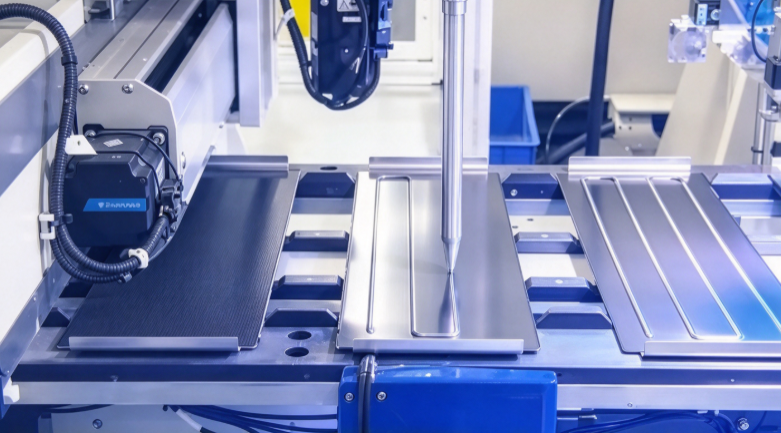
Battery Management Systems (BMS) are essential components in electric vehicles and energy storage systems. During BMS manufacturing, precise adhesive application plays an important role in PCB protection, thermal management, component bonding, and product reliability.
However, different adhesive materials, high-density PCB layouts, and demanding production tolerances create challenges for automated dispensing processes. How can manufacturers achieve consistent adhesive application while maintaining production efficiency?
This article explores five key challenges in BMS adhesive dispensing and explains how automated dispensing solutions can help address them.
Why Is Precision Adhesive Dispensing Important in BMS Manufacturing?
A Battery Management System monitors battery voltage and temperature, manages cell balancing, and supports battery protection functions. Its electronic components must operate reliably under demanding conditions.
Different adhesive materials are used in BMS manufacturing for specific purposes:
Conformal Coating: Applies a thin protective layer to designated PCB surfaces to help prevent moisture, dust, and environmental contamination while providing electrical insulation.
Thermal Conductive Adhesive: Improves heat transfer between electronic components and heat-dissipation structures.
Structural Adhesive: Provides bonding strength and mechanical support for components and assemblies.
Potting Compound: Encapsulates electronic assemblies to provide environmental protection, electrical insulation, or mechanical protection, depending on the material.
Each application requires an appropriate dispensing or coating process. Excessive adhesive, insufficient coverage, inconsistent material delivery, or inaccurate application positions may affect insulation performance, thermal management, and assembly reliability.
Therefore, selecting the right dispensing method and maintaining stable process control are essential for reliable BMS manufacturing.
What Are the Main Challenges in BMS Adhesive Dispensing?
BMS circuit boards often feature high-density components, irregular geometries, and varying component heights. These characteristics make it challenging to control adhesive volume, bead width, and application position.
Five common challenges include:
Excessive or Insufficient Adhesive
Too much adhesive may cause overflow, contaminate sensitive components, or reduce electrical clearance. Insufficient adhesive may result in incomplete coverage, weak bonding, or poor thermal contact.
Inconsistent Material Delivery
Changes in adhesive viscosity, temperature, pressure, or material flow characteristics can affect dispensing volume and bead consistency.
Complex PCB Layouts
Closely spaced components and irregular dispensing paths require accurate positioning and programmable motion control to achieve consistent application.
Material Viscosity and Temperature Variations
High-viscosity adhesives and materials containing thermally conductive fillers may require specialized pumping systems, controlled material handling, and suitable dispensing valves.
Two-Component Adhesive Mixing and Pot Life
For two-component adhesives, maintaining the correct mixing ratio and managing the material's working life after mixing are essential for consistent bonding and curing performance.
To address these challenges, an automated BMS dispensing machine should provide stable material delivery, programmable motion control, and application-specific process parameters.
Dispensing trials using actual materials and workpieces are also important for validating process performance before mass production.
How Does Vision-Guided Dispensing Improve BMS Production?
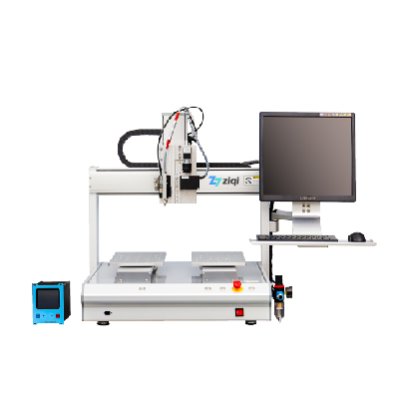
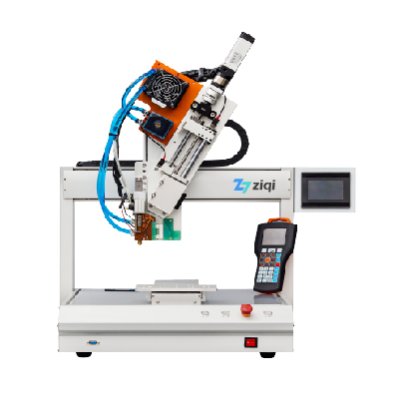
A vision-guided dispensing system combines an industrial camera, image-processing software, and programmable motion control to identify workpiece features and compensate for positioning deviations before dispensing.
During BMS PCB assembly, fixture tolerances, board misalignment, and incoming workpiece variations may cause deviations from programmed dispensing coordinates.
A machine vision system can identify fiducial marks or selected PCB features, calculate positional offsets, and adjust the dispensing path accordingly.
This helps maintain accurate adhesive application even when workpieces are not perfectly aligned.
Depending on the equipment configuration, vision technology can also support post-dispensing inspection, including:
·Adhesive bead width measurement.
·Dispensing position verification.
·Bead continuity inspection.
·Adhesive coverage inspection.
It is important to distinguish between vision-guided positioning and post-dispensing inspection. Vision guidance corrects workpiece positioning before or during dispensing, while inspection evaluates the resulting adhesive application. Advanced inspection may require specialized lighting, 3D imaging, or additional sensing technologies.
By combining machine vision with automated motion control, manufacturers can reduce manual positioning adjustments, improve dispensing consistency, and support more reliable production processes.
What Dispensing Equipment Is Suitable for Different BMS Adhesive Applications?
Different adhesive materials require different application methods and equipment configurations. Selecting a suitable BMS dispensing machine depends on material viscosity, dispensing volume, workpiece geometry, and production requirements.
Conformal Coating
Conformal coating requires controlled film thickness and uniform coverage across designated PCB areas. Depending on the coating material and PCB design, suitable methods may include selective coating, precision spraying, or dispensing.
Automated selective coating equipment should provide accurate path control and stable material flow to prevent excessive coating and contamination of sensitive areas.
Thermal Conductive Adhesive
Thermal conductive adhesives are used to improve heat transfer between electronic components and heat-dissipation structures.
Some materials have high viscosity or contain conductive fillers, requiring suitable pumping systems, stable pressure control, and compatible dispensing valves. Temperature control may also be necessary depending on the material properties.
Structural Adhesive
Structural adhesives provide mechanical bonding and support for BMS components and assemblies.
The dispensing system should control adhesive volume, bead position, and material consistency. For two-component adhesives, accurate metering, mixing ratio control, and pot life management are also important.
Electronic Potting
Potting processes involve filling or encapsulating electronic assemblies with suitable compounds. Equipment selection depends on filling volume, material viscosity, mixing requirements, curing characteristics, and component structure.
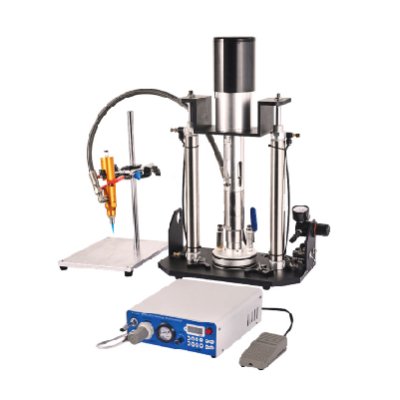
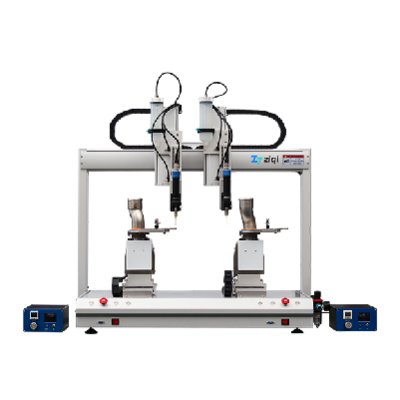
For manufacturers handling multiple BMS applications, a modular automated dispensing platform can provide greater flexibility through interchangeable pumps, valves, fixtures, and process configurations.
What Should Manufacturers Evaluate When Selecting a BMS Dispensing Machine?
Choosing an automated dispensing machine requires more than checking its advertised positioning accuracy. Manufacturers should evaluate the complete dispensing process across four key dimensions.
Dispensing Accuracy and Repeatability
Evaluate whether the equipment can consistently control dispensing position, adhesive volume, and bead width within the required process tolerances.
Repeatability is particularly important in high-volume production, where variations across multiple workpieces may affect overall product quality.
Material Delivery Stability
The dispensing system should maintain stable material flow and pressure throughout production.
For high-viscosity or temperature-sensitive adhesives, material conditioning, temperature control, and suitable pumping systems may be necessary.
Vision Guidance and Quality Inspection
Evaluate whether the vision system can recognize PCB fiducial marks, compensate for positioning deviations, and perform the required post-dispensing inspections.
The inspection method should match the actual material characteristics and quality requirements.
Process Validation and Data Traceability
Before mass production, dispensing trials should be conducted using actual workpieces and production materials.
Important evaluation parameters include:
·Dispensing volume consistency.
·Adhesive bead width and continuity.
·Dispensing position accuracy.
·Product defect rate.
·Process stability and process capability (Cpk).
Cpk analysis should be performed using representative production data after process stability and measurement system suitability have been established.
Evaluating these factors provides a more reliable basis for equipment selection than relying on positioning specifications or marketing claims alone.
Conclusion: Improving BMS Manufacturing with Automated Dispensing Solutions
Reliable BMS adhesive application requires more than accurate dispensing equipment. It depends on selecting the appropriate application method, maintaining stable material delivery, controlling dispensing paths, and validating process quality.
From PCB conformal coating and thermal conductive adhesive application to structural bonding and electronic potting, each process requires equipment configurations tailored to its material properties and production requirements.
Shenzhen ZiQi Technology Co., Ltd. specializes in automated dispensing solutions for precision adhesive applications. Our equipment can be configured with different dispensing valves, material delivery systems, vision positioning technologies, and motion control functions to address diverse industrial manufacturing requirements.
By combining equipment customization with application-specific process optimization, we help manufacturers improve dispensing consistency, production efficiency, and product quality across demanding electronics manufacturing applications.
Frequently Asked Questions
What adhesives are commonly used in BMS manufacturing?
Common materials include conformal coatings, thermal conductive adhesives, structural adhesives, and potting compounds. Each serves a different purpose, such as PCB protection, heat transfer, component bonding, or electronic encapsulation.
Can a vision-guided dispensing machine be used for BMS PCBs?
Yes. A vision-guided dispensing machine can identify PCB fiducial marks or selected features, compensate for positioning deviations, and adjust dispensing coordinates to improve application accuracy.
What is the difference between conformal coating and potting?
Conformal coating applies a relatively thin protective layer to designated PCB surfaces, while potting involves filling or encapsulating an electronic assembly with a suitable compound. They differ in material usage, application methods, and protection requirements.
How do you select an automated dispensing machine for BMS applications?
Equipment selection should consider adhesive properties, dispensing volume, workpiece geometry, production cycle time, positioning requirements, and quality inspection needs. Testing with actual materials and workpieces is recommended before finalizing the equipment configuration.