
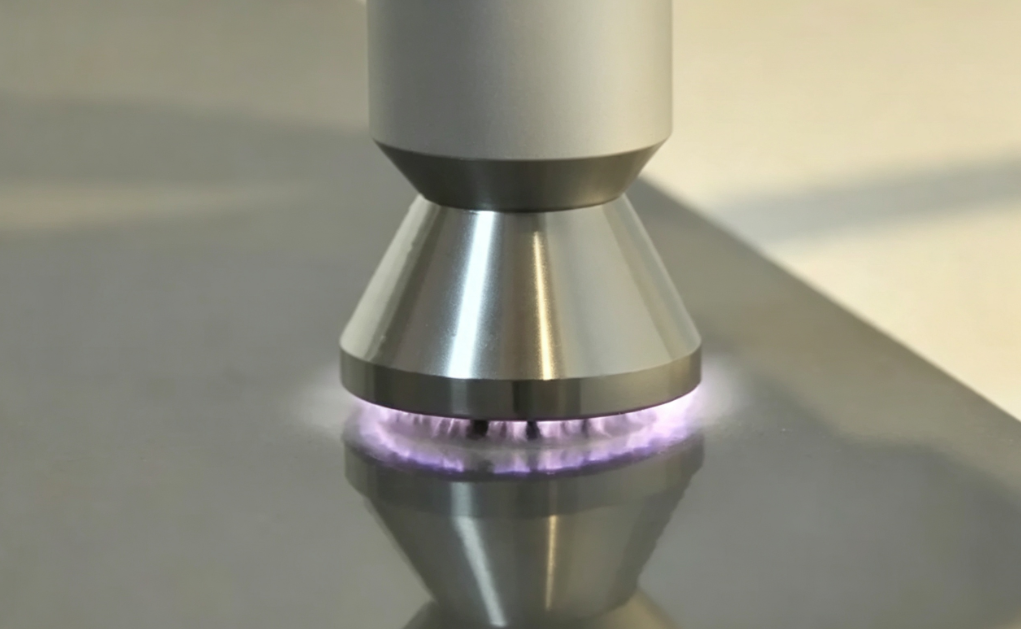
As automotive sunroof systems become more advanced, manufacturers are using more lightweight plastic components and adhesive bonding processes. These materials help reduce weight and support flexible component design, but they can also create challenges for reliable bonding.
Polypropylene (PP) is one of the plastics that can be difficult to bond because of its relatively low surface energy and non-polar surface characteristics. For PP plastic parts used in automotive sunroof applications, untreated surfaces may not provide sufficient wettability for some adhesives.
Atmospheric plasma surface treatment provides a practical way to clean and activate PP surfaces before adhesive bonding. By modifying the surface and improving wettability, plasma treatment creates more favorable conditions for subsequent adhesive application and bonding.
Quick Answer: How Does Plasma Improve PP Adhesion?
Atmospheric plasma improves the adhesion of PP by cleaning the surface and modifying its surface characteristics, which can increase surface energy and improve wettability.
A more wettable surface allows adhesive materials to spread more effectively instead of forming droplets or remaining poorly distributed on the PP surface. This can help create more consistent conditions for adhesive bonding.
The actual improvement in bonding strength depends on the PP formulation, adhesive, plasma parameters, treatment coverage, and production conditions, so application-specific testing is recommended.
Why Is PP Difficult to Bond?
PP is widely used in automotive manufacturing because of its lightweight characteristics, chemical resistance, durability, and processing flexibility. However, its low surface energy makes untreated PP relatively difficult to wet and bond.
When adhesive is applied to an untreated PP surface, poor wetting can occur. Instead of spreading evenly across the surface, the adhesive may have limited contact with the substrate.
This can contribute to:
·Poor adhesive wetting
·Inconsistent bonding
·Reduced adhesion reliability
For this reason, surface treatment is commonly considered before bonding, coating, printing, or other processes where adhesion is important.
How Does Atmospheric Plasma Improve PP Surface Adhesion?
Atmospheric plasma treatment acts on the outermost surface of the PP material.
During treatment, active plasma species interact with the material surface. Depending on the process conditions and material formulation, the treatment can remove certain organic contaminants and modify the surface chemistry, increasing surface polarity and wettability.
This creates a more suitable interface for subsequent adhesive bonding.
The basic process can be understood as:
Untreated PP → Atmospheric Plasma Treatment → Surface Activation → Improved Wettability → Adhesive Application → Bonding
A lower water contact angle generally indicates better surface wettability. However, contact-angle results should be considered a surface-characterization indicator rather than a direct measurement of final adhesive bond strength.
Benefits of Plasma Treatment for Automotive Sunroof PP Parts
For PP plastic components used in automotive sunroof assemblies, atmospheric plasma treatment can provide several process benefits.
Improved Surface Wettability
Plasma treatment can significantly improve the wettability of PP. This allows adhesives to spread more evenly across the treated area and creates more favorable conditions for bonding.
Improved Adhesion Conditions
Because untreated PP has relatively low surface energy, adhesive bonding can be challenging. Plasma surface activation helps modify the bonding interface and can improve adhesion performance when the process is properly matched to the material and adhesive.
More Consistent Surface Preparation
Manual cleaning or other pretreatment methods can introduce process variation. An automated plasma treatment system can provide a more controlled treatment path, helping manufacturers achieve more consistent surface preparation.
Easy Integration Into Automated Production
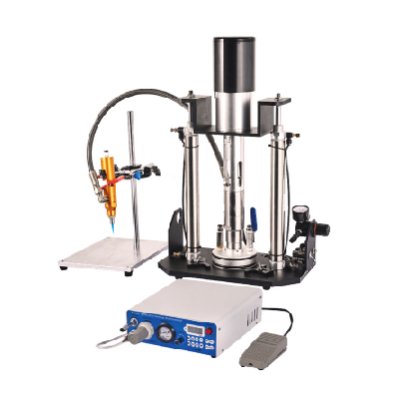
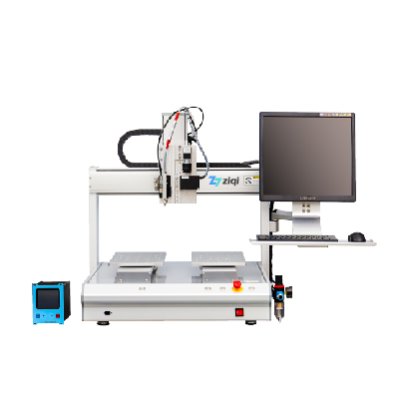
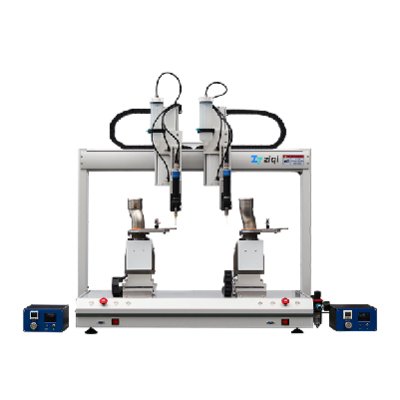
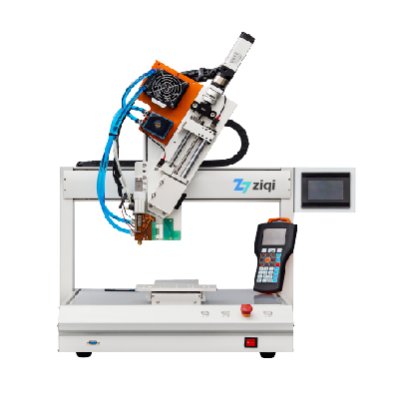
Atmospheric plasma treatment does not require a vacuum chamber and can be configured for localized or inline treatment. Industry applications demonstrate the use of robot-controlled atmospheric plasma systems for automotive plastic components and adhesive bonding.
How Can Plasma Treatment Be Integrated Into Automotive Production?
For automated automotive component manufacturing, plasma treatment can be positioned before adhesive dispensing or bonding.
A typical process may include:
PP Component Loading → Plasma Surface Treatment → Adhesive Dispensing → Assembly → Curing
For complex automotive components, the treatment path can be designed according to the geometry and bonding area of the part.
Important process parameters may include:
·Plasma power
·Treatment speed
·Nozzle-to-surface distance
·Treatment path
·Treatment coverage
·Material composition
·Adhesive type
Optimizing these parameters helps ensure that the required bonding area receives stable and repeatable surface treatment.
This makes atmospheric plasma particularly suitable for automated production environments where repeatability and process control are important.
Why Use Atmospheric Plasma for Automotive Plastic Parts?
Automotive manufacturers increasingly need surface-treatment processes that can support lightweight materials, reliable bonding, and automated production.
Atmospheric plasma treatment offers several advantages for this type of application:
·Non-contact surface treatment
·Localized treatment of selected bonding areas
·Improved surface wettability
·Surface activation before adhesive bonding
·Compatibility with automated production
·Suitable for PP and other polymer materials
Plasma treatment is already used in automotive applications involving plastic components, adhesive bonding, sealing, coatings, and other surface-sensitive processes.
Conclusion
For PP plastic parts used in automotive sunroof applications, achieving reliable adhesive bonding can be challenging because untreated PP has relatively low surface energy and poor wettability.
Atmospheric plasma surface treatment helps address this challenge by cleaning and activating the PP surface, improving wettability and creating more favorable conditions for subsequent adhesive bonding.
For manufacturers seeking a more consistent and automation-friendly surface preparation process, an atmospheric plasma surface treatment machine can be integrated before adhesive dispensing and bonding to help improve surface treatment consistency and process stability.
ZiQi Technology provides atmospheric plasma surface treatment solutions for plastic and composite components, with treatment configurations that can be adapted to different part geometries and automated production requirements.
FAQ
Can atmospheric plasma improve adhesion on PP plastic?
Yes. Atmospheric plasma treatment can modify the surface of PP, increase surface wettability, and create more favorable conditions for adhesive bonding. The actual adhesion improvement depends on the PP material, adhesive, and treatment parameters.
Why is polypropylene (PP) difficult to bond?
PP has relatively low surface energy and a non-polar surface, which can make it difficult for some adhesives to wet and adhere to untreated PP. Plasma surface treatment can help activate the surface before bonding.
How does plasma treatment improve PP surface adhesion?
Atmospheric plasma interacts with the PP surface and can modify its surface chemistry, increasing surface polarity and wettability. This allows adhesive materials to spread more effectively across the treated area.
Can atmospheric plasma treatment be used for automotive plastic parts?
Yes. Atmospheric plasma is suitable for many automotive plastic and composite components where improved surface wettability and adhesion are required. It can be integrated into automated production processes before adhesive dispensing, bonding, coating, or sealing.
Can plasma treatment be integrated with an automatic dispensing machine?
Yes. Atmospheric plasma treatment can be positioned before adhesive dispensing in an automated production line. A typical process can be configured as plasma surface treatment → adhesive dispensing → assembly → curing, helping manufacturers create a more controlled and repeatable bonding process.