
Quick Answer
Plasma surface treatment is used in automotive interior manufacturing to improve surface wettability and modify surface chemistry before painting, coating, printing, lamination, and adhesive bonding. It is particularly useful for low-surface-energy plastics such as polypropylene (PP) and TPO, which can be difficult to wet or bond without suitable surface pretreatment.
Compared with flame treatment, plasma can provide localized and controllable surface activation and can be integrated with robotic, linear, or inline automation. However, flame treatment remains a technically valid option for many compatible plastic substrates and established production processes.
The correct plasma process depends on the substrate, component geometry, treatment area, plasma source, gas, power, working distance, treatment speed, and the time between treatment and the downstream coating or bonding process.
Why Do Automotive Interior Parts Need Surface Treatment?
Automotive interior components are manufactured from a wide range of materials, including PP and TPO compounds, ABS, PC/ABS, textiles, leather, synthetic leather, composites, and coated plastics.
Many of these materials have relatively low surface energy or surfaces that are difficult to wet with coatings and adhesives. Mold-release residues, oils, dust, and other contamination can further affect surface quality and adhesion.
For this reason, surface pretreatment is often required before:
·Painting
·Decorative coating
·Printing and marking
·Adhesive bonding
·Leather or textile lamination
·Protective coating
·Other surface-finishing processes
The objective is not simply to “clean” the component. A properly engineered pretreatment process should provide a surface condition that is compatible with the specific coating, ink, adhesive, or laminating material used downstream.
How Does Plasma Surface Treatment Work?
Plasma is an ionized gas containing energetic electrons, ions, excited species, and reactive particles. In industrial surface treatment, electrical energy is used to generate plasma from a selected process gas.
Depending on the equipment and application, air, oxygen, nitrogen, or other gases may be used.
When plasma interacts with a polymer surface, several effects can occur:
·Removal or modification of certain organic contaminants
·Modification of surface chemistry
·Improved surface wettability
·Modification of surface free energy
·Formation of polar functional groups
·Controlled micro-scale surface modification
These effects can make certain polymer surfaces more receptive to coatings, paints, inks, adhesives, and other materials.
For polypropylene, for example, plasma treatment can introduce oxygen-containing or other polar functional groups and change the surface characteristics. This can improve wettability and make the treated surface more suitable for subsequent bonding or coating processes.
However, the result depends strongly on the material and treatment conditions. Plasma treatment should therefore be developed for the actual substrate and downstream process rather than applied using a generic parameter.
Plasma Cleaning vs. Plasma Activation vs. Plasma Surface Treatment
These terms are related but should not be treated as identical.
Plasma Cleaning
Plasma cleaning focuses on removing or modifying certain surface contaminants and weak boundary layers that may interfere with subsequent processing.
It can be useful when a component contains light organic contamination, but plasma should not be considered a universal replacement for conventional degreasing or cleaning methods.
Plasma Surface Activation
Plasma activation primarily changes the surface chemistry and wettability of a material, making the surface more receptive to coatings, adhesives, inks, or other materials.
For automotive plastics, this is often the main objective of plasma pretreatment.
Plasma Surface Treatment
Plasma surface treatment is the broader term covering cleaning, activation, and controlled surface modification according to the application requirements.
For automotive interior components, the process may therefore combine surface preparation and activation within one automated treatment step.
Why Is Plasma Used for Automotive Interior Coatings?
Improved Wettability and Surface Compatibility
One of the most important effects of plasma treatment is improved surface wettability.
Low-surface-energy polymers such as PP and TPO can be difficult to wet with certain coating or adhesive systems. Plasma treatment can modify the surface chemistry and surface free energy, including the polar component of the surface, allowing suitable coatings or adhesives to spread more effectively.
This can be relevant to:
·Interior plastic painting
·Decorative coatings
·Adhesive bonding
·Leather lamination
·Protective coatings
·Printing and marking
However, improved wettability does not automatically guarantee final coating or bonding performance. The actual result should be verified with the specific substrate, coating or adhesive, and production process.
Controlled Treatment of Complex 3D Components
Automotive interior parts are rarely flat.
Instrument panels, door trims, decorative components, side panels, and other interior parts may contain:
·Curved surfaces
·Edges
·Grooves
·Recessed areas
·Seams
·Three-dimensional contours
Plasma sources can be integrated with industrial robots, linear axes, rotary plasma systems, or customized nozzle configurations to follow defined treatment areas.
This makes plasma suitable for applications where only selected areas need to be activated.
However, complex geometry does not mean that every surface will automatically receive uniform treatment. Nozzle design, working distance, treatment angle, plasma power, treatment speed, gas composition, and robot path all influence treatment coverage and uniformity.
Which Automotive Interior Materials Can Be Plasma Treated?
Plasma treatment can be considered for a range of automotive interior materials, including:
PP and TPO
PP and TPO are important automotive plastics that can present surface-wetting and adhesion challenges. Plasma treatment can modify their surface chemistry and wettability before coating or bonding.
ABS and PC/ABS
ABS and PC/ABS components may require controlled pretreatment before painting, decorative coating, printing, or bonding, depending on the material formulation and downstream process.
Leather and Synthetic Leather
Plasma pretreatment can be used on selected plastic substrates before leather or synthetic leather lamination when improved surface compatibility is required.
Textiles and Non-Woven Materials
Selected textile-related applications can use plasma treatment to modify surface characteristics before coating, bonding, or lamination.
Composite and Coated Components
Composite structures and previously coated materials require application-specific testing because the plasma response depends on the actual surface layer rather than simply the bulk material.
The same plasma setting should not be assumed to work equally well for every automotive interior material.
Atmospheric Plasma vs. Vacuum Plasma
The plasma source and process configuration should also be selected according to the component and production requirements.
Atmospheric Plasma
Atmospheric-pressure plasma systems generally use a plasma source or nozzle to treat the component directly without placing the entire part inside a vacuum chamber.
They can be particularly suitable for:
·Large components
·Localized surface treatment
·Robotic treatment
·Conveyor-based processing
·Inline production
·Selected areas of complex 3D components
The treatment path can be programmed according to the geometry and required coating or bonding area.
Vacuum Plasma
Vacuum plasma operates inside a controlled chamber at reduced pressure.
It can be useful when:
·Batch processing is appropriate
·A controlled chamber environment is required
·The component geometry is compatible with chamber treatment
·Treatment of multiple parts at the same time is preferred
The choice between atmospheric and vacuum plasma depends on component size, production volume, treatment area, required uniformity, process configuration, and automation requirements.
How Long Does Plasma Activation Last?
Plasma-induced surface activation is not necessarily permanent.
Some polymers can undergo hydrophobic recovery, in which the surface gradually changes after treatment and some of the increased wettability may decrease over time.
For this reason, manufacturers should evaluate:
·Plasma treatment conditions
·Storage conditions
·Time between treatment and coating
·Time between treatment and adhesive application
·Material composition
·Required long-term performance
Where possible, plasma treatment should be positioned close enough to the downstream coating or bonding process to provide a stable and repeatable production result.
How Is Plasma Treatment Validated?
A successful plasma process should be evaluated using the actual production material and downstream process.
Typical validation methods can include:
·Water contact-angle measurement
·Surface-energy measurement
·Coating adhesion testing
·Cross-hatch adhesion testing
·Peel testing
·Lap-shear testing
·Visual surface inspection
·Environmental and aging tests
·Process repeatability testing
Contact-angle or surface-energy measurements can help monitor changes in surface condition, but they should not be treated as the only proof of final coating or bonding performance.
The final acceptance criteria should be linked to the actual automotive component and its required performance.
Automotive Applications of Plasma Surface Treatment
Plasma treatment can be integrated into a variety of automotive interior manufacturing processes.
Automotive Dashboard and Instrument Panel
Plasma treatment can be used before painting, coating, bonding, or decorative finishing on selected plastic surfaces.
Door Trim and Interior Panels
Complex door trims and interior panels may benefit from localized robotic plasma treatment before coating, lamination, or adhesive application.
Leather and Synthetic Leather Lamination
Plasma pretreatment can improve the surface condition of selected plastic substrates before adhesive application and lamination.
Decorative Coating and Painting
Plasma activation can improve surface wettability before selected coating systems are applied to plastic interior components.
Printing and Marking
Surface activation can improve the interaction between certain inks and polymer substrates.
Adhesive Bonding
Plasma treatment can be used before adhesive application when the substrate requires improved wettability or surface compatibility.
The exact treatment conditions should always be developed around the substrate, coating or adhesive system, component geometry, and required production performance.
Integrating Plasma Treatment into an Automated Production Line
For automotive manufacturers, the value of plasma treatment is not limited to the plasma source.
A complete automated process can include:
Loading → Positioning → Plasma Treatment → Inspection → Coating/Bonding → Unloading
Depending on the production requirements, plasma equipment can be integrated with:
·Industrial robots
·Conveyor systems
·Linear motion systems
·Rotary motion systems
·Machine vision
·PLC control
·Motion control
·Automated process monitoring
·Customized production-line equipment
Machine vision can also be used when treatment needs to follow the actual position or geometry of the component.
For complex 3D automotive parts, the treatment path can be synchronized with robot motion, conveyor movement, or production-cycle timing.
The objective is not simply to generate plasma, but to create a repeatable surface-treatment process that matches the component and downstream manufacturing requirements.
ZiQi Automotive Plasma Surface Treatment Solutions
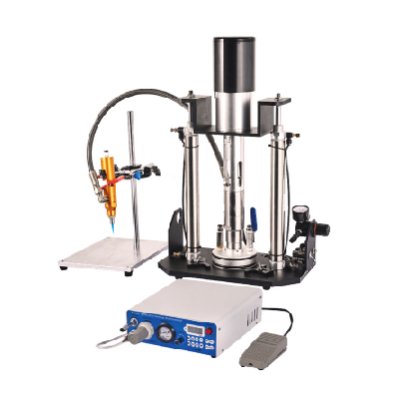
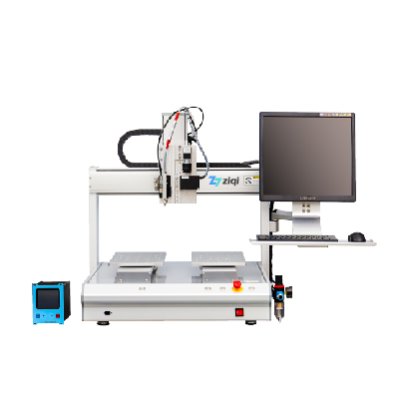
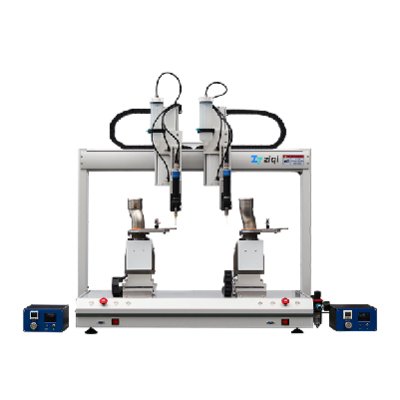
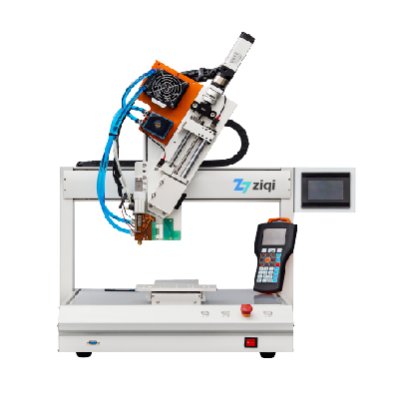
ZiQi develops plasma surface treatment and automation solutions for manufacturers that require controlled and repeatable surface preparation.
For automotive interior applications, the system configuration can be developed according to:
·Substrate and material composition
·Plasma source and treatment method
·Nozzle configuration
·Working distance
·Treatment speed
·Treatment area
·Component geometry
·Robot or linear motion requirements
·Inline production requirements
·PLC and motion control
·Downstream coating or bonding process
A typical customized solution can combine plasma treatment with automated material handling, motion control, machine vision, and production-line integration.
For complex automotive interior components, the process-development approach should begin with the actual material and application requirements, followed by plasma parameter optimization and downstream performance validation.
This application-specific approach helps manufacturers develop a surface-treatment process that is stable, repeatable, and suitable for integration into automated production.
Key Takeaways
Plasma surface treatment can be an effective pretreatment technology for selected automotive interior materials and downstream coating, painting, printing, lamination, and bonding processes.
Its main benefits come from the ability to modify surface wettability and surface chemistry while supporting localized treatment and automated processing.
For low-surface-energy materials such as PP and TPO, plasma can provide a controlled way to improve surface compatibility with suitable coatings and adhesives.
However, successful plasma treatment depends on application-specific parameters. Plasma power, gas, working distance, treatment speed, nozzle design, treatment path, and the time before downstream processing should be evaluated together.
The right solution should ultimately be determined through material testing, surface characterization, adhesion testing, and production-line validation.
Frequently Asked Questions
What is plasma treatment used for in automotive interiors?
Plasma treatment is used to modify and prepare selected automotive interior surfaces before painting, coating, printing, adhesive bonding, and lamination. It is particularly relevant to low-surface-energy plastics such as PP and TPO.
Can plasma treatment replace flame treatment?
In some applications, plasma can be used as an alternative to flame treatment. It may be considered when localized treatment, complex 3D geometry, controlled thermal exposure, or robotic and inline integration is important. Flame treatment remains suitable for many compatible substrates and established production processes.
Does plasma treatment damage automotive plastics?
Properly controlled plasma treatment can modify the surface while minimizing unwanted effects on the bulk material. Excessive treatment, however, can cause undesirable surface or thermal effects. Plasma parameters should therefore be optimized for each material and application.
How long does plasma activation last?
The duration of plasma-induced surface activation depends on the material and treatment conditions. Some polymers experience hydrophobic recovery after treatment, so the time between plasma treatment and coating or bonding should be evaluated during process development.
How is plasma treatment verified?
Plasma treatment can be evaluated using methods such as water contact-angle measurement, surface-energy testing, coating adhesion testing, peel testing, lap-shear testing, and environmental or aging tests. Final validation should use the actual material and production process.
What is the difference between atmospheric and vacuum plasma?
Atmospheric plasma generally treats components directly at atmospheric pressure and can be well suited to robotic, localized, and inline treatment. Vacuum plasma operates inside a reduced-pressure chamber and can be suitable for controlled batch processing. The appropriate technology depends on component geometry, production requirements, treatment area, and process configuration.