
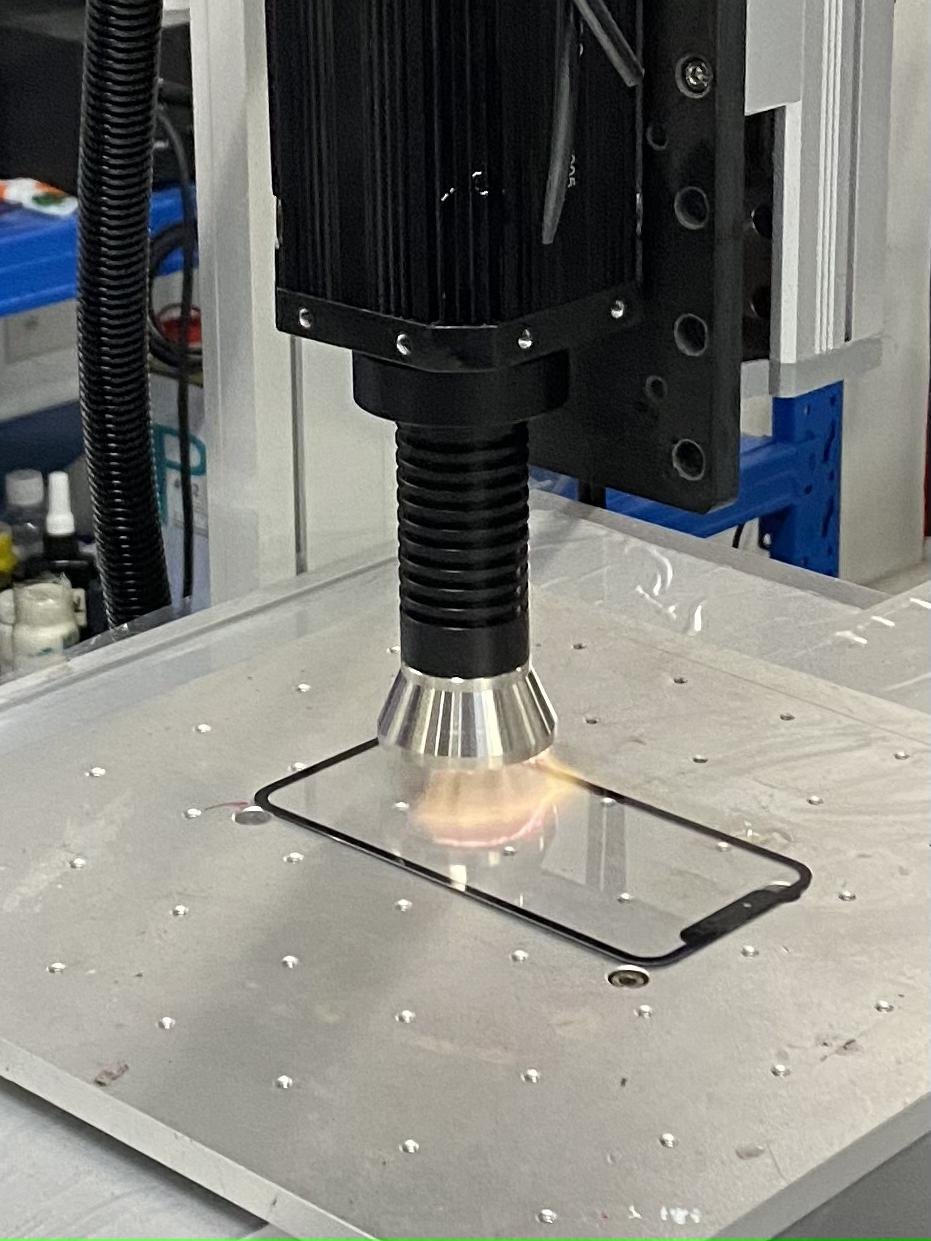
What Is a Plasma Cleaning Machine?
A plasma cleaning machine is an industrial surface treatment system that generates plasma, often referred to as the fourth state of matter, to clean and activate material surfaces without mechanical contact.
Plasma is created when electrical energy is applied to a process gas, causing part of the gas to ionize. The resulting plasma contains energetic electrons, ions, reactive radicals, excited molecules, and ultraviolet photons. These active species interact with contaminants on the material surface through physical and chemical reactions.
During the plasma cleaning process:
·Organic contaminants are decomposed into volatile compounds.
·microscopic residues are removed.
·Surface energy increases.
·Wettability improves.
·Adhesion performance is significantly enhanced.
Unlike solvent-based cleaning, plasma treatment does not rely on liquid chemicals and produces minimal secondary pollution. Since it is a non-contact process, it is also suitable for delicate components that could be damaged by mechanical cleaning methods.
For these reasons, plasma cleaning has become one of the most widely used surface preparation technologies in precision manufacturing.
Why Surface Preparation Matters Before Manufacturing?
Surface preparation is one of the most critical—but often overlooked—steps in modern manufacturing. Many production defects originate not from the adhesive, coating, or printing process itself, but from contamination that exists on the material surface before production begins.
Common surface contaminants include:
·Mold release agents used during plastic molding
·Organic residues
·Oxidation layers on metal surfaces
·Moisture and other microscopic contaminants
These contaminants can prevent adhesives, inks, coatings, sealants, and solder materials from making full contact with the substrate. As a result, manufacturers may experience adhesive bonding、Coating delamination、Poor printing quality、Air bubbles during dispensing、Seal leakage.
Traditional cleaning methods such as solvent wiping, abrasive polishing, or flame treatment can remove some contaminants, but they often introduce new challenges, including chemical residues, inconsistent cleaning quality, damage to delicate components, or environmental concerns.
Plasma cleaning addresses these challenges by providing a dry, non-contact, highly controllable, and environmentally friendly surface treatment process. Beyond cleaning, plasma can also modify surface chemistry, increase surface energy, and improve wettability, making it an ideal pretreatment method for precision manufacturing.
Types of Plasma Cleaning Equipment
Different manufacturing applications require different plasma technologies. The most common types include:
Plasma surface treatment operate under atmospheric pressure without the need for a vacuum chamber. They are ideal for inline automated production and are commonly used for plastics, metals, glass, rubber, and electronic components.
Vacuum plasma cleaning machine perform surface treatment inside a sealed vacuum chamber. They provide highly uniform plasma distribution and are widely used in semiconductor manufacturing, medical devices, aerospace components, and other high-precision applications.
Advantages of Plasma Cleaning Technology
Compared with conventional surface preparation methods, plasma cleaning provides significant technical and environmental advantages.
Environmentally Friendly
Plasma cleaning significantly reduces or eliminates the use of chemical solvents, helping manufacturers lower hazardous waste generation while supporting sustainable production practices.
Non-Contact Surface Treatment
Because plasma interacts with the material without mechanical abrasion, delicate or precision components can be treated with minimal risk of physical damage.
Improved Adhesion
By increasing surface energy and improving wettability, plasma treatment enables adhesives, inks, coatings, sealants, and encapsulation materials to spread more evenly and bond more reliably.
Easy Automation Integration
Atmospheric plasma systems can be seamlessly integrated into robotic cells, conveyor lines, and intelligent manufacturing systems, making them ideal for Industry 4.0 production environments.
Industrial Applications of Plasma Cleaning Machines
Plasma surface treatment has become a standard process across many manufacturing industries, including:
·Electronics and PCB assembly
·Semiconductor packaging
·Automotive components
·Medical devices
·Consumer electronics
·Precision plastics
·Glass manufacturing
·Metal processing
·New energy battery components
Typical applications include adhesive bonding, automatic dispensing, conformal coating, laser marking pretreatment, printing, sealing, and painting.
How to Choose the Right Plasma Cleaning Machine?
Selecting the right plasma cleaning system depends on your production process rather than simply choosing the most advanced equipment.
When evaluating a plasma solution, consider the material Type.Different materials respond differently to plasma treatment.
Examples include:
·Plastics (PP, PE, ABS, PEEK)
·Metals
·Glass
·Rubber
·Ceramics
·Composite materials
Material properties influence both the plasma process and gas selection.
Why Choose Shenzhen ZiQi Technology?
Shenzhen ZiQi Technology provides industrial plasma cleaning systems and customized automation solutions for precision manufacturing.
Manufacturers choose ZiQi Technology because we offer:
Customized plasma solutions tailored to different materials and production processes
Easy integration with automated production lines
Stable and repeatable surface treatment performance
Professional engineering support from project evaluation to commissioning
One-stop automation solutions, including plasma cleaning, dispensing, soldering, screw fastening, and customized production lines.
Whether upgrading an existing production line or developing a new automation project, our engineering team works closely with customers to deliver practical and reliable surface treatment solutions.
Frequently Asked Questions
What is a plasma cleaning machine used for?
A plasma cleaning machine removes microscopic contaminants and activates material surfaces before bonding, dispensing, coating, printing, sealing, or other manufacturing processes.
What is the difference between atmospheric plasma and vacuum plasma?
Atmospheric plasma operates at normal air pressure and is ideal for inline automated production, while vacuum plasma performs treatment inside a vacuum chamber, offering highly uniform processing for precision applications.
Which industries use plasma cleaning?
Plasma cleaning is widely used in electronics, semiconductor packaging, automotive manufacturing, medical devices, consumer electronics, precision plastics, glass processing, aerospace, and new energy industries.
Can plasma cleaning be integrated into automated production lines?
Yes. Atmospheric plasma systems are widely integrated with robotic systems, conveyor lines, machine vision, and automatic dispensing equipment for high-volume manufacturing.
How do I choose the right plasma cleaning machine?
The best solution depends on your material, production process, component geometry, cleanliness requirements, production volume, and automation level. Consulting with an experienced equipment manufacturer can help identify the most suitable system.