
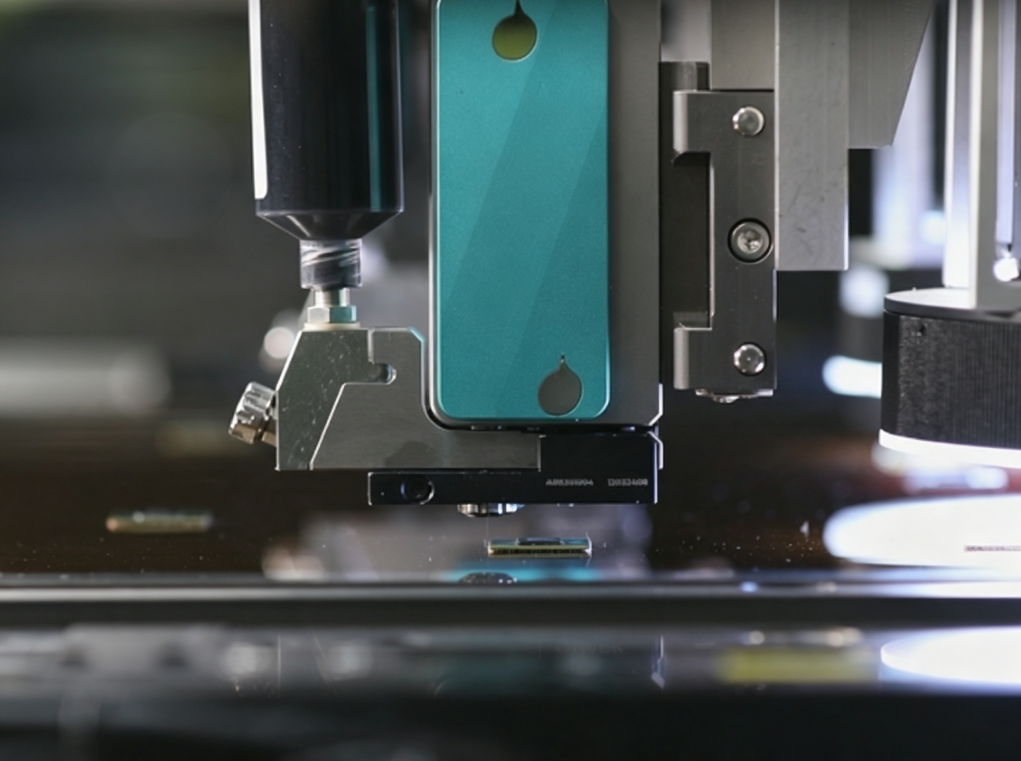
Introduction: The Importance of Precision Dispensing in Semiconductor Manufacturing
The semiconductor industry is moving toward smaller packages, higher integration, and more advanced technologies such as Chiplet, 2.5D/3D packaging, and heterogeneous integration.
With these developments, semiconductor manufacturers face increasing challenges in adhesive dispensing processes. Small variations in adhesive volume, position, or consistency can affect package reliability, production yield, and long-term performance.
Traditional contact dispensing methods may face limitations in speed, flexibility, and process stability. Therefore, more manufacturers are adopting non-contact jet dispensing technology to achieve higher accuracy, efficiency, and reliability.
What Is Non-Contact Jet Dispensing Technology?
Non-contact jet dispensing is a precision adhesive dispensing technology that uses a high-speed jet dispensing valve to deposit controlled adhesive droplets without direct contact with the substrate.
Unlike traditional needle dispensing, jet dispensing separates the nozzle from the workpiece and applies adhesive through high-speed jetting.A complete non-contact jet dispensing system typically includes:
·Precision motion control system
·Adhesive supply system
·Intelligent dispensing software
This technology enables stable micro-volume dispensing and repeatable adhesive application for advanced semiconductor packaging.
Why Is Non-Contact Jet Dispensing Used in Semiconductor Packaging?
Improve Underfill Dispensing Accuracy
Underfill is a critical process in semiconductor packaging, especially for flip-chip applications.It improves:Mechanical strength、Thermal reliability、Environmental resistance.
However, advanced semiconductor packages require more precise adhesive control.Non-contact jet dispensing helps manufacturers achieve:
·More consistent adhesive volume
·Accurate dispensing position
·Improved process stability
This reduces variations during production and supports higher manufacturing quality.
Increase Production Efficiency
Semiconductor manufacturing requires high productivity while maintaining strict quality standards.
Because the dispensing valve does not physically contact the substrate, non-contact jet dispensing can reduce unnecessary mechanical movement and improve production efficiency.
Reduce Risk of Component Damage
Modern semiconductor devices are becoming smaller and more sensitive.Traditional contact dispensing may create risks such as:Needle collision、Surface damage、Component movement.
Non-contact jet dispensing reduces mechanical contact between the dispensing tool and the product, providing a safer solution for fragile semiconductor components.
Support Advanced Semiconductor Applications
As industries such as AI, automotive electronics, and high-performance computing continue to grow, manufacturers require more flexible dispensing solutions.
Non-contact jet dispensing is suitable for:
·Flip-chip underfill
·Chiplet packaging
·System-in-Package (SiP)
·Die bonding
·Semiconductor encapsulation
·Precision electronic assembly
How to Choose a Semiconductor Dispensing Machine?
Selecting the right semiconductor dispensing machine requires consideration of several factors.
Accuracy and Stability
A reliable dispensing system should provide:Precise adhesive positioning、Stable volume control、Repeatable dispensing performance、Long-term production reliability.
These factors directly affect product quality and manufacturing yield.
Adhesive Material Compatibility
Different semiconductor applications require different materials.A flexible dispensing system should support adhesives such as:Epoxy adhesives、Underfill materials、UV adhesives、Thermal interface materials、Conductive adhesives.
Good material compatibility allows manufacturers to handle different production requirements.
Intelligent Automation Capability
Modern semiconductor manufacturing requires smart automation.Advanced dispensing equipment should integrate:
·Machine vision alignment
·Automatic calibration
·Process monitoring
·Data management
These functions help improve production efficiency and process control.
ZiQi Semiconductor Dispensing Solutions
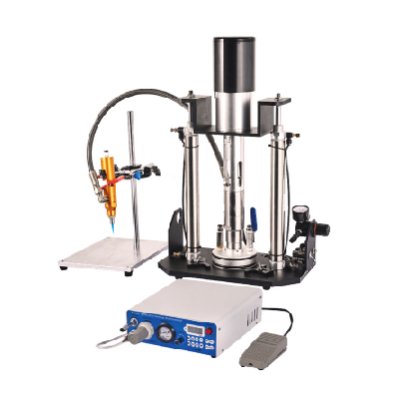
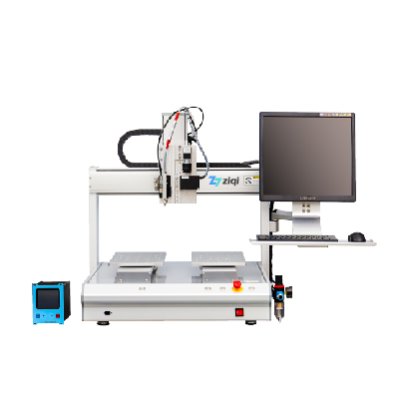
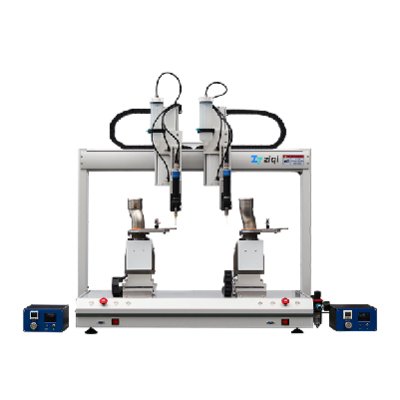
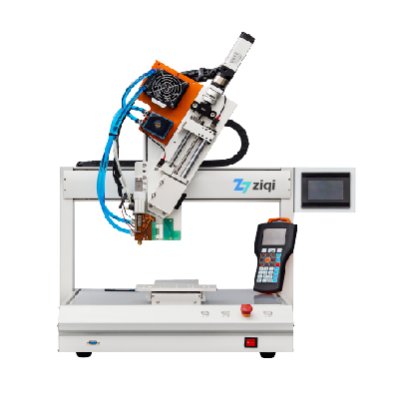
Shenzhen ZiQi Technology Co., Ltd. specializes in industrial automation equipment and precision dispensing solutions for global manufacturing industries.By integrating:
·Precision motion control technology
·Intelligent vision systems
·Advanced dispensing technology
·Customized automation solutions
ZiQi provides automated dispensing solutions for:
·Semiconductor packaging
·Automotive electronics
·Consumer electronics
·Precision electronic manufacturing
With continuous investment in intelligent manufacturing technology, ZiQi helps manufacturers improve production efficiency, product consistency, and automation capabilities.
Frequently Asked Questions
What is non-contact jet dispensing in semiconductor packaging?
Non-contact jet dispensing is a precision adhesive application technology that uses a high-speed jet valve to deposit controlled adhesive droplets without direct contact between the nozzle and semiconductor substrate.
Why is jet dispensing better than traditional needle dispensing?
Jet dispensing reduces mechanical contact with the product, allowing faster operation and better adaptability for small and complex semiconductor packages.It is especially suitable for applications requiring stable micro-volume adhesive dispensing.
What applications use semiconductor dispensing machines?
Semiconductor dispensing machines are commonly used for:
Underfill dispensing
Die bonding
Chip encapsulation
Semiconductor packaging adhesives
Electronic component assembly
Conclusion
As semiconductor packaging continues to evolve, manufacturers need faster, more accurate, and more reliable adhesive dispensing technologies.
Non-contact jet dispensing provides an effective solution through:
·High-speed dispensing
·Accurate adhesive control
·Reduced mechanical contact
·Improved process stability
For manufacturers seeking higher production efficiency and smarter manufacturing, non-contact jet dispensing has become an important technology for next-generation semiconductor packaging.