
Introduction
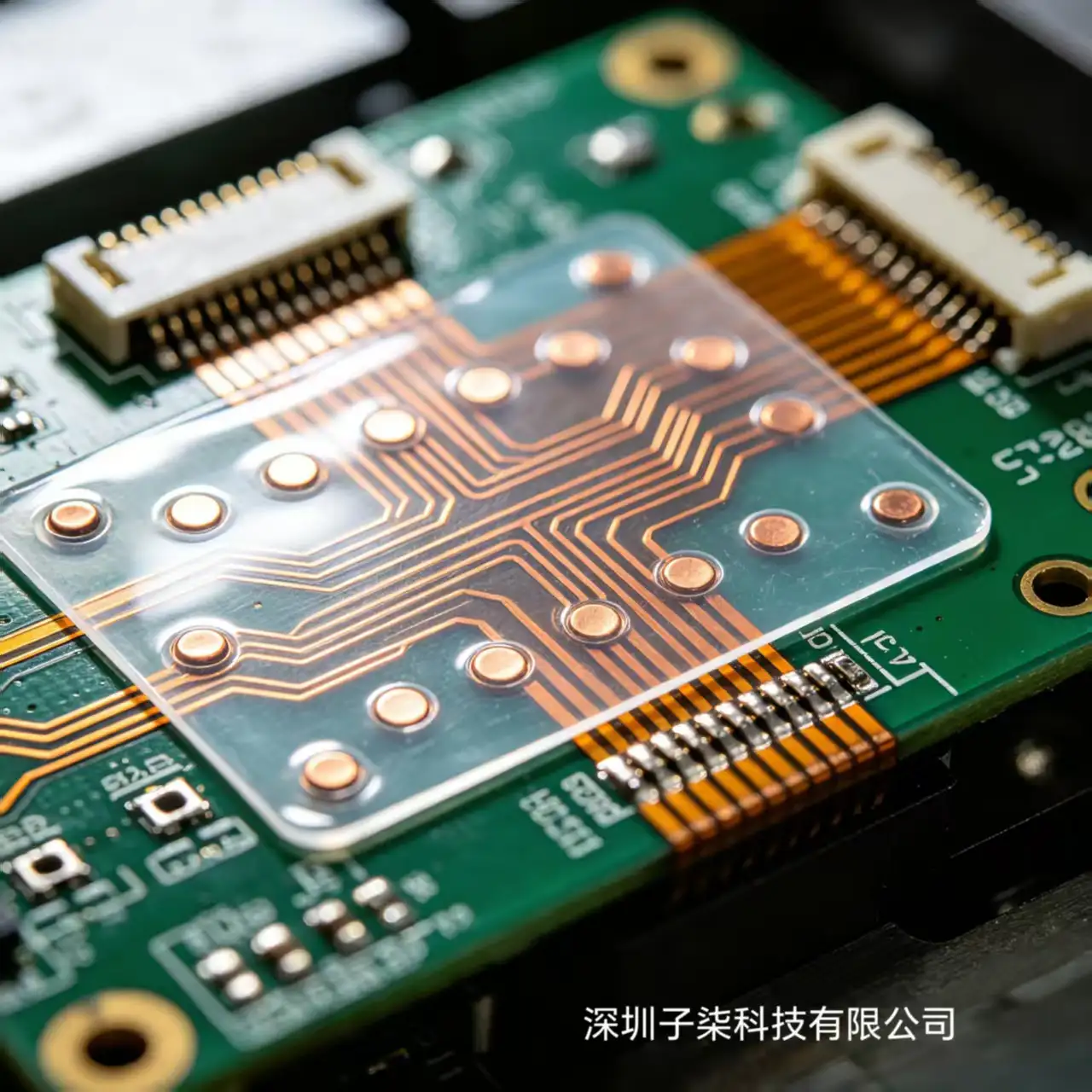
With the rapid growth of electric vehicles, advanced driver assistance systems (ADAS), and smart automotive electronics, Flexible Printed Circuits (FPCs) are becoming increasingly important components in modern vehicles.
FPCs are widely used in battery management systems (BMS), camera modules, displays, sensors, and intelligent cockpit systems due to their lightweight design, flexibility, and efficient space utilization.
However, as automotive electronics become smaller and more integrated, manufacturers face higher requirements for adhesive dispensing accuracy, consistency, and production reliability.
Non-contact dispensing technology has become an important solution for precision automotive FPC manufacturing by enabling accurate adhesive application while reducing mechanical stress on delicate flexible circuits.
What Is Non-Contact Dispensing Technology?
Non-contact dispensing is a precision adhesive application method that deposits controlled amounts of adhesive without direct contact between the dispensing nozzle and the workpiece surface.
Compared with traditional contact dispensing, non-contact dispensing reduces unnecessary mechanical interaction with sensitive components and provides greater flexibility for complex product structures.
Combined with machine vision systems, precision motion control, and intelligent software, modern dispensing equipment can achieve stable and repeatable adhesive application for high-precision electronics manufacturing.
Why Automotive FPC Manufacturing Requires Precision Dispensing?
Automotive FPCs often feature:
·Fine conductive traces
·Compact circuit layouts
·Flexible substrates
·Complex product geometries
·High reliability requirements
During assembly, inaccurate adhesive application may cause problems such as:
·Adhesive overflow
·Poor bonding performance
·Contamination of nearby components
·Reduced product reliability
For automotive electronics, even small process variations can affect long-term performance.Therefore, manufacturers require dispensing systems that provide high repeatability, accurate positioning, and stable production performance.
How Non-Contact Dispensing Solves Manufacturing Challenges?
Protecting Delicate FPC Structures
Because the dispensing nozzle does not need to touch the product surface, non-contact dispensing helps minimize mechanical stress on thin and flexible circuit structures.
Improving Dispensing Accuracy
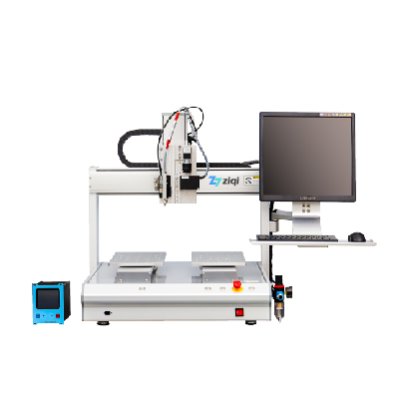
Modern dispensing systems integrate CCD vision positioning technology to identify product features and automatically compensate for positioning deviations.
Supporting Complex Product Designs
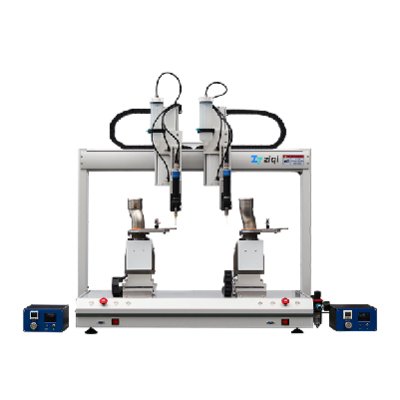
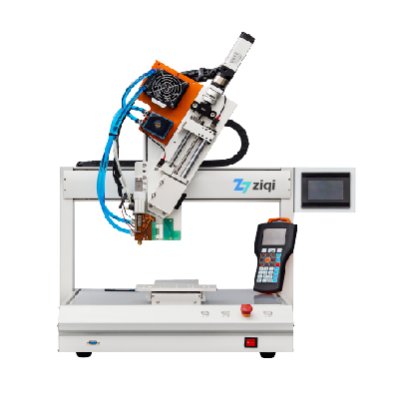
Automotive electronic components often include curved surfaces, narrow spaces, and irregular dispensing paths.Multi-axis dispensing platforms combined with intelligent motion control can adapt to different product structures and improve manufacturing flexibility.
Enhancing Automated Production
Non-contact dispensing equipment can be integrated with automated production lines, including:Robotic handling systems、Conveyor systems、MES systems、Inspection equipment.
This helps manufacturers improve production consistency, traceability, and overall efficiency.
Shenzhen ZiQi Technology Provides Customized Dispensing Solutions
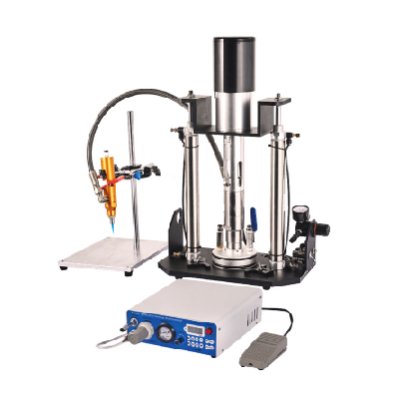
Shenzhen ZiQi Technology Co., Ltd. specializes in industrial automation equipment and customized dispensing solutions for precision manufacturing industries.
The company provides intelligent dispensing equipment integrating:
CCD vision positioning
Precision motion control
Multi-axis automation systems
Customized dispensing solutions
Based on different product structures, adhesive requirements, and production goals, ZiQi Technology helps customers improve dispensing consistency, production efficiency, and manufacturing flexibility.
With continuous investment in automation technology, ZiQi Technology supports manufacturers worldwide in developing smarter and more reliable production processes.
FAQ
What is non-contact dispensing?
Non-contact dispensing is an adhesive application technology that deposits materials without direct contact between the nozzle and the product surface.
Why is non-contact dispensing suitable for FPC manufacturing?
Because FPCs are thin and flexible, reducing mechanical contact helps protect delicate circuit structures and improve production stability.
Can dispensing equipment be integrated into automated production lines?
Yes. Modern dispensing systems can integrate with robots, conveyors, MES systems, and inspection equipment.
What industries use precision dispensing technology?
Precision dispensing is widely used in automotive electronics, consumer electronics, medical devices, semiconductor manufacturing, and industrial electronics.
Conclusion
As automotive electronics continue to become smaller, smarter, and more integrated, precision dispensing technology plays an increasingly important role in manufacturing.
Non-contact dispensing helps manufacturers improve adhesive application accuracy, protect delicate FPC structures, and achieve more stable automated production.
By combining dispensing technology with machine vision, motion control, and intelligent automation, manufacturers can build more efficient and reliable production processes for next-generation automotive electronics.