
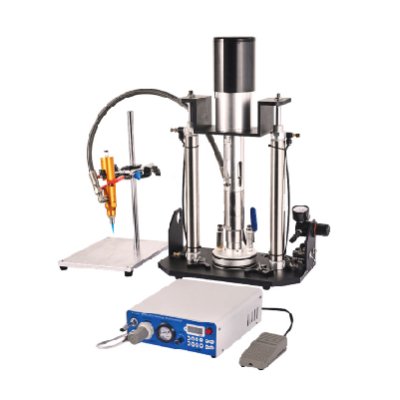
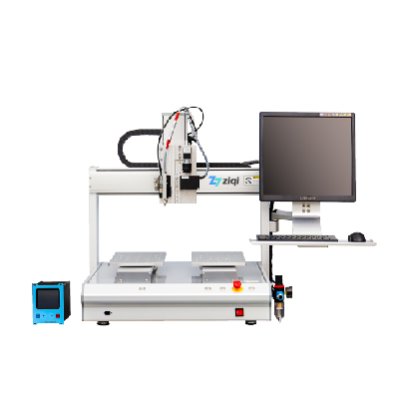
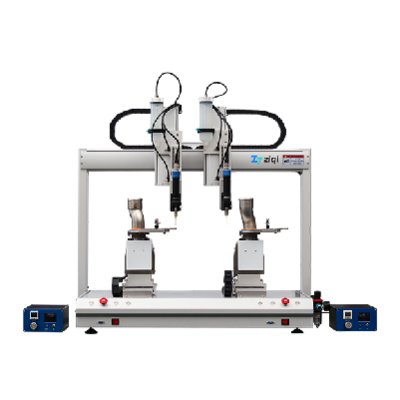
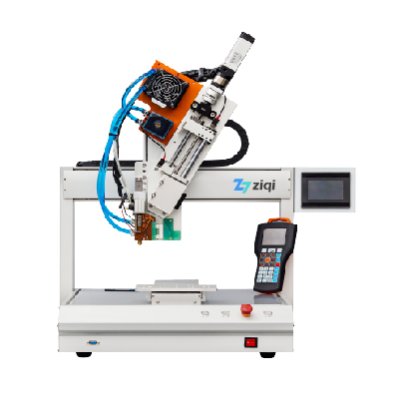
As electronic products become smaller and manufacturing processes become more demanding, accurate adhesive application has become increasingly important in automated production.
Many electronic components feature compact structures, irregular surfaces, and small bonding areas, making precise dispensing position control essential for consistent assembly quality.
Traditional automated dispensing systems often execute programmed paths based on predefined coordinates. Although these systems can achieve stable dispensing under controlled conditions, variations in workpiece placement may cause the actual dispensing position to deviate from the programmed target.
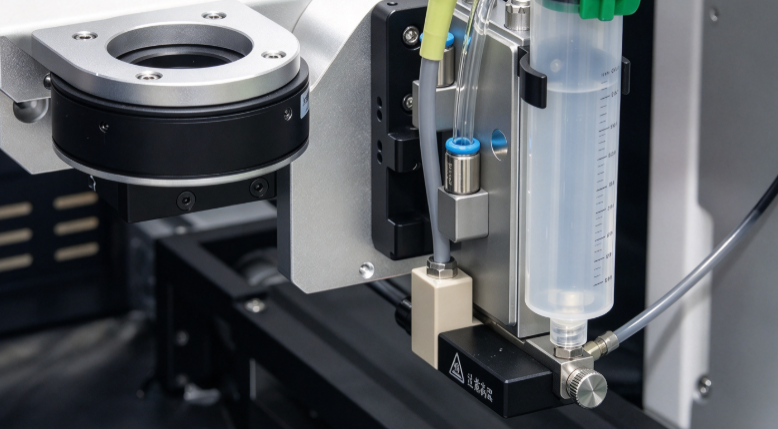
A Local Vision Dispensing Machine addresses this challenge through localized visual positioning. Unlike systems that rely solely on fixed coordinates or separate product positioning processes, it uses a camera mounted alongside the dispensing head. As the dispensing head moves toward the target area, the camera moves with it and captures images of the local region near the dispensing position.
The vision system identifies recognizable product features, determines the actual target location, and calculates the corresponding coordinate offset. The motion control system then applies the necessary position compensation before dispensing.
By combining localized image recognition, moving-camera technology, automatic coordinate compensation, and precision motion control, a local vision dispensing machine help simprove adhesive placement accuracy and process consistency for precision manufacturing applications.
How Does Local Vision Positioning Work in a Dispensing Machine?
The main function of a local vision dispensing machine is to identify the actual dispensing position near the target area rather than relying entirely on previously programmed coordinates.
In conventional dispensing processes, the machine follows predefined dispensing paths. If a workpiece shifts slightly during loading or positioning, the programmed path may no longer align with the actual adhesive application area.
Local vision positioning helps compensate for these deviations through image acquisition and feature recognition.
The process generally involves five steps:
Move to the Target Dispensing Area
The dispensing head moves toward the programmed dispensing location according to the production program.
Capture Local Images
As the dispensing head approaches the target, the camera mounted alongside it moves to the same region and captures an image of the nearby product area.
Recognize Local Product Features
The vision system processes the captured image and identifies recognizable features, such as reference marks, product edges, grooves, holes, or other predefined structures.
Calculate Position Compensation
The system compares the detected feature position with its programmed reference coordinates and calculates the corresponding positional deviation.
Perform Corrected Dispensing
Based on the calculated offset, the motion control system adjusts the dispensing coordinates and guides the dispensing nozzle to the corrected target position.
Through this process, the machine can compensate for workpiece positioning deviations within its calibrated operating range, helping improve adhesive alignment and dispensing consistency.
Moving Camera Design: Bringing Visual Recognition Closer to the Dispensing Area
One of the defining features of a local vision dispensing machine is its moving-camera configuration.
Unlike a fixed-camera arrangement that captures images from a predetermined position, the camera in a local vision dispensing system is mounted alongside the dispensing head and moves together with it.
This allows the machine to perform localized image acquisition near different dispensing locations on the same workpiece.
The moving-camera design offers several advantages.
Localized Image Acquisition
The camera captures images close to the actual dispensing area. This allows the vision system to focus on specific product features rather than relying exclusively on an overall image of the entire workpiece.
Flexible Recognition of Different Product Structures
For products with multiple dispensing locations, small target areas, or complex surface layouts, the camera can move to different regions and perform localized visual recognition according to the programmed process.
Coordinated Camera and Dispensing Nozzle Positioning
Accurate dispensing requires the system to establish a calibrated positional relationship between the camera and the dispensing nozzle.
Because the camera and nozzle are not located at exactly the same physical position, the vision system must account for their relative coordinate offset. After recognizing the target feature, the system converts the image-based position into the corresponding dispensing coordinates.
This camera-to-nozzle calibration is essential for translating visual recognition results into accurate dispensing movements.
The actual positioning performance depends on several factors, including camera resolution, lens selection, lighting conditions, image recognition algorithms, calibration accuracy, and mechanical positioning performance.
Precision Adhesive Dispensing for Different Product Structures
Modern manufacturing involves a wide variety of components with different shapes, dimensions, and adhesive application requirements.
Local vision positioning helps dispensing equipment adapt to these variations by identifying target features near individual dispensing locations and correcting positional deviations before adhesive application.
Depending on the machine's motion axes, dispensing valve configuration, and programmed process, a local vision dispensing machine can support different adhesive application patterns.
Precision Dot Dispensing
Applies controlled adhesive deposits to small target areas, such as electronic component bonding points, sensor assemblies, and precision structural parts.
Line Dispensing
Follows programmed adhesive paths along product edges, grooves, bonding surfaces, and other designated application areas.
Curved and Irregular Path Dispensing
Applies adhesive along curved or irregular paths when supported by the machine's motion axes and dispensing configuration.
Multi-Point Dispensing
Recognizes and corrects the positions of multiple dispensing locations on the same workpiece according to the programmed vision process.
For manufacturers handling different product models or precision bonding requirements, localized vision recognition provides greater flexibility in positioning and helps reduce dependence on fixed workpiece coordinates.
How Does Automatic Position Compensation Improve Dispensing Consistency?
In precision adhesive dispensing, even a small positioning deviation can cause adhesive to miss the intended application area. This may result in insufficient bonding, adhesive overflow, inconsistent application, or additional rework.
Automatic position compensation helps address this issue by identifying the actual target position before dispensing.
When the vision system detects a deviation between the programmed reference position and the actual product feature, it calculates the corresponding coordinate offset. The motion control system then applies the correction to the dispensing path or target position.
This process provides several potential production benefits.
Reduced Positioning-Related Defects
Visual recognition and coordinate correction help reduce adhesive misalignment caused by workpiece placement variations.
Improved Dispensing Repeatability
Consistent feature recognition and position compensation help maintain more stable dispensing positions across production cycles.
Reduced Adhesive Waste
More accurate adhesive placement can help minimize unnecessary material consumption caused by dispensing misalignment.
Less Manual Position Adjustment
Automated visual positioning reduces the need for repeated manual coordinate adjustments and alignment operations.
It is important to note that visual positioning is only one part of the dispensing process. Overall dispensing quality also depends on adhesive properties, dispensing valve performance, flow control, mechanical accuracy, and process parameters.
When these factors are properly configured, local vision dispensing can contribute to more consistent production quality and more efficient manufacturing operations.
Which Manufacturing Applications Benefit from Local Vision Dispensing?
Local vision dispensing technology is particularly suitable for applications involving small adhesive target areas, localized bonding requirements, or workpiece positioning variations.
Its ability to recognize product features near individual dispensing locations makes it useful in several precision manufacturing industries.
Consumer Electronics Manufacturing
Smartphone camera modules, speakers, electronic accessories, and compact electronic components often require adhesive to be applied within limited bonding areas. Local vision positioning helps identify specific product features and correct dispensing coordinates before adhesive application.
PCB Assembly
Electronic component fixation and localized bonding on printed circuit boards often require accurate adhesive placement around small components and designated bonding areas. Local vision recognition helps improve alignment with the intended application positions.
Automotive Electronics
Automotive sensors, electronic modules, connectors, and other precision electronic assemblies may involve different product structures and adhesive application locations. Localized visual positioning helps accommodate workpiece positioning variations during automated dispensing.
Precision Component Manufacturing
Small mechanical and electronic components may contain grooves, edges, reference marks, or irregular structures that serve as visual positioning features. A moving-camera dispensing system can capture these local features and determine the corresponding dispensing positions.
The suitability of each application depends on product geometry, recognizable visual features, adhesive characteristics, dispensing requirements, and machine configuration.
What Factors Affect the Accuracy of a Local Vision Dispensing Machine?
Although localized vision positioning can improve dispensing alignment, the actual positioning accuracy depends on the complete vision and motion control system.
Several technical factors should be considered when selecting or configuring a local vision dispensing machine.
Camera Resolution and Lens Selection
Camera resolution and lens magnification affect the system's ability to identify small product features. The appropriate configuration should match the dimensions of the dispensing target and the required positioning accuracy.
Lighting Conditions
Stable illumination helps improve image contrast and feature recognition, particularly when working with reflective metal surfaces, transparent materials, or products with low-contrast features.
Image Recognition Algorithms
The vision system must reliably identify the intended reference features. Different products may require different recognition methods depending on their surface characteristics and geometric structures.
Camera-to-Nozzle Calibration
The positional relationship between the camera and dispensing nozzle must be accurately calibrated. Any calibration deviation may affect the conversion of image coordinates into dispensing coordinates.
Mechanical Positioning Performance
The accuracy and repeatability of the motion platform also influence the final dispensing position. A precise vision system cannot fully compensate for limitations in mechanical positioning performance.
Considering these factors helps manufacturers select an appropriate vision configuration and achieve more reliable dispensing results.
Frequently Asked Questions
What is a local vision dispensing machine?
A local vision dispensing machine is an automated dispensing system equipped with a moving vision camera that captures and recognizes features near the actual dispensing area. It uses the detected position to calculate coordinate compensation and guide the dispensing nozzle toward the correct target location.
How is a local vision dispensing machine different from a conventional vision dispensing machine?
A local vision dispensing machine uses a camera that moves together with the dispensing head to capture images near individual dispensing locations. This differs from configurations that use a fixed camera or perform overall product positioning before dispensing. The main distinction is the localized image acquisition approach.
Can a local vision dispensing machine compensate for workpiece positioning deviations?
Yes. The vision system identifies predefined product features and calculates positional offsets relative to the programmed reference coordinates. The motion control system then applies the corresponding compensation before dispensing, within the system's calibrated operating range.
What products are suitable for local vision dispensing?
Typical applications include smartphone camera modules, speakers, PCB assemblies, automotive electronic components, sensors, connectors, and other precision parts requiring accurate localized adhesive application.
What factors affect the positioning accuracy of a local vision dispensing machine?
Positioning accuracy depends on camera resolution, lens selection, lighting conditions, image recognition performance, camera-to-nozzle calibration, and mechanical positioning accuracy. Proper system configuration and calibration are essential for reliable dispensing results.
Conclusion
A Local Vision Dispensing Machine improves automated adhesive application by bringing visual recognition closer to the actual dispensing area.
Through its moving-camera design, localized image acquisition, automatic feature recognition, and coordinate compensation, the system helps correct workpiece positioning deviations and improve adhesive alignment on precision components.
For manufacturers working with compact electronic products, complex component structures, and small adhesive application areas, local vision positioning provides a flexible approach to improving dispensing accuracy and process consistency.
As manufacturing requirements continue to evolve, localized vision recognition offers an effective solution for precision adhesive dispensing and automated production.