
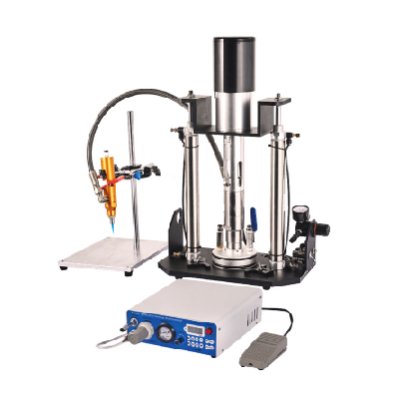
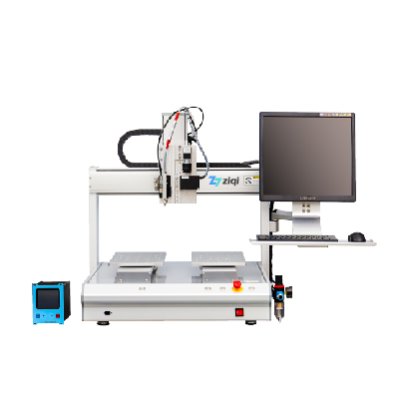
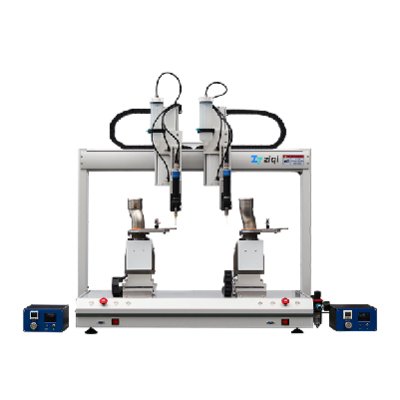
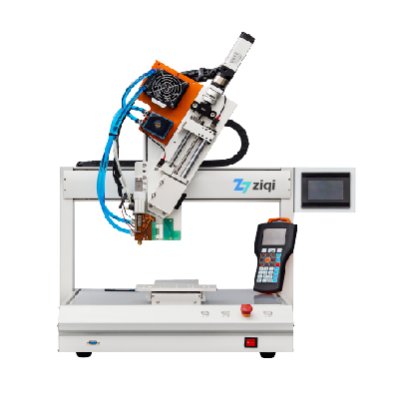
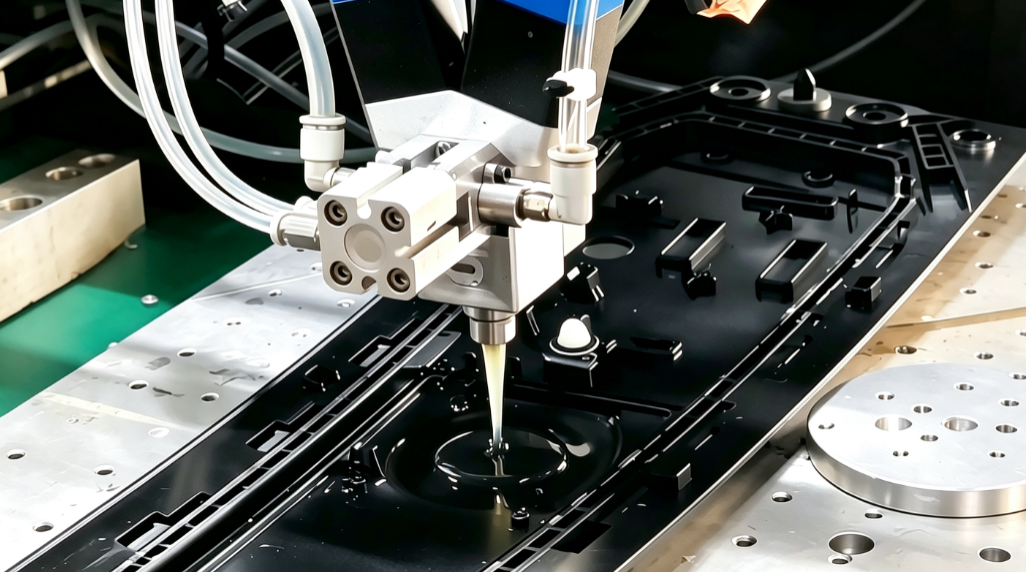
Choosing the right AB adhesive dispensing machine depends on more than the adhesive type. The correct solution should be selected based on adhesive properties, mixing ratio, viscosity, dispensing volume, product geometry, required accuracy, cycle time, and automation requirements.
For two-component (2K) adhesives, the best machine is not necessarily the one with the highest specifications. It is the system that can reliably deliver the required mixing ratio, dispensing volume, pattern, and production stability for the actual application.
Start with the AB Adhesive Properties
The first step is to understand the material. Before selecting an AB adhesive dispensing machine, confirm:
·Mixing ratio of Part A and Part B
·Viscosity of each component
·Required dispensing volume and flow rate
·Curing characteristics
·Filler content and material handling requirements
The mixing ratio is particularly important in 2K adhesive dispensing because it can affect curing behavior and the final performance of the material. The actual ratio should therefore be verified under representative production conditions.
Viscosity also has a direct impact on equipment selection. Low-, medium-, and high-viscosity materials may require different material-delivery and metering configurations. For filled or high-viscosity adhesives, the pump, material supply, valve, tubing, and mixing system should be evaluated together rather than selected individually.
Define the Product and Dispensing Requirements
The next step is to determine what the product and process actually require.Key factors include:
·Required dispensing accuracy
·Dot size or bead width
·Dispensing volume
·Dispensing path
·Product dimensions and geometry
·Sealing, bonding, potting, or encapsulation requirements
·Product positioning accuracy
·Required cycle time
A machine should be selected according to the actual dispensing task. The goal is to match the equipment to the process—not simply choose the most complex machine.
Choose the Right Machine Configuration
Different products may require different dispensing configurations.
A 3-axis dispensing machine is generally suitable for relatively straightforward dispensing paths and fixed product positions. It can be an efficient solution for standard bonding, sealing, and potting applications.
Vision-guided dispensing is useful when product positions vary, dispensing locations are difficult to fixture accurately, or different product models require flexible positioning.
The vision system can identify the workpiece or reference features and help guide the dispensing process to the required location.
A five-axis dispensing system provides greater motion flexibility for applications involving complex 3D geometries, curved surfaces, or multi-angle dispensing paths.
Additional axes should be selected because the dispensing trajectory requires them—not simply because more axes appear to provide a higher machine specification.
Choose the Complete Dispensing System, Not Just the Machine
For AB and other two-component adhesive applications, the machine itself is only one part of the solution.
A complete 2K adhesive dispensing system may include:
Material Supply → Metering Pump → Mixing System → Dispensing Valve → Motion Control → Process Monitoring
These components need to work together to achieve stable dispensing.
This is especially important for high-viscosity or filled materials. Material delivery, metering stability, mixing performance, and valve operation should be evaluated as one process.
Instead of asking only:
“Which AB glue machine should I buy?”
A more useful question is:
“Which dispensing system can reliably deliver the required adhesive ratio, volume, pattern, accuracy, and production cycle?”
This approach helps reduce the risk of selecting a machine based only on general specifications.
Validate the Solution with Actual Sample Testing
When the adhesive behavior or equipment configuration is uncertain, sample testing is one of the most practical ways to validate the solution.
Ideally, testing should use the actual adhesive and workpiece under conditions close to the intended production process.
Engineers can evaluate:
·Actual mixing ratio
·Dispensing volume
·Dot or bead consistency
·Dispensing accuracy
·Air bubbles
·Material flow stability
·Curing performance
·Cycle time
·Continuous operating stability
For two-component adhesives, ratio verification should be performed under representative process conditions.
Sample testing helps determine the equipment configuration based on actual dispensing results rather than theoretical specifications alone.
How ZiQi Selects an AB Adhesive Dispensing Solution
At Shenzhen ZiQi Technology, AB adhesive dispensing solutions are configured according to the customer's material, product, dispensing process, and production requirements.
Depending on the application, a solution may combine two-component metering, precision dispensing valves, screw-valve technology, servo control, vision guidance, or five-axis motion.
ZiQi's engineering selection process typically follows:
Adhesive → Product → Dispensing Requirements → Accuracy → Cycle Time → Production Volume → Automation Level → Machine Configuration → Sample Validation
For applications where the correct configuration is not yet clear, sample testing can be used to evaluate the adhesive, dispensing pattern, required accuracy, and process stability before final equipment selection.
This helps match the dispensing solution to the actual production requirements.
Frequently Asked Questions
What factors should I consider when choosing an AB adhesive dispensing machine?
The main factors include the adhesive mixing ratio, viscosity, dispensing volume, product geometry, dispensing pattern, required accuracy, cycle time, production volume, and automation requirements.
How do I choose a pump for AB adhesive?
Pump selection should be based on the adhesive viscosity, A mixing ratio, required flow rate, dispensing volume, and material characteristics. For high-viscosity or filled materials, the material-delivery and metering system should be evaluated as a complete process.
Do I need a 3-axis or five-axis AB dispensing machine?
A 3-axis machine is generally suitable for straightforward dispensing paths. A five-axis system is more useful when the application requires multi-angle dispensing, curved-surface dispensing, or more complex 3D trajectories.
Do I need vision-guided dispensing?
Vision is worth considering when product positions vary, dispensing locations are difficult to fixture mechanically, or multiple product models require flexible positioning.
Should I test my AB adhesive before purchasing a dispensing machine?
Yes. Testing the actual adhesive and workpiece can help verify the mixing ratio, dispensing volume, bead consistency, accuracy, curing behavior, cycle time, and overall process stability before the final equipment configuration is confirmed.
Conclusion
The right AB adhesive dispensing machine is not simply the most advanced model. It is the solution that matches the adhesive, product, dispensing process, accuracy requirements, production volume, and automation level.
By following a clear selection process—understanding the adhesive, defining the dispensing requirements, selecting the appropriate system and machine configuration, and validating the process through sample testing—manufacturers can reduce equipment-selection risks and build a more stable two-component adhesive dispensing process.