
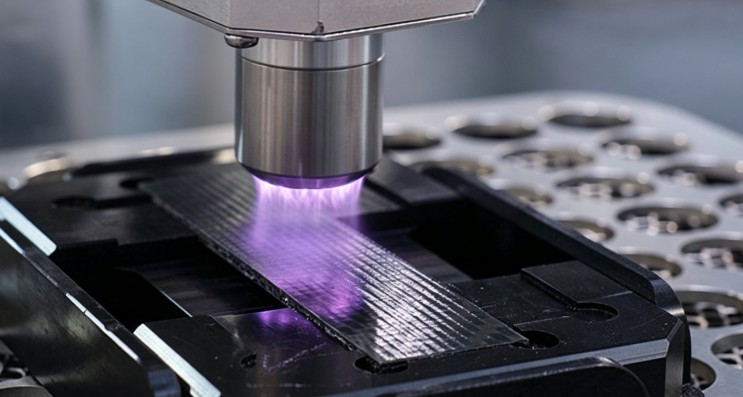
Plastic components are widely used in automotive, electronics, consumer electronics, medical devices, and industrial products. However, many plastic materials are difficult to bond, print, paint, or coat reliably.
This is particularly true for low-surface-energy plastics such as polypropylene (PP), polyethylene (PE), thermoplastic polyolefin (TPO), and certain elastomers.
Quick Answer: How Does Plasma Treatment Improve Plastic Adhesion?
Plasma surface treatment improves plastic adhesion by modifying the outermost surface of the material. Depending on the polymer and process conditions, plasma can remove certain organic contaminants, introduce polar functional groups, increase surface energy, and improve wettability.
As a result, adhesives, inks, paints, and coatings can spread more effectively and interact more favorably with the treated surface.
However, plasma treatment does not automatically guarantee stronger adhesion. Final bonding performance also depends on the plastic material, adhesive chemistry, treatment parameters, surface condition, curing process, and environmental requirements.
For manufacturers, the practical value of plasma treatment is therefore not simply “making plastic sticky,” but creating a more consistent and suitable surface for the next manufacturing process.
Why Is Plastic Difficult to Bond?
Not all plastics have the same adhesion characteristics. Some polymers are naturally easier to bond, while others require surface treatment before adhesive, ink, paint, or coating application.
PP and PE are two common examples of difficult-to-bond materials.
Low Surface Energy and Poor Wettability
Many polyolefin plastics, including PP and PE, have relatively low surface energy.
When an adhesive or coating is applied to a low-energy surface, the liquid may not spread evenly. Instead, it can retract or form droplets, reducing the effective contact area between the liquid and the plastic.
The basic relationship can be summarized as:
Low surface energy → Poor wetting → Limited surface contact → Higher risk of weak adhesion
Surface energy is therefore an important consideration when evaluating plastic bonding and coating processes. However, there is no single surface-energy value that guarantees successful bonding. The required surface condition depends on the specific adhesive, ink, coating, and application.
Non-Polar Surface Chemistry
PP and PE are relatively non-polar polymers and contain comparatively few polar functional groups at their untreated surfaces.
This can limit interactions between the plastic and many adhesive or coating formulations.
For demanding applications, the bonded interface may need to withstand:
·Mechanical stress
·Temperature changes
·Moisture
·Chemical exposure
·Vibration
·Long-term aging
Plasma treatment addresses this challenge by modifying the surface chemistry of the polymer without intentionally changing the bulk material.
Surface Contamination
Plastic parts may also contain substances that interfere with bonding.
Depending on the manufacturing process, these can include:
·Mold-release residues
·Oils
·Dust
·Organic contaminants
·Processing residues
Even when the plastic itself is suitable for bonding, contamination can prevent the adhesive from making effective contact with the substrate.
Plasma can provide a surface-cleaning effect while also activating the material, although the ability of plasma to remove contaminants depends on the contaminant type and process conditions.
How Does Plasma Surface Treatment Improve Plastic Adhesion?
Plasma surface treatment modifies the outermost layer of a plastic surface.
When atmospheric-pressure plasma interacts with a polymer, energetic and reactive species can react with the surface. Depending on the gas chemistry and treatment parameters, several effects can occur.
Plasma treatment may:
·Remove certain organic contaminants
·Modify surface chemistry
·Introduce polar functional groups
·Increase surface energy
·Improve wettability
·Improve the surface's compatibility with subsequent adhesives or coatings
For some polymers, oxygen- or nitrogen-containing functional groups may be introduced during treatment. This can increase surface polarity and improve wetting.
The process can therefore be simplified as:
Untreated plastic → Plasma Activation → Modified Surface Chemistry → Improved Wettability → Better Conditions for Adhesion
An important point is that improved wettability and improved adhesion are related but not identical.
A plastic surface can show better wetting after plasma treatment without achieving the required bond strength if the adhesive is incompatible, the treatment is non-uniform, the surface becomes contaminated again, or the curing process is inadequate.
For this reason, plasma parameters should always be validated together with the actual adhesive and application.
Which Plastics Can Be Treated with Plasma?
Plasma surface treatment is commonly considered for plastics and elastomers that require improved wettability or adhesion.
Typical materials include:
·Polypropylene (PP)
·Polyethylene (PE)
·Thermoplastic Polyolefin (TPO)
·Polyamide (PA)
·Polycarbonate (PC)
·EPDM and other elastomers
·Other engineered polymers and composite materials
PP and PE are particularly important because their relatively low surface energy can make conventional bonding, printing, painting, and coating more challenging.
However, the same plasma process should not automatically be applied to every polymer. Material formulation, fillers, additives, pigments, surface geometry, and manufacturing history can all affect treatment results.
Can Plasma Treatment Improve PP and PE Adhesion?
Yes. Plasma treatment can improve the surface wettability and adhesion characteristics of PP and PE in many applications.
For untreated PP and PE, low surface energy and non-polar surface chemistry can make it difficult for adhesives, inks, and coatings to spread and interact effectively with the surface.
Plasma treatment can modify the outermost surface and create a more polar, higher-energy surface.
This can improve conditions for:
·Adhesive bonding
·Sealing
·Painting
·Printing
·Coating
·Overmolding-related processes
The final result still needs to be verified using the actual plastic, adhesive, treatment process, and required performance criteria.
What Plasma Treatment Parameters Affect Adhesion?
Plasma treatment is a process rather than a single fixed setting.
Important variables can include:
·Plasma power
·Treatment speed
·Treatment distance
·Treatment time
·Gas type
·Gas flow
·Nozzle configuration
·Surface geometry
·Polymer composition
·Distance between plasma treatment and adhesive application
The correct parameters depend on the material and application.
For example, a flat PP housing and a small curved plastic component may require different treatment strategies because the plasma must reach the target bonding area consistently.
For automated production, the objective is not simply to maximize plasma intensity. Instead, manufacturers need to establish a stable process window that provides adequate surface activation without creating unwanted effects on the material.
Plasma Treatment Before Adhesive Dispensing
One of the most useful industrial applications is combining plasma surface treatment with automatic adhesive dispensing.
A typical automated process can be arranged as:
Plastic Part Loading → Plasma Surface Treatment → Vision Positioning → Precision Dispensing → Assembly → Curing
The plasma system prepares the bonding surface before adhesive application.
The dispensing system then applies a controlled amount of adhesive along the required path.
This combination can be useful for applications such as:
·Plastic housings
·Automotive plastic components
·Electronic enclosures
·Sensor housings
·Camera components
·Sealing grooves
·Plastic-to-metal assemblies
·Plastic-to-plastic bonding
When vision positioning is included, the system can identify the actual component position or bonding area before dispensing.
This is particularly useful when components have:
·Complex geometries
·Narrow adhesive paths
·Curved surfaces
·Small bonding areas
·Positioning tolerances
The result is a more integrated manufacturing process rather than treating plasma and dispensing as two completely independent operations.
How Do You Verify Plasma Treatment Results?
A common mistake is to judge plasma treatment only by visual inspection.
A treated plastic surface may look almost identical to an untreated surface even though its surface properties have changed.
Several methods can be used to evaluate treatment performance.
Dyne Testing
Dyne test inks or pens can provide a quick indication of surface-energy and wettability behavior.
This can be useful for checking whether a treatment process is producing a consistent surface condition.
Contact Angle Measurement
Contact angle measurements can be used to evaluate surface wettability.
In general, a smaller contact angle indicates better wetting by the test liquid.
However, contact angle alone does not prove that the final adhesive bond will meet production requirements.
Adhesion Testing
The most important question is:
Does the treated surface achieve the required bond strength and durability for the actual application?
Depending on the product, manufacturers may use:
·Peel testing
·Lap-shear testing
·Pull testing
·Scratch testing
·Environmental aging
·Temperature/humidity testing
A practical validation process can therefore be:
Untreated → Plasma Treatment → Adhesive Application → Bond Strength Testing → Environmental Validation
For demanding applications, comparing different surface-preparation methods can provide additional information:
Untreated → Primer → Plasma → Plasma + Primer
This helps engineers determine which process provides the best balance of adhesion, durability, cost, and production efficiency.
How Long Does Plasma Activation Last?
Plasma activation is not necessarily permanent.
The stability of the treated surface depends on factors such as:
·Polymer type
·Surface chemistry
·Treatment intensity
·Storage environment
·Temperature
·Humidity
·Contamination
·Time between treatment and the next process
Some polymers can experience hydrophobic recovery over time, meaning that the surface may gradually move toward its original state.
For this reason, manufacturers should establish the appropriate time interval between plasma treatment and bonding, printing, painting, or coating through application testing.
In many manufacturing processes, performing the next process as soon as practical after treatment can help reduce variability.
Plasma vs. Corona vs. Flame Treatment
Plasma is one of several technologies used to modify plastic surfaces.
Plasma Treatment
Plasma treatment can provide localized surface activation and can be designed for automated or inline manufacturing.
It is commonly considered when manufacturers need controlled treatment of specific areas before bonding, printing, painting, or coating.
Corona Treatment
Corona treatment is also used to increase the surface energy of polymers and is widely used in applications such as films and sheet materials.
Flame Treatment
Flame treatment can rapidly modify the surface of certain plastics, but process control and thermal effects need to be considered carefully.
The best technology depends on:
·Material
·Component geometry
·Treatment area
·Production speed
·Required surface condition
·Automation requirements
·Downstream adhesive or coating process
Therefore, manufacturers should select the surface-treatment method based on application testing rather than assuming that one technology is suitable for every plastic.
Plasma Treatment for Automotive Plastic Components
Automotive manufacturing is an important application area for plasma surface treatment.
Plastics and elastomers are increasingly used in vehicles because they can support lightweight designs and complex component structures. However, some automotive polymers can be difficult to bond or coat without appropriate surface preparation.
Potential applications include:
·PP interior components
·TPO automotive parts
·Plastic housings
·Automotive lighting components
·Exterior plastic parts
·Sealing and bonding areas
·Plastic-to-metal assemblies
Atmospheric-pressure plasma can be integrated into automated automotive manufacturing processes before adhesive bonding, painting, printing, or coating.
For production applications, treatment consistency is particularly important because bonding performance needs to remain stable across large quantities of components.
Plasma Treatment for Electronics and Consumer Products
Electronics and consumer products often contain small plastic components with narrow bonding areas and increasingly complex geometries.
Potential applications include:
·Electronic housings
·Sensor housings
·Camera components
·Connector assemblies
·Plastic covers
·Waterproof sealing
·Decorative printing
·Component bonding
Selective plasma treatment can be used to activate the area where adhesive, ink, paint, or coating will subsequently be applied.
This can be particularly useful for automated production because the treatment area can be matched to the actual process requirement rather than treating the entire component unnecessarily.
Why Integrate Plasma Treatment with Automated Dispensing?
For high-volume manufacturing, the value of plasma treatment is not limited to surface activation.
The larger opportunity is process integration.
A complete automated solution can combine:
Loading → Plasma Treatment → Vision Positioning → Precision Dispensing → Assembly
Each stage addresses a different manufacturing requirement:
·Plasma treatment: prepares the target surface
·Vision system: identifies component position and process location
·Dispensing system: controls adhesive placement and volume
·Assembly system: positions and joins components
·Curing process: develops the required adhesive performance
·This approach can help manufacturers achieve:
·Consistent adhesive placement
·Repeatable surface treatment
·Reduced manual operations
·Improved production efficiency
·More stable process conditions
·Easier production-line integration
·Scalable manufacturing
For complex plastic components, integrating these processes can also reduce the risk of transferring parts between separate machines.
How Can ZiQi Integrate Plasma Treatment with Automatic Dispensing?
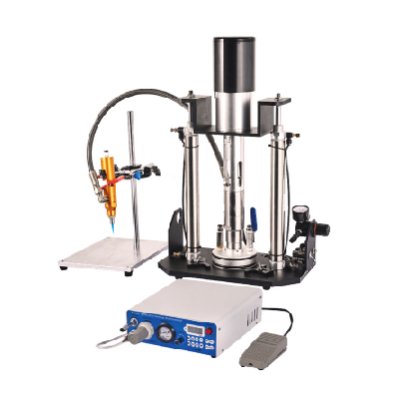
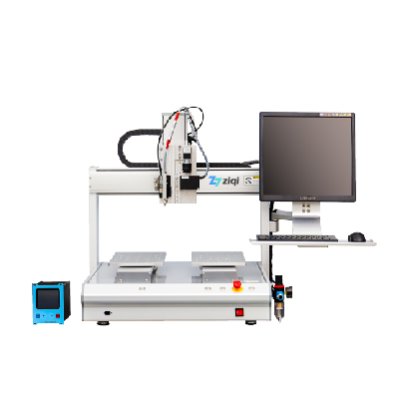
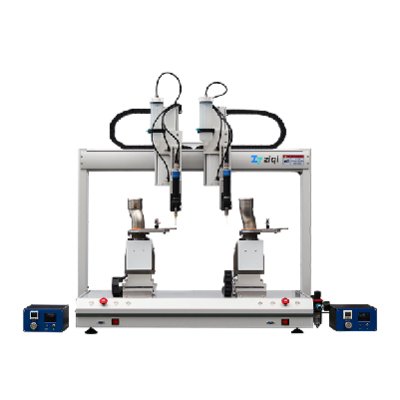
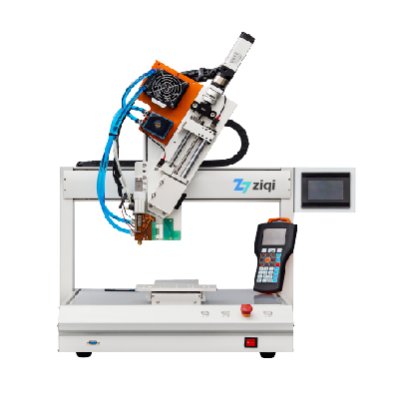
Shenzhen ZiQi Technology Co., Ltd. specializes in industrial automation equipment and customized manufacturing solutions, including plasma surface treatment equipment, automatic dispensing machines, automatic soldering machines, automatic screw locking machines, and customized automation production lines.
For plastic bonding and surface-activation applications, ZiQi can develop automation solutions that combine:
Plasma Surface Treatment + Vision Positioning + Precision Dispensing + Automated Production
A typical process can be designed around:
Plastic Component → Plasma Surface Activation → Vision Positioning → Automatic Adhesive Dispensing → Assembly
The actual equipment configuration should be determined according to the customer's:
·Plastic material
·Adhesive or coating
·Component geometry
·Treatment area
·Dispensing path
·Production speed
·Required bond performance
·Automation requirements
For difficult-to-bond PP, PE, TPO, and other polymer components, application testing is recommended before finalizing the equipment configuration.
This allows the plasma treatment process and dispensing process to be evaluated as a complete manufacturing solution rather than as isolated operations.
Frequently Asked Questions
What is plasma surface treatment?
Plasma surface treatment is a surface-modification process that uses plasma to change the properties of the outermost layer of a material. For plastics, it can improve surface energy and wettability and create more favorable conditions for bonding, printing, painting, and coating.
Why is PP difficult to bond?
PP has relatively low surface energy and a relatively non-polar surface chemistry. This can result in poor wettability and limited interaction with many adhesives and coatings.
What plastics can be treated with plasma?
Common candidates include PP, PE, TPO, PA, PC, EPDM, and other polymers or composite materials. Treatment results depend on the specific material formulation and process conditions.
Should adhesive be applied immediately after plasma treatment?
In many applications, processing the treated surface as soon as practical is preferred because surface activation can change over time. The appropriate process window should be established through testing.
Does plasma treatment damage plastic?
Plasma primarily targets the outermost surface rather than the bulk material. However, excessive or inappropriate treatment conditions can affect sensitive materials, so parameters should be optimized for the specific polymer and application.
How do you verify plasma treatment?
Common methods include dyne testing, contact-angle measurement, and direct adhesion testing such as peel, lap-shear, or pull testing. For demanding applications, environmental and aging tests may also be required.
Can plasma treatment be integrated with an automatic dispensing machine?
Yes. Plasma treatment can be integrated with vision positioning and automatic dispensing in a production line. A typical process is plasma treatment → vision positioning → adhesive dispensing → assembly → curing.
Conclusion: Is Plasma Treatment Suitable for Plastic Adhesion?
Plasma surface treatment can be an effective surface-preparation technology for improving the adhesion characteristics of difficult-to-bond plastics such as PP, PE, TPO, and certain elastomers.
Its main benefit is not simply roughening the plastic surface. Plasma can modify the outermost surface, remove certain contaminants, introduce polar functional groups, increase surface energy, and improve wettability.
However, successful bonding depends on more than surface activation.
A reliable production process should consider:
Material → Surface Preparation → Plasma Parameters → Adhesive Compatibility → Dispensing → Assembly → Curing → Adhesion Testing
For manufacturers, integrating plasma treatment with vision inspection and precision automatic dispensing can create a more consistent and scalable production process.
For PP, PE, TPO, and other difficult-to-bond materials, the most reliable approach is to validate the complete process using the actual plastic component, adhesive, geometry, production speed, and required performance before finalizing the equipment configuration.
With the right process design, plasma surface treatment can become an important part of an automated plastic bonding and dispensing solution.