
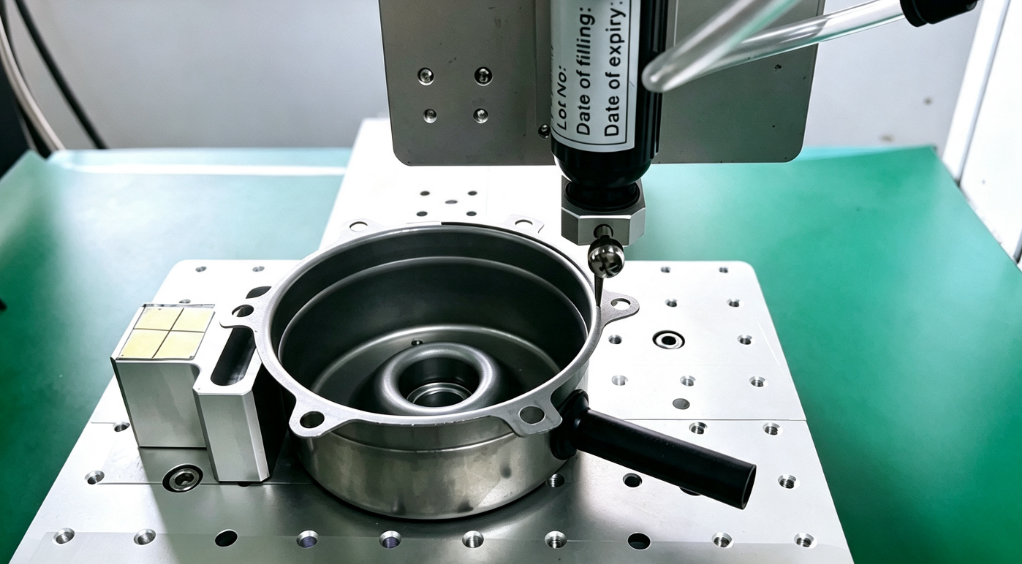
As electric vehicles (EVs) continue to evolve, reliable sealing of electric motor housings has become an important consideration in automotive manufacturing. The motor housing helps protect internal components from moisture, dust, contaminants, vibration, and temperature changes.
Automatic dispensing can improve EV motor housing sealing by controlling adhesive position, material volume, dispensing speed, and bead geometry. This reduces variation during adhesive application and helps manufacturers achieve more consistent sealing paths from one production cycle to another.
Why Is EV Motor Housing Sealing Important?
An EV motor housing may operate under changing temperatures, vibration, moisture, and other environmental conditions. The sealing system therefore needs to maintain its intended performance throughout the required operating environment.
A reliable sealing process depends on several factors, including:
·Adhesive or sealant selection
·Housing material and surface condition
·Adhesive bead width, height, and continuity
·Dispensing accuracy and repeatability
·Assembly conditions
·Curing process
·Inspection and leak testing
This means that improving motor housing sealing is not simply a matter of applying more adhesive. The objective is to apply the right material, at the right location, in the right amount, with consistent bead geometry.
What Causes Inconsistent Motor Housing Sealing?
Before selecting an automatic dispensing machine, manufacturers should understand the potential causes of sealing variation.
Common issues include:
·Inconsistent adhesive volume
·Uneven bead width or height
·Incorrect dispensing path
·Variation in material pressure or flow
·Inadequate surface preparation
·Incorrect adhesive mixing ratio for two-component materials
·Excessive or insufficient adhesive application
Some of these factors are related to the adhesive or assembly process, while others can be controlled more effectively through dispensing automation.Automatic dispensing does not eliminate every sealing problem, but it can reduce variation in the adhesive application process.
How Does Automatic Dispensing Improve EV Motor Housing Sealing?
More Accurate Dispensing Position
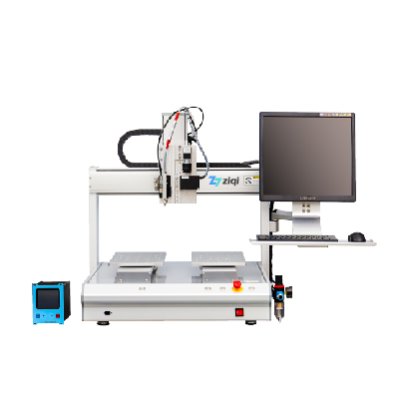
An automatic dispensing machine follows a programmed path to apply adhesive or sealant along the designated sealing area.
Compared with manual application, automated motion control can reduce variation in dispensing position and help maintain a more consistent sealing path.
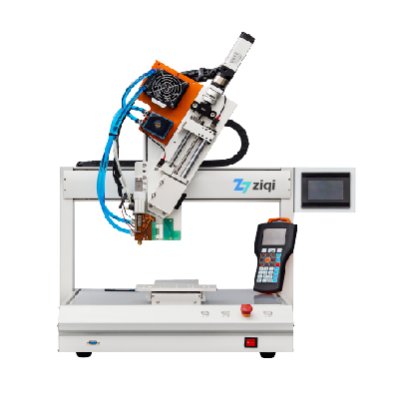
For housings with positioning variation or complex geometries, a vision positioning system can identify the workpiece position before dispensing and adjust the dispensing path accordingly.
More Consistent Adhesive Volume
The amount of adhesive applied to a sealing interface directly affects the process.Insufficient material may result in incomplete coverage, while excessive material can increase material consumption and may interfere with assembly.
Automatic dispensing systems can control factors such as:
·Dispensing speed
·Material pressure
·Pump operation
·Valve opening
·Dispensing height
·Motion speed
These parameters can be adjusted according to the adhesive properties and required process conditions to improve dispensing consistency.
Better Adhesive Bead Geometry
For liquid sealing applications, bead geometry is an important process variable.
A suitable dispensing system can coordinate material flow, nozzle selection, dispensing speed, and motion parameters to produce a more consistent adhesive bead.
Controlled Dispensing of One- and Two-Component Materials
EV motor housing applications may use different types of adhesives and sealants, depending on the housing material, sealing requirements, curing conditions, and production process.
For one-component materials, the dispensing system can be configured for controlled material delivery.
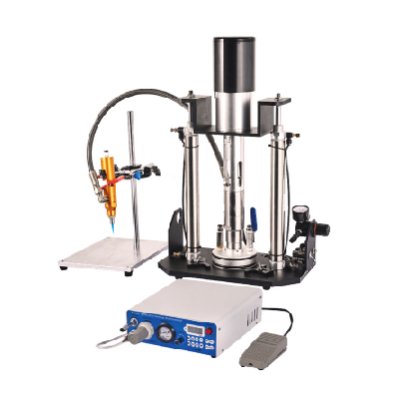
For two-component adhesives, the system may include metering and mixing equipment designed for the specified material ratio and working time.
Repeatable Dispensing Along Complex Sealing Pathss
Motor housings may contain flat, curved, stepped, or three-dimensional sealing paths.
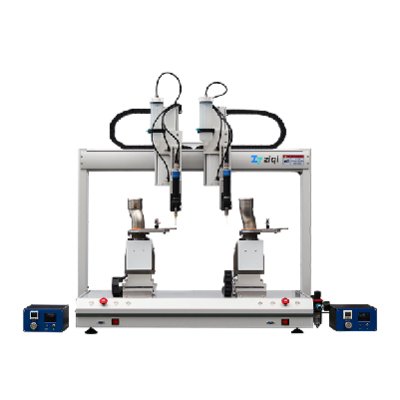
Automatic motion control allows the dispensing system to repeatedly follow a programmed path. Depending on the application, multi-axis motion can help maintain the required nozzle position around complex geometries.
Integration with Vision Inspection
For production environments that require higher process control, automatic dispensing machines can be integrated with machine vision.
What Should You Consider When Choosing an EV Motor Housing Dispensing Machine?
There is no single dispensing machine suitable for every EV motor housing application. Equipment should be selected according to the adhesive, housing design, production requirements, and quality-control strategy.
Adhesive type
Is the material silicone, polyurethane, epoxy, or another adhesive/sealant? Is it a one-component or two-component material?
Adhesive properties
Viscosity, mixing ratio, curing method, working time, and material sensitivity can affect the dispensing system configuration.
Required bead dimensions
The required bead width, height, and adhesive volume determine the appropriate dispensing valve, nozzle, pump, and motion parameters.
Housing geometry
The sealing path may be flat, curved, stepped, or three-dimensional. More complex geometries may require multi-axis dispensing or vision positioning.
Production requirements
Cycle time, production volume, loading method, and the required level of automation should be considered when designing the equipment.
Quality inspection
Manufacturers should determine whether the process requires vision positioning, adhesive bead inspection, process monitoring, traceability, or final leak testing.
How Can ZiQi Support EV Motor Housing Dispensing?
For EV motor housing applications, ZiQi can configure an automatic dispensing solution according to the adhesive characteristics, housing geometry, dispensing path, bead requirements, production cycle time, and inspection requirements.
Depending on the application, a dispensing system may incorporate:
·Precision adhesive dispensing
·Programmable multi-axis motion
·Vision positioning
·Two-component metering and mixing
·Customized fixtures
·Vision inspection
·Production-line integration
The goal is not simply to automate adhesive application, but to establish a stable, repeatable, and controllable dispensing process that fits the manufacturer's production and quality requirements.
Conclusion
Automatic dispensing can play an important role in improving the consistency of EV motor housing sealing.
By controlling dispensing position, material volume, speed, pressure, and bead geometry, automated dispensing systems can reduce variation and improve the repeatability of adhesive application.
Frequently Asked Questions
What is the main benefit of automatic dispensing for EV motor housing sealing?
The main benefit is improved control and repeatability of adhesive application. Automatic dispensing can help control dispensing position, material volume, speed, and bead geometry, reducing variation between production cycles.
Can automatic dispensing machines handle two-component adhesives?
Yes. With suitable metering and mixing equipment, automatic dispensing systems can be configured for many two-component adhesives and sealants. The equipment must be matched to the material's mixing ratio, viscosity, working time, and curing requirements.
Can vision systems be integrated into EV motor housing dispensing machines?
Yes. Vision systems can be used for workpiece positioning and dispensing-path alignment. Depending on the system configuration, vision inspection can also be used to evaluate adhesive position, bead continuity, or other defined visual characteristics.
How do I choose an automatic dispensing machine for EV motor housing sealing?
Start with the adhesive specifications, required bead dimensions, housing geometry, production cycle time, automation requirements, and inspection strategy. The dispensing valve, pump, motion system, fixture, and vision system should then be selected based on the validated process requirements.