
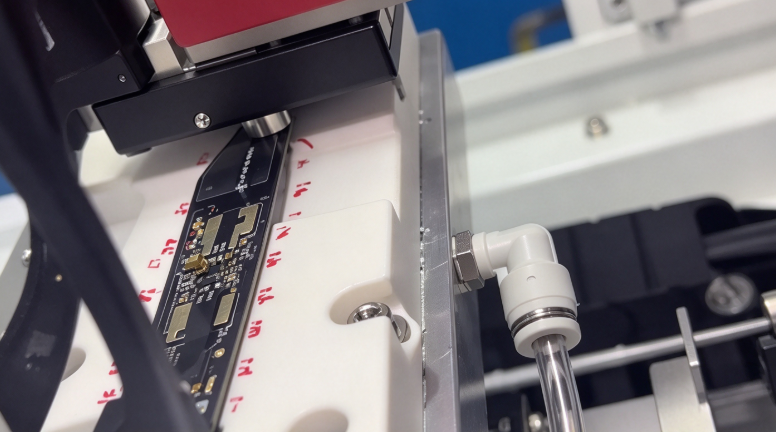
As smart glasses and wearable electronics become increasingly sophisticated, manufacturers face higher requirements for precision bonding, adhesive sealing, and component fixation. Compact structures, curved frames, narrow bonding areas, and integrated electronic components make adhesive dispensing more challenging.
In smart glasses manufacturing, adhesive may need to be applied to frame structures, lens assemblies, camera modules, sensors, and internal components. Inconsistent dispensing can cause adhesive overflow, poor bonding, or contamination of sensitive components.
An automated dispensing machine helps improve process consistency through controlled adhesive output, accurate positioning, and automated motion control. For applications involving complex three-dimensional surfaces and multiple dispensing angles, a five-axis vision-guided dispensing machine can offer greater flexibility than a conventional three-axis system.
Three-Axis vs. Five-Axis Dispensing Machines
A three-axis dispensing machine uses X, Y, and Z linear movements to control the dispensing position and height. It is suitable for flat surfaces, fixed-angle dispensing paths, and certain curved applications using dedicated fixtures.
However, when dispensing along complex three-dimensional surfaces or angled bonding areas, a fixed nozzle orientation may become a limitation.
A five-axis dispensing machine combines three linear axes with two rotational axes, allowing greater flexibility in adjusting the relative orientation between the dispensing nozzle and the workpiece.
Depending on the machine configuration, the rotational movements can be integrated into the dispensing head, workpiece fixture, or both.
Five-axis dispensing is particularly useful for:
·Complex curved dispensing paths.
·Multi-angle adhesive application.
·Irregular three-dimensional surfaces.
·Narrow or difficult-to-access bonding areas.
The main advantage of five-axis motion is greater positioning and trajectory flexibility, not automatically higher dispensing accuracy. For simpler applications, a three-axis machine may already meet production requirements.
How Does a Five-Axis Vision-Guided Dispensing Machine Work?
A five-axis vision-guided dispensing machine combines multi-axis motion control, CCD vision positioning, and precision adhesive dispensing.
Five-Axis Motion Control
By coordinating XYZ linear movement with two rotational axes, the machine can adjust the nozzle or workpiece orientation during dispensing. This helps process curved frame surfaces, angled bonding areas, and complex three-dimensional structures.
CCD Vision Positioning
The CCD camera captures images of the workpiece and identifies predefined reference features. The vision system calculates positional deviations and sends compensation coordinates to the machine controller.
The machine then adjusts the dispensing coordinates according to the vision results, helping compensate for workpiece loading variations and positioning deviations.
Actual positioning performance depends on camera resolution, lighting, calibration, image recognition, fixture repeatability, and machine accuracy. Applications requiring height or depth measurement may need additional 3D vision capabilities.
Synchronized Dispensing Control
Consistent adhesive application requires coordination between dispensing output and movement speed. Adjusting adhesive output according to motion speed helps maintain a more consistent adhesive volume per unit length.
The dispensing valve and adhesive supply system must also match the material viscosity, required dispensing volume, and production conditions.
Common Adhesive Dispensing Applications in Smart Glasses
Automated dispensing technology can support various bonding and sealing processes in smart glasses manufacturing.
Frame Bonding: Applying adhesive along designated frame bonding areas, including curved edges and structural joints.
Lens Bonding: Dispensing adhesive in specified lens assembly areas while controlling application position and preventing contamination of optical regions.
Camera and Sensor Fixation: Applying adhesive to designated positions for camera modules, sensors, and other electronic components.
Battery and Internal Component Fixation: Dispensing adhesive for battery assemblies, internal brackets, and electronic modules according to product design.
Sealing Applications: Applying adhesive along selected enclosure interfaces to help protect internal components against moisture and dust.
Different applications require different adhesive materials, dispensing valves, positioning methods, and curing conditions.
Optical bonding applications may also require special consideration of transparency, bubbles, and curing characteristics.
How to Choose the Right Automated Dispensing Machine?
When selecting a dispensing machine for smart glasses assembly, manufacturers should consider the following factors:
Dispensing Precision: Evaluate adhesive volume consistency, bead width, dispensing position, Z-axis height control, and repeatability.
Vision System Performance: Consider camera resolution, lighting, image recognition stability, calibration, and positioning compensation capabilities.
Motion Control: Determine whether the machine can coordinate linear and rotational movements to follow the required dispensing trajectory.
Dispensing Valve and Adhesive Supply: Select suitable pneumatic valves, screw-type valves, jet valves, or servo-controlled systems according to adhesive viscosity, dispensing volume, and production speed.
Production Integration: Consider automatic loading and unloading, customized fixtures, product recipe management, MES communication, and integration with curing or inspection processes when required.
The choice between three-axis and five-axis equipment should be based on the actual workpiece geometry and dispensing path. A three-axis machine may be sufficient for simpler applications, while a five-axis solution is more suitable when coordinated multi-angle movement is necessary.
Actual workpiece testing is recommended before equipment selection to verify dispensing quality, cycle time, and process repeatability.
What Adhesives Are Used in Smart Glasses Assembly?
Depending on the bonding application, smart glasses manufacturing may involve several adhesive types:
UV-Curable Adhesives: Suitable for selected applications where sufficient UV exposure is available for curing.
Silicone Adhesives: Used in applications requiring flexibility and sealing performance.
Epoxy Adhesives: Considered for structural bonding and component fixation.
Acrylic and Polyurethane Adhesives: Used in selected bonding applications depending on material compatibility and performance requirements.
Adhesive selection depends on substrate materials, bonding strength, viscosity, curing conditions, and environmental requirements. The dispensing equipment must be configured to match the selected adhesive and application process.
Customized Automated Dispensing Solutions from Shenzhen ZiQi Technology
Shenzhen ZiQi Technology Co., Ltd. specializes in automated dispensing equipment and customized dispensing solutions for industrial manufacturing.
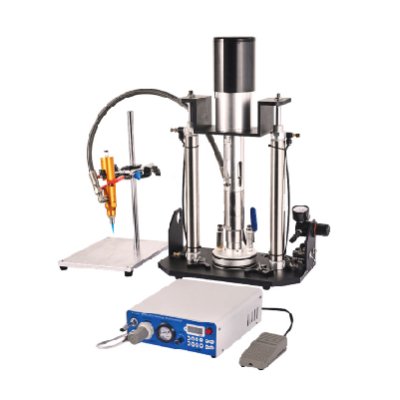
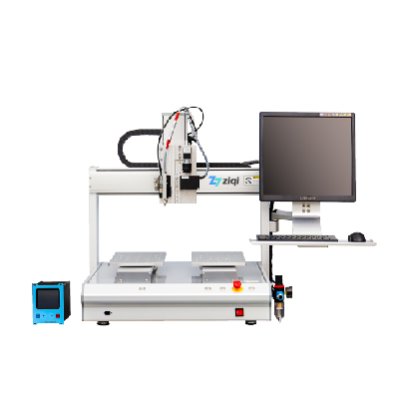
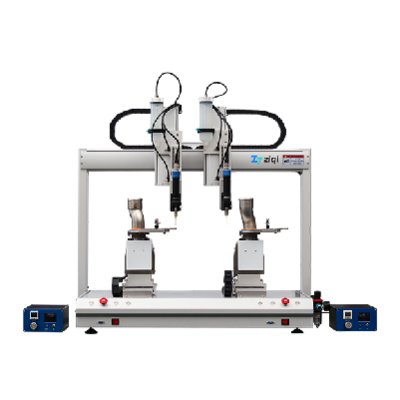
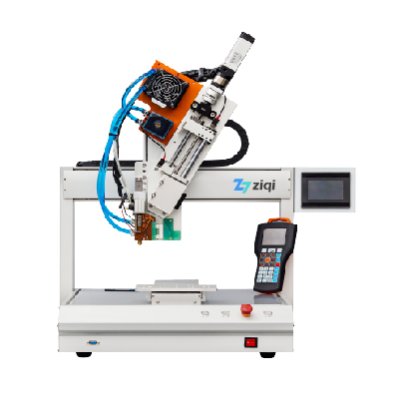
Its product portfolio includes automatic dispensing machines, vision-guided dispensing systems, and multi-axis dispensing equipment.
Depending on application requirements, equipment configurations can integrate:
·CCD vision positioning and automatic coordinate compensation.
·Multi-axis coordinated motion control.
·Precision adhesive dispensing valves.
·Customized fixtures and rotary mechanisms.
·Adhesive supply and metering systems.
·Integration with curing and other production processes.
For smart glasses and wearable electronics manufacturers, ZiQi can evaluate workpiece structures, adhesive characteristics, dispensing paths, and production requirements to recommend a suitable equipment configuration.
Conclusion
Choosing the right automated dispensing machine for smart glasses assembly requires evaluating product geometry, adhesive properties, dispensing paths, and production requirements.
Three-axis machines can handle many conventional applications, while five-axis vision-guided dispensing systems offer greater flexibility for complex three-dimensional surfaces and multi-angle adhesive application.
By combining suitable motion control, CCD vision positioning, and stable adhesive dispensing, manufacturers can improve process consistency and support more demanding assembly requirements.
Looking for a customized dispensing machine for smart glasses or wearable electronics? Contact Shenzhen ZiQi Technology to discuss your application and explore a suitable dispensing solution.
Frequently Asked Questions
Why Is a Five-Axis Dispensing Machine Suitable for Smart Glasses Assembly?
A five-axis dispensing machine offers additional rotational movement, allowing the dispensing valve or workpiece to follow more complex angles and curved surfaces. It is suitable for applications that require precise adhesive application along irregular paths.
Can a Vision-Guided Dispensing Machine Compensate for Workpiece Position Deviations?
Yes. A CCD vision system can identify predefined reference features and adjust the dispensing position according to detected coordinate deviations. This helps improve positioning consistency when workpiece placement varies.
Can the Dispensing Machine Be Customized for Different Smart Glasses Products?
Yes. The dispensing system can be customized according to product structure, adhesive characteristics, dispensing paths, production requirements, and automation needs.