
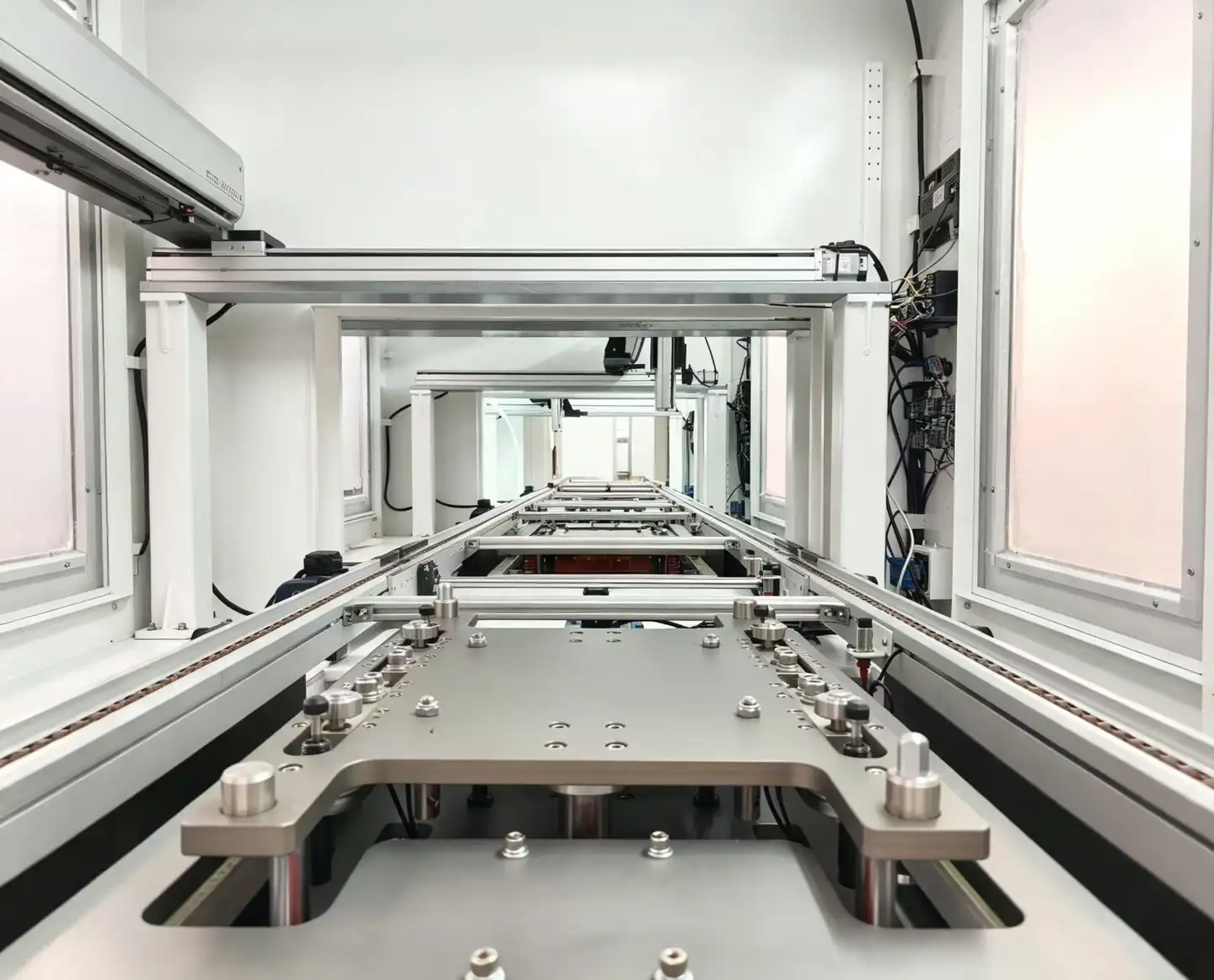
Battery PACK sealing is a critical process in battery manufacturing. Consistent adhesive application helps protect enclosure interfaces against moisture and dust when required by the sealing design. For manufacturers targeting an IP67 protection rating, accurate dispensing, stable process control, and appropriate enclosure testing are essential.
Vision-guided automated dispensing helps manufacturers address common sealing challenges by compensating for workpiece positioning deviations and applying adhesive along programmed paths. When combined with suitable inspection functions and manufacturing data integration, it can also support quality monitoring and production traceability.
This article explains how vision-guided dispensing improves battery PACK sealing, how automated dispensing can support Cell Contacting System (CCS) manufacturing, and what manufacturers should consider when selecting a suitable dispensing solution.
What Are the Main Challenges in Battery PACK Sealing?
Battery PACK sealing typically requires adhesive to be applied along designated paths on the enclosure or its mating surfaces. Variations in workpiece positioning, dispensing volume, or adhesive bead geometry can affect process consistency and increase the risk of rework.
Manufacturers commonly face three challenges.
Inconsistent Adhesive Bead Application
Manual dispensing and conventional positioning methods can make it difficult to maintain consistent adhesive bead position, width, and continuity, particularly along complex sealing paths.
Variations in fixture positioning, material viscosity, dispensing pressure, and motion parameters may also affect the final bead geometry. These variations can create potential sealing defects if they exceed the process requirements.
Limited Process Monitoring and Traceability
Without appropriate monitoring and data collection, manufacturers may find it difficult to identify dispensing interruptions, investigate process abnormalities, or determine which production parameters were associated with a defective workpiece.
Effective process monitoring and data recording can help improve production visibility and support quality analysis.
Frequent Product Changeovers
Different battery PACK designs may require different dispensing paths, fixtures, and process parameters. Frequent changeovers can increase setup time and complicate production management, particularly when multiple product models share the same production line.
Programmable dispensing paths, vision-based positioning, and suitable recipe management can help manufacturers handle product variations more efficiently.
How Does Vision-Guided Dispensing Improve Battery PACK Sealing Quality?
A vision-guided dispensing system combines machine vision, motion control, and automated adhesive dispensing. Depending on the configuration, additional inspection and monitoring functions can be incorporated to support quality control.
Vision-Based Positioning and Path Compensation
Before dispensing, a CCD vision system identifies predefined reference marks or geometric features on the battery PACK enclosure. The system uses the detected position to calculate the required coordinate compensation within its configured operating range.
The dispensing system can then adjust the programmed path to better match the actual workpiece position.
This is particularly useful when workpiece placement varies between fixtures or production cycles. By reducing the effect of positioning deviations, vision-guided dispensing can help maintain the intended adhesive path.
Actual positioning and dispensing accuracy depend on the camera system, calibration, mechanical repeatability, fixture stability, workpiece characteristics, and process conditions.
More Consistent Adhesive Application
Automated dispensing follows programmed paths and controls dispensing operations according to configured process parameters. The dispensing valve, material supply system, motion platform, and control settings must be selected to match the adhesive properties and required bead geometry.
For battery PACK sealing, important process characteristics may include:
·Adhesive bead position and continuity along the designated sealing path.
·Consistent dispensing volume and bead dimensions.
·Stable material supply and dispensing performance.
·Compatibility between the adhesive, enclosure materials, and curing process.
Vision positioning helps align the dispensing path, while appropriate valve selection and process optimization help maintain adhesive application consistency. These functions work together but address different aspects of the process.
Adhesive Bead Inspection and Process Monitoring
Vision positioning alone does not automatically provide complete adhesive bead inspection. If the application requires inspection of bead position, width, continuity, or other characteristics, suitable inspection hardware and software must be included.
Depending on the system configuration, process monitoring may also identify dispensing interruptions or abnormal operating parameters.
These functions can help operators detect potential defects earlier and reduce the risk of defective workpieces progressing to subsequent production stages.
Inspection capability should be verified against the actual quality criteria. For example, detecting a missing section of adhesive is different from measuring bead height or determining whether a completed enclosure meets its required sealing performance.
Production Data and Traceability
When supported by the equipment configuration and connected manufacturing systems, relevant process parameters, equipment status, and inspection results can be recorded for quality analysis.
MES integration can further support data exchange between dispensing equipment and the factory's manufacturing execution system. Depending on the integration scope, manufacturers may associate production records with work orders, product identifiers, process parameters, or inspection results.
These capabilities can improve production visibility and support root-cause analysis. However, the available data fields, recording methods, and traceability scope should be defined during project planning.
Important: Automated dispensing and inspection can support process consistency, but they do not independently guarantee that a completed battery PACK meets IP67 requirements. Final protection performance depends on the complete enclosure design, sealing materials, assembly process, curing conditions, and appropriate testing.
How Can Automated Dispensing Support Battery CCS Manufacturing?
In battery manufacturing, CCS commonly refers to the Cell Contacting System or a related cell-connection assembly.
Depending on the battery design, it may incorporate electrical connection components, busbars, sensing elements, and supporting structures.
Some CCS manufacturing processes require adhesive application for component fixation, insulation-related functions, or other application-specific purposes. The actual dispensing requirements depend on the product structure and manufacturing process.
Automated dispensing can support CCS production in several ways.
Repeatable Adhesive Application
Programmable dispensing paths and suitable positioning systems help apply adhesive to designated locations. The dispensing method and valve configuration should be selected according to the material properties, component geometry, and required dispensing volume.
Flexible Production for Different CCS Designs
Different CCS models may require different dispensing programs, fixtures, and process parameters. Recipe management, adaptable tooling, and vision-based positioning can help manufacturers manage product variations and simplify changeovers.
Integration with Automated Production Lines
Where required, dispensing equipment can be integrated with automated loading and unloading, material handling systems, and MES platforms. Appropriate integration can support coordinated production workflows and improve process data visibility.
Process Monitoring and Quality Analysis
When suitable monitoring and data collection functions are available, manufacturers can record relevant dispensing parameters and production results. These records can support process evaluation, defect investigation, and continuous improvement.
The appropriate solution for CCS manufacturing should be determined by the component design, adhesive requirements, cycle-time target, inspection criteria, and production-line configuration. Application testing is recommended before confirming equipment performance or expected productivity improvements.
What Should Manufacturers Consider When Selecting a Battery PACK Dispensing Solution?
Selecting a vision-guided dispensing machine requires more than comparing nominal positioning accuracy. Manufacturers should evaluate the complete dispensing process, material requirements, quality criteria, and production environment.
Positioning Accuracy and Dispensing Repeatability
Determine whether the vision system can reliably identify the required reference features and compensate for workpiece positioning deviations.
It is important to distinguish between vision positioning accuracy, mechanical repeatability, and the final accuracy of the adhesive bead. These are related but different performance characteristics.
Application trials using representative workpieces can help verify whether the proposed system meets the actual process requirements.
Adhesive Compatibility and Dispensing Stability
Adhesive viscosity, material characteristics, curing behavior, required bead dimensions, and supply conditions all influence dispensing performance.
The dispensing valve, pressure or pumping system, motion platform, and process parameters should be selected according to the specific adhesive and application. For two-component materials, the mixing and material delivery requirements must also be considered where applicable.
Inspection Requirements and Quality Criteria
Manufacturers should identify which characteristics need to be inspected, such as bead position, width, continuity, or height.
They should also confirm whether the proposed equipment includes the required inspection functions or needs additional cameras, sensors, lighting, or inspection software.
Where sealing performance is critical, dispensing inspection should be considered alongside the appropriate finished-product testing procedures.
MES Integration and Production Traceability
For factories requiring digital production management, MES integration can help connect dispensing equipment with broader manufacturing workflows.
Before implementation, manufacturers should confirm the required communication interfaces, data fields, product identification methods, inspection records, and traceability scope.
The integration design should reflect the factory's existing systems and quality management requirements rather than assuming that every machine provides identical data functions.
Changeover Efficiency and Production Flexibility
For manufacturers producing multiple battery PACK or CCS models, evaluate the time needed to change fixtures, select dispensing programs, adjust process parameters, and validate a new product.
Vision-based positioning, configurable recipes, and adaptable tooling can help accommodate workpiece variations. Actual changeover improvements should be verified through application testing.
Technical Support and Long-Term Service
Equipment selection should also consider installation, process commissioning, operator training, spare parts, and after-sales support.
A suitable dispensing solution should meet current production requirements while allowing for reasonable future changes in product design and manufacturing processes.
Conclusion: Building a More Reliable Battery PACK Sealing Process
Vision-guided automated dispensing can help battery manufacturers improve adhesive placement, compensate for workpiece positioning deviations, and maintain more consistent dispensing processes. When configured with appropriate inspection, process monitoring, and MES integration functions, it can also support quality management and production traceability.
For battery PACK sealing, the most suitable solution depends on the enclosure design, adhesive properties, required bead geometry, positioning tolerances, inspection criteria, and production-line environment. CCS manufacturing may require a different dispensing configuration according to its component structure and assembly requirements.
Shenzhen ZiQi Technology Co., Ltd. provides automated dispensing equipment for industrial manufacturing applications. By evaluating the actual workpiece, adhesive, and process requirements, manufacturers can identify a suitable dispensing configuration for their production needs.
To evaluate a battery PACK sealing or CCS dispensing application, manufacturers can prepare representative workpieces, adhesive specifications, target dispensing paths, and quality requirements for a technical assessment. This helps establish the appropriate equipment configuration and verify process feasibility before implementation.