
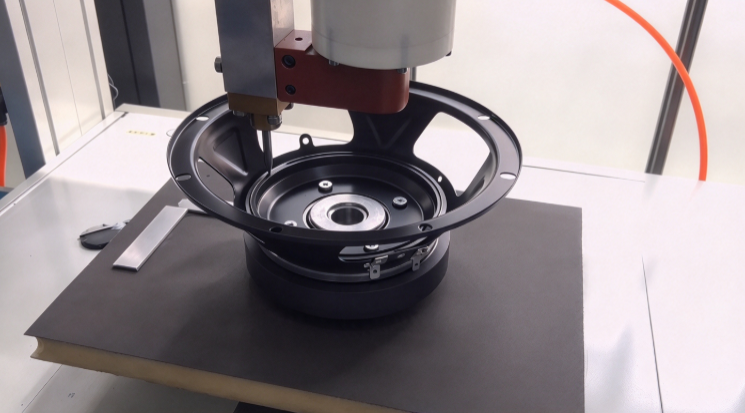
Automotive speaker assembly involves multiple components and bonding interfaces that may require controlled adhesive application. Depending on the speaker architecture and manufacturing process, adhesive may be dispensed at bonding interfaces involving the spider, voice coil, cone, surround, dust cap, basket, and other speaker components.
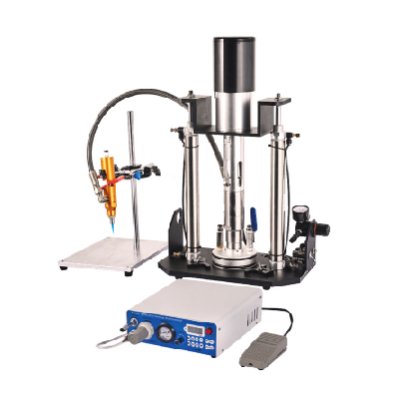
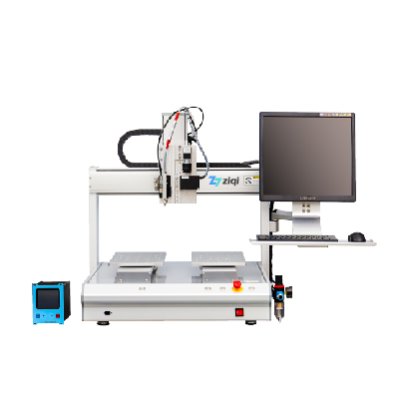
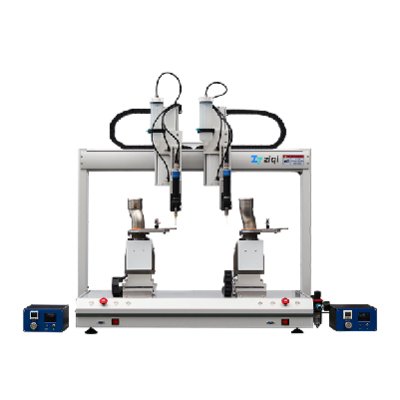
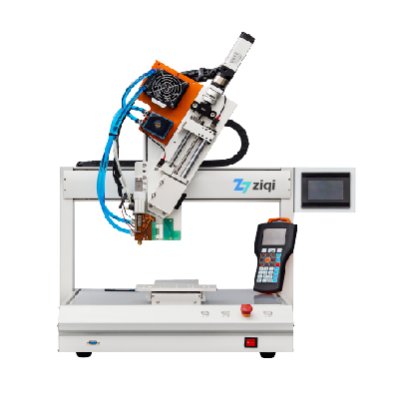
An automotive speaker dispensing machine is an automated adhesive dispensing system designed to apply controlled amounts of material along defined bonding paths during speaker assembly. Depending on the product geometry and production requirements, the system may integrate XYZ motion, rotary dispensing, machine vision, multi-axis motion control, and application-specific material delivery.
The objective is not simply to apply adhesive, but to control where the adhesive is placed, how much material is applied, and how consistently the process can be repeated.
Where Is Adhesive Dispensed in Automotive Speaker Assembly?
The actual adhesive locations depend on the speaker design, materials, joint structure, and assembly process. Common bonding interfaces can include:
·Spider-to-basket bonding
·Spider-to-voice-coil or voice-coil-former bonding
·Voice-coil-to-cone bonding
·Cone-to-surround bonding
·Surround-to-basket bonding
·Dust-cap-to-cone or related moving-component interfaces
·Other application-specific structural bonding joints
These interfaces can require different adhesive patterns, bead sizes, dispensing volumes, and curing conditions. Automated speaker assembly processes have also been developed around controlled adhesive application at these interfaces, particularly where adhesive mass, position, and concentricity are important to the assembly process.
Why Is Automotive Speaker Adhesive Dispensing Difficult?
Automotive speakers often contain circular, annular, curved, or closely positioned bonding interfaces. At the same time, the adhesive process must be compatible with the mechanical and material characteristics of the speaker assembly.
Accurate Adhesive Placement
The dispensing path needs to match the intended bonding interface. Narrow or circular paths can require controlled motion and accurate positioning, particularly when the adhesive must remain within a defined joint area.
For automated production, the dispensing path should be programmed according to the actual product geometry and assembly process.
Consistent Adhesive Volume
Adhesive quantity depends on the joint design, material properties, bead requirements, and assembly process.
Too much adhesive may cause unnecessary material consumption, squeeze-out, or added mass. For moving components, excessive adhesive mass can also be undesirable. Too little adhesive may result in incomplete bonding or insufficient coverage.
Automated dispensing allows material delivery parameters to be programmed and repeated from cycle to cycle.
Repeatable Dispensing Paths
Manual adhesive application can make it difficult to reproduce the same path, bead size, and dispensing speed consistently across high-volume production.
Programmable motion control allows engineers to define the dispensing path, movement speed, dispensing timing, and other process parameters for repeatable production.
Different Speaker Designs
Different speaker models may have different diameters, bonding interfaces, materials, adhesive requirements, and cycle times.
Therefore, an automotive speaker dispensing machine should be selected according to the actual application rather than using the same machine configuration for every speaker.
How Do Automate Adhesive Dispensing for Speaker Assembly?
An automated speaker dispensing solution normally combines four key elements:
Motion control + material delivery + workpiece positioning + process parameters
The exact configuration depends on the speaker structure and production requirements.
XYZ Dispensing for Fixed Bonding Paths
For products with stable positioning and relatively accessible bonding paths, an XYZ dispensing system can follow a programmed path around the speaker or along defined bonding areas.
This configuration can be suitable when the workpiece position is repeatable and the required motion is primarily along the X, Y, and Z axes.
Rotary Dispensing for Circular or Annular Paths
Many speaker bonding interfaces have circular or annular geometries. A rotary dispensing mechanism can coordinate workpiece rotation with adhesive dispensing to create a continuous bead around the required bonding area.
However, a circular speaker does not automatically require a rotary dispensing machine.
The appropriate motion architecture depends on the actual bonding path, workpiece positioning method, accessibility of the joint, cycle time, and production workflow.
Vision-Guided Adhesive Dispensing
Machine vision can be integrated when the speaker position or orientation varies between production cycles.
A vision-guided dispensing system can identify reference features, determine the workpiece position, and compensate for certain positioning deviations before dispensing.
Vision is not always necessary. For stable, fixed-position applications, a programmed dispensing system with suitable workholding may provide a simpler solution.
Multi-Axis Dispensing for Complex Geometries
When the adhesive path involves angled, curved, or spatial surfaces that cannot be accessed effectively with basic XYZ movement, additional rotary axes or multi-axis motion can be considered.
The required number of axes should be determined from the actual dispensing path rather than simply from the overall shape of the speaker.
How Should You Select an Automotive Speaker Dispensing Machine?
·The machine configuration should start with the adhesive process rather than the machine model.
·For a fixed-position bonding path, a conventional XYZ dispensing machine may be sufficient.
·For a circular or annular bonding path, rotary dispensing can be considered when coordinated rotation improves the dispensing process.
·For variable workpiece positioning, machine vision can provide automatic position detection and path compensation where required.
·For complex three-dimensional or angled paths, multi-axis motion may provide additional dispensing flexibility.
·For high-volume production, the dispensing system should also be evaluated according to cycle time, material delivery stability, loading method, workholding, and inline production requirements.
The dispensing valve and material delivery system should be selected according to the adhesive rather than the product name alone. Important parameters include:
·Adhesive chemistry
·Viscosity
·Temperature
·Required dispensing volume
·Target bead size
·Dispensing speed
·Material stability
·Curing requirements
·Required cycle time
Depending on the adhesive, the system may use a dispensing valve, syringe, pressure-fed material supply, screw pump, or another suitable delivery method.
For two-component adhesives, the equipment may additionally require controlled metering and mixing according to the specified material ratio.
ZiQi Automotive Speaker Dispensing Solutions
ZiQi Technology develops customized automatic dispensing and industrial automation solutions based on the product, adhesive, and production process.
For automotive speaker applications, ZiQi engineers can evaluate:
·Speaker drawings or product samples
·Bonding interface and dispensing path
·Adhesive type and viscosity
·Target bead size and adhesive volume
·Workpiece positioning and orientation
·Required cycle time
·Production volume
·Vision requirements
·Inline or standalone production
Based on these requirements, the dispensing system can be configured with suitable dispensing valves, material delivery systems, programmable motion control, rotary mechanisms, machine vision, or customized automation.
The engineering objective is to match the dispensing technology, motion configuration, and material delivery system to the actual speaker assembly process rather than applying one standard machine configuration to every product.
For equipment evaluation, manufacturers can provide speaker drawings or samples together with adhesive information, dispensing path requirements, target bead size, cycle time, and production volume. These details allow engineers to determine a suitable dispensing configuration and evaluate the required automation level.
Typical Automotive Speaker Adhesive Dispensing Applications
Depending on the speaker architecture and assembly process, automated adhesive dispensing may be used for bonding interfaces such as:
Spider-to-basket:
Adhesive can be applied around the spider landing area where the spider is connected to the basket.
Spider-to-voice-coil:
Controlled adhesive application can be used at the interface between the spider and voice-coil former or related moving assembly.
Voice-coil-to-cone:
A controlled adhesive bead can be applied around the connection between the voice coil and cone.
Cone-to-surround:
Adhesive may be dispensed along the joint between the cone and surround.
Surround-to-basket:
A controlled bead can be applied around the outer suspension interface where the surround connects to the basket.
Dust-cap bonding:
Depending on the speaker design, adhesive can be dispensed for dust-cap attachment to the cone or related moving components.
The actual dispensing locations, adhesive pattern, and process parameters should always be determined from the specific speaker design, adhesive specification, joint requirements, and manufacturer's assembly process.
Frequently Asked Questions
What is an automotive speaker dispensing machine?
An automotive speaker dispensing machine is an automated system that applies controlled amounts of adhesive to defined bonding interfaces during automotive speaker assembly. Depending on the application, it can combine programmable motion, dispensing valves, material delivery systems, rotary motion, machine vision, or multi-axis control.
Why use automatic adhesive dispensing for automotive speakers?
Automatic dispensing can provide programmable adhesive paths, controlled material delivery, and repeatable process parameters compared with manual application. It can also support different dispensing recipes for multiple speaker models.
Can a dispensing machine apply adhesive to circular speaker components?
Yes. Circular or annular bonding paths can be handled with suitable programmed motion or rotary dispensing configurations. Whether rotary motion is required depends on the actual bonding path, workpiece handling method, accessibility, and production requirements.
Is machine vision required for automotive speaker dispensing?
Not always. Vision is useful when workpiece position or orientation varies, or when automatic position detection and path compensation are required. For stable, fixed-position applications, a programmed dispensing system may be sufficient.
How should I choose a dispensing valve?
Valve selection depends on adhesive properties and dispensing requirements, including viscosity, dispensing volume, bead size, dispensing speed, material characteristics, and process conditions. The valve should be evaluated together with the material delivery system and the complete dispensing process.
What information is needed to select a speaker dispensing machine?
The main information includes speaker dimensions, product drawings or samples, adhesive type and viscosity, dispensing path, target bead size, required adhesive volume, cycle time, production volume, workpiece positioning, and required automation level.
Can ZiQi customize a dispensing machine for automotive speakers?
Yes. ZiQi can develop customized dispensing solutions based on speaker geometry, adhesive characteristics, dispensing requirements, production capacity, and automation needs.
Conclusion
Automotive speaker adhesive dispensing requires more than simply applying glue. The dispensing system needs to match the speaker geometry, bonding interface, adhesive characteristics, dispensing path, positioning requirements, and production process.
For circular or annular bonding paths, rotary motion may be considered. For variable workpiece positioning, machine vision can provide additional process flexibility. For more complex paths, multi-axis motion may be appropriate. The dispensing valve and material delivery system should also be selected according to the adhesive and required dispensing performance.
ZiQi provides customized automatic dispensing solutions designed around these application requirements, helping manufacturers develop controlled and repeatable adhesive dispensing processes for automotive speaker assembly.