

Automotive camera modules are critical components in ADAS, intelligent driving, parking assistance, and other vehicle sensing systems. During assembly, components such as camera lenses, housings, optical windows, brackets, and other substrates may require adhesive bonding, sealing, or protective coating.
However, even small amounts of surface contamination can affect adhesive spreading and bonding consistency.
Can plasma treatment improve automotive camera module surface preparation?
Yes. Plasma surface treatment can help reduce certain surface contaminants and activate compatible materials before adhesive dispensing, bonding, sealing, or coating. By improving surface wettability and creating a more consistent bonding interface, plasma treatment can support more reliable automated camera module assembly.
For manufacturers, the key is not simply to select a plasma cleaning machine. The plasma process should be developed together with the camera module material, adhesive, treatment area, dispensing process, and production requirements.
Why Does Automotive Camera Module Surface Treatment Matter?
Automotive camera modules must maintain stable mechanical and optical performance throughout their service life. Adhesive bonding and sealing are therefore important processes in camera module assembly.
Depending on the design, adhesives may be used for applications such as:
·Lens or optical window bonding
·Camera housing sealing
·Component bonding
·Bracket or structural-part bonding
·Waterproofing and environmental sealing
·Protective or functional coating
Before adhesive application, the bonding surface may contain contaminants introduced during molding, machining, transportation, handling, or previous manufacturing steps.
Typical contaminants may include:
·Dust and fine particles
·Oil or grease residues
·Mold-release residues
·Organic contamination
·Handling residues
·Other microscopic surface impurities
These contaminants can interfere with adhesive-substrate contact and may lead to inconsistent wetting or adhesion.
Potential manufacturing problems include:
·Poor adhesive spreading
·Inconsistent bonding
·Reduced adhesion
·Bonding defects
·Delamination
·Localized adhesive failure
·Reduced long-term environmental reliability
For this reason, surface preparation is an important part of the automotive camera module bonding process.
How Does Plasma Treatment Improve Automotive Camera Module Surface Preparation?
Plasma treatment is generally used as a surface cleaning and surface activation process.
For automotive camera module applications, these two functions can work together.
Plasma Cleaning
Plasma can help remove or break down certain organic contaminants and residues from compatible surfaces.
Unlike mechanical wiping, plasma treatment is a non-contact process. This can be useful for components with delicate surfaces, narrow bonding areas, or geometries that are difficult to access with conventional mechanical cleaning.
However, plasma should not automatically be considered a replacement for every conventional cleaning process. The effectiveness depends on the contamination, material, plasma technology, and process conditions.
Plasma Surface Activation
Plasma can also modify the surface characteristics of compatible materials.
One important effect is an increase in surface energy, which can improve surface wettability.
Better wettability allows the adhesive to spread more effectively across the treated area, helping create closer and more uniform contact between the adhesive and substrate.
Therefore, plasma treatment is more accurately understood as:
Surface Cleaning + Surface Activation + Improved Wettability
rather than simply as a conventional cleaning process.
What Happens If the Camera Module Surface Is Not Properly Prepared?
Surface preparation problems may not always be visible during initial assembly.
A surface can appear visually clean while still having contamination or insufficient surface energy for the selected adhesive system.
When the bonding interface is not properly prepared, manufacturers may encounter:
Poor Adhesive Wetting
The adhesive may not spread evenly across the intended bonding area.
Inconsistent Adhesion
Different parts may exhibit different bonding performance even when the same adhesive is used.
Local Bonding Defects
Contamination or poor wettability can create localized areas where adhesive contact is insufficient.
Delamination
Long-term exposure to vibration, temperature changes, humidity, and other environmental conditions can place additional stress on a weak bonding interface.
For automotive camera modules, these risks make controlled surface preparation particularly important.
Plasma Treatment Before Adhesive Dispensing
For automated automotive camera module assembly, plasma treatment is commonly considered as an upstream surface-preparation step before adhesive dispensing and bonding.
A typical process can be:
Component Loading → Plasma Cleaning & Activation → Adhesive Dispensing → Component Assembly → Curing → Inspection
Component Loading
The camera module component or bonding substrate is positioned using a suitable fixture or automated handling system.
Plasma Cleaning and Activation
The selected bonding area is treated with an appropriate plasma process.
The treatment method and parameters should be developed according to the actual material, geometry, contamination, and bonding requirements.
Adhesive Dispensing
After surface treatment, the adhesive is dispensed onto the prepared bonding area.
Improved wettability can help the adhesive achieve more consistent spreading and contact.
Component Assembly
The lens, housing, optical component, or other camera-module component is positioned and assembled.
Curing
The adhesive is cured according to the adhesive supplier's specified process.
Inspection
The finished assembly can be inspected for adhesive position, coverage, assembly accuracy, and other quality requirements.
This process allows plasma treatment to become part of a controlled automated manufacturing workflow rather than an isolated cleaning operation.
What Are the Benefits of Plasma Treatment for Automotive Camera Modules?
Non-Contact Surface Treatment
Plasma treatment does not require physical contact with the workpiece.
This can reduce mechanical wiping-related risks and can be advantageous for delicate surfaces or difficult-to-reach bonding areas.
Improved Surface Wettability
Plasma activation can improve the wettability of compatible materials.
This can help adhesive materials spread more uniformly across the treated bonding area.
More Consistent Surface Preparation
Manual cleaning can be affected by operator technique, cleaning materials, and process variation.
An automated plasma system can provide more controlled treatment conditions and repeatability.
Support for Adhesion Reliability
Proper surface preparation can create a more favorable interface for adhesive bonding.
For automotive camera applications, this can contribute to more consistent bonding performance under environmental and mechanical stresses.
Suitable for Automated Production
Plasma treatment can be integrated with:
·Automatic loading and unloading
·Motion control
·PLC control
·Sensors
·Vision inspection
·Automatic dispensing
·Assembly systems
·Production-line communication
This makes plasma surface treatment suitable for automated camera module production environments.
Atmospheric Plasma vs. Vacuum Plasma for Automotive Camera Modules
One of the most important equipment decisions is whether to use atmospheric plasma or vacuum plasma.
There is no universal answer. The appropriate technology depends on the material, treatment area, component geometry, production volume, and line configuration.
When Is Atmospheric Plasma Suitable?
Atmospheric plasma can be considered when the manufacturer needs:
·Inline production
·Localized surface treatment
·Selective treatment of bonding areas
·Continuous processing
·Integration with dispensing or assembly equipment
For automated camera module production, atmospheric plasma can be particularly attractive when only a specific bonding or sealing area needs to be treated.
When Is Vacuum Plasma Suitable?
Vacuum plasma can be considered when:
·Multiple components need chamber-based treatment
·A controlled chamber process is preferred
·Larger exposed surface areas need to be treated simultaneously
·Batch processing is acceptable
The final selection should be based on actual process testing rather than assuming that one plasma technology is universally better than the other.
How to Select a Plasma Treatment Machine for Automotive Camera Modules?
Choosing a plasma machine requires more than evaluating cleaning capability.
Camera Module Materials
Identify the actual material of the surface being treated.
The evaluation may need to include:
·Optical glass
·Polymer components
·Camera housings
·Coated surfaces
·Metal components
·Adhesive substrates
Different materials can respond differently to plasma treatment.
Surface Coating
If the camera component contains an optical or functional coating, plasma compatibility should be evaluated before production.
The objective is not simply to maximize plasma treatment intensity. The process must achieve the required surface preparation without adversely affecting the component or coating.
Treatment Area and Geometry
The shape and size of the bonding area affect plasma exposure.
Narrow grooves, curved surfaces, recessed areas, and localized bonding zones may require a suitable plasma source, nozzle configuration, and motion path.
Adhesive Type
Plasma treatment should be evaluated together with the adhesive system.
Important considerations include:
·Adhesive type
·Wettability
·Adhesive spreading
·Bonding strength
·Curing process
·Long-term aging performance
Cycle Time
For mass production, the plasma treatment process must meet the required production takt.
Treatment speed, motion path, plasma exposure, and equipment cycle time should therefore be evaluated together.
Automation Integration
For automated camera module production, the plasma system may need to integrate with:
·PLC systems
·Motion controllers
·Vision systems
·Sensors
·Dispensing machines
·Automatic handling systems
·Production-line communication
Process Repeatability
A production plasma system should provide stable and repeatable treatment conditions.
Parameters such as plasma power, treatment speed, nozzle distance, treatment time, and treatment path may need to be developed and monitored according to the application.
How Should Plasma Treatment Be Validated Before Mass Production?
Plasma treatment should be validated using the actual camera module material, adhesive, and production conditions.
Useful evaluation methods may include:
Contact-Angle Testing
Contact-angle measurements can be used to evaluate changes in surface wettability.
Adhesive Spreading Evaluation
The treated surface can be evaluated to determine whether the adhesive spreads consistently across the required bonding area.
Bond Strength Testing
Bonding strength should be evaluated using the appropriate test method for the specific assembly.
Environmental Reliability Testing
Depending on the application, validation may include temperature, humidity, thermal cycling, vibration, or other reliability testing.
The goal is not simply to obtain a highly activated surface.
The goal is to establish a stable and validated relationship between surface treatment, adhesive behavior, bonding performance, and long-term reliability.
Plasma Treatment and Adhesive Dispensing: Why Should They Be Evaluated Together?
For automotive camera module manufacturing, plasma treatment and adhesive dispensing are closely connected.
Plasma treatment prepares the surface, while the dispensing system controls the adhesive application.
The overall bonding process can therefore be viewed as:
Surface Preparation → Adhesive Dispensing → Assembly → Curing → Inspection
A plasma process may improve surface wettability, but consistent bonding also depends on factors such as:
·Adhesive volume
·Bead width
·Dispensing position
·Dispensing speed
·Adhesive viscosity
·Substrate geometry
·Assembly accuracy
·Curing conditions
For automated production, integrating plasma treatment with adhesive dispensing and vision-based positioning can help create a more controlled manufacturing process.
This is particularly relevant for camera module applications where bonding areas may be narrow, curved, or position-sensitive.
From Plasma Surface Treatment to Automated Camera Module Assembly
A complete automated production line may combine multiple processes:
Loading → Plasma Treatment → Vision Inspection → Precision Dispensing → Assembly → Curing → Final Inspection
In this type of workflow:
·Plasma prepares the surface.
·Vision systems identify the required treatment or dispensing position.
·The dispensing system applies the adhesive accurately.
·Assembly equipment positions components.
·Curing systems complete the bonding process.
·Inspection systems verify production quality.
This integrated approach allows manufacturers to manage surface preparation and adhesive application as part of one production system.
Why Choose ZiQi for Automotive Camera Module Surface Treatment?
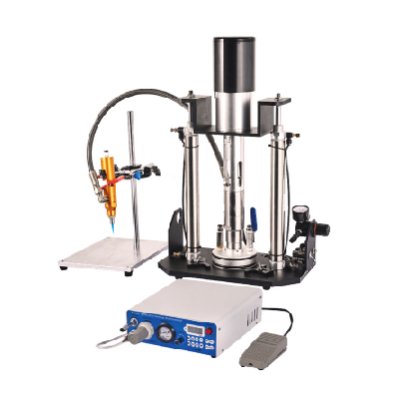
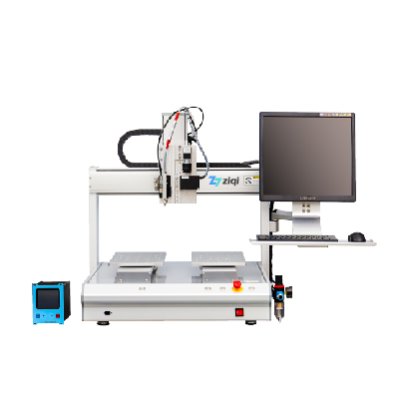
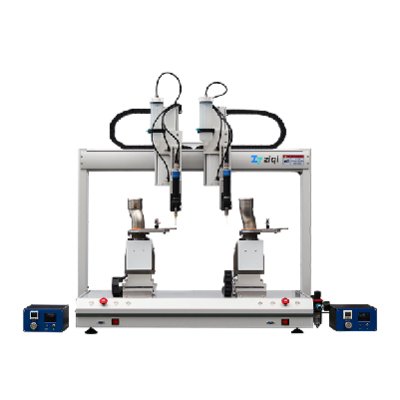
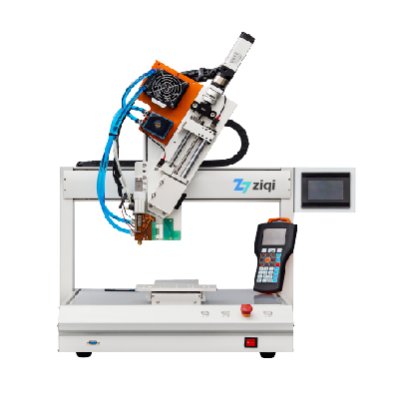
Shenzhen ZiQi Technology Co., Ltd. specializes in industrial automation equipment and customized manufacturing solutions, including plasma surface treatment equipment, automatic dispensing machines, automatic potting systems, automatic soldering machines, and automatic screw locking machines.
For automotive camera module applications, ZiQi can develop plasma surface treatment solutions based on the customer's:
·Camera module material
·Surface coating
·Adhesive system
·Treatment area
·Component geometry
·Production cycle time
·Equipment layout
·Automation requirements
The plasma process can also be evaluated together with subsequent adhesive dispensing and assembly operations.
Rather than applying a fixed plasma configuration to every camera module, the equipment and process should be developed and validated according to the actual workpiece and production requirements.
Frequently Asked Questions
Can plasma treatment improve automotive camera lens adhesion?
Yes. Plasma treatment can remove or reduce certain surface contaminants and increase surface energy on compatible materials. This can improve wettability and create better conditions for adhesive bonding.
Is plasma cleaning safe for automotive camera lenses?
Plasma treatment is a non-contact process, which can reduce mechanical cleaning risks. However, the appropriate plasma technology and process conditions must be validated for the specific lens material, coating, and adhesive system.
What is the difference between plasma cleaning and plasma activation?
Plasma cleaning focuses on removing or reducing surface contamination, while plasma activation modifies surface properties such as surface energy and wettability. In many applications, one plasma process can provide both effects.
How do I choose the right plasma cleaning machine for an automotive camera lens?
The selection should consider the lens and substrate materials, adhesive type, bonding geometry, treatment area, production cycle time, automation requirements, and required reliability testing. Atmospheric and vacuum plasma systems should be evaluated according.
How do I validate plasma treatment for an automotive camera module?
Validation can include contact-angle testing, adhesive spreading evaluation, bonding-strength testing, and environmental reliability testing using the actual component and adhesive system.
Conclusion
Automotive camera module surface treatment is an important step when surface contamination or poor wettability can affect adhesive bonding and assembly consistency.
Plasma treatment can provide two key functions: surface cleaning and surface activation. On compatible materials, it can reduce certain contaminants, increase surface energy, and improve wettability before adhesive dispensing and bonding.
However, selecting a plasma cleaning machine should not be based on cleaning performance alone.
The material, coating, adhesive, treatment area, component geometry, plasma parameters, cycle time, dispensing process, and automation requirements should be evaluated as one complete manufacturing system.
When properly developed and validated, plasma surface treatment can become an effective part of an automated automotive camera module production line, helping manufacturers establish a more controlled and repeatable bonding process.