
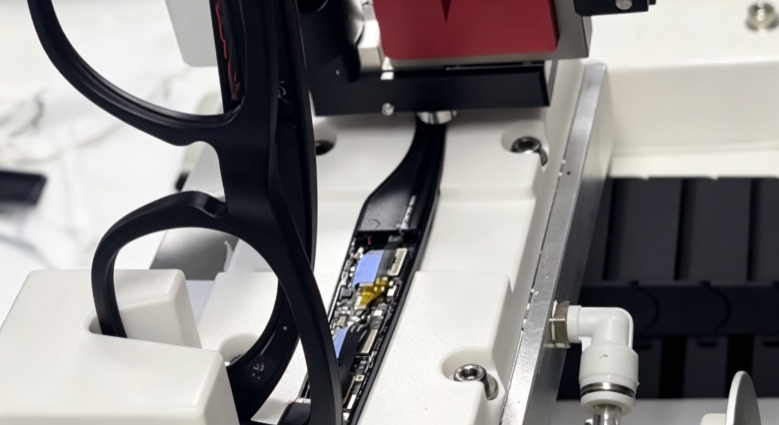
As AI and AR technologies continue to evolve, smart glasses are becoming increasingly compact and integrated. Components such as cameras, speakers, batteries, flexible printed circuits (FPCs), SoC chips, and optical display modules must be assembled within limited spaces, creating higher demands for precision adhesive application and manufacturing consistency.
In smart glasses manufacturing, dispensing is used in various processes, including structural bonding, component fixation, optical assembly, sealing, and thermal interface material application. Different applications require different adhesive properties, dispensing paths, positioning accuracy, and equipment configurations.
Choosing the right automatic dispensing machine is therefore essential for achieving consistent bonding quality, reducing material waste, and improving production efficiency.
So, how should manufacturers select an automatic dispensing machine for smart glasses production?
The key is to evaluate the product structure, adhesive application, material characteristics, and production requirements together. This helps manufacturers identify a suitable dispensing solution without investing in unnecessary equipment configurations.
Understanding Smart Glasses Types and Their Manufacturing Requirements
Smart glasses are not a single product category. Different designs integrate different electronic and optical components, resulting in different assembly and dispensing requirements.
The following four configurations provide a practical reference for understanding their manufacturing needs.
AI Audio Glasses
AI audio glasses primarily integrate speakers, microphones, batteries, circuit boards, and other electronic components into compact frames and temples.
Typical dispensing applications include frame and temple bonding, hinge fixation, speaker assembly, internal component fixation, and structural sealing.
These processes generally require consistent adhesive output, controlled dispensing paths, and reliable bonding between small components and supporting structures.
AI Camera Glasses
In addition to audio and electronic components, AI camera glasses incorporate camera modules and related flexible circuits.
Typical dispensing applications include camera module fixation, FPC reinforcement, internal component bonding, and sealing around selected openings or structural interfaces.
Because camera modules and FPCs often have limited bonding areas, these applications may require accurate positioning, controlled adhesive volume, and repeatable dispensing paths.
AI + AR Display Glasses
AI + AR display glasses integrate additional optical components, such as micro-displays, optical waveguides, and related supporting structures.
Their manufacturing processes may involve optical component bonding, edge sealing, electronic component fixation, and thermal interface material application.
These applications place greater demands on adhesive placement, bondline consistency, and process control. For certain optical assembly processes, precision micro-dispensing is particularly important to prevent adhesive overflow and protect functional optical areas.
Modular AR Glasses
Some AR glasses adopt a modular design in which the display module and main frame are manufactured as separate assemblies.
This structure introduces additional bonding interfaces and assembly requirements. Depending on the product design, dispensing may involve display module fixation, structural bonding, sealing, and adhesive application around compact or irregularly shaped components.
These four configurations represent typical smart glasses designs rather than mutually exclusive categories. Some products combine audio, camera, and AR display functions.
Common Adhesive Dispensing Applications in Smart Glasses Manufacturing
Product type alone cannot determine which dispensing machine is required. The actual application, adhesive characteristics, component geometry, and positioning requirements are equally important.
The following are common dispensing processes that manufacturers may need to consider.
Frame and Temple Structural Bonding
Structural bonding is used to assemble frames, temples, hinges, brackets, and internal supporting components.
Depending on the product structure and adhesive properties, manufacturers may use automatic dispensing machines to apply controlled adhesive paths along designated bonding surfaces.
For relatively simple bonding paths, a three-axis dispensing machine may be sufficient. When the bonding surfaces involve curved structures, inclined planes, or different application angles, additional motion axes may be required.
Consistent adhesive volume and path accuracy help improve bonding repeatability and reduce excessive adhesive application.
Camera Module and FPC Fixation
Camera modules and flexible printed circuits (FPCs) are relatively small components that require controlled adhesive application within limited spaces.
Typical processes include camera module fixation, FPC reinforcement, and bonding of supporting electronic components.
Vision dispensing can identify predefined product features or reference points and compensate for workpiece positioning variations before dispensing.
For applications involving narrow bonding areas, small component spacing, or variable workpiece positions, vision positioning can help improve dispensing alignment and process consistency.
The dispensing process should also consider adhesive volume, curing compatibility, and the mechanical requirements of the assembled components.
Optical Component Bonding and Edge Sealing
Optical components, such as waveguides, display modules, and related optical structures, may require carefully controlled adhesive application during assembly.
Depending on the optical design and bonding process, manufacturers need to consider adhesive placement accuracy, bondline thickness consistency, adhesive overflow control, and compatibility with optical materials.
For applications involving optical bonding or edge sealing, dispensing paths must be carefully controlled to prevent adhesive from entering functional optical areas and affecting optical performance.
The appropriate dispensing solution should be evaluated according to the adhesive properties, optical structure, bonding area, and required assembly tolerances.
Sealing and Environmental Protection
Selected structural interfaces, electronic components, and openings may require adhesive sealing to help protect against dust and moisture.
Automated dispensing equipment can improve sealing consistency by controlling the dispensing path, adhesive output, and application position.
Depending on the product's environmental protection requirements, manufacturers should evaluate the sealing material, application width, path continuity, and curing process.
Thermal Interface Material Application
Some smart glasses integrate high-performance electronic components within compact enclosures, making thermal management an important design consideration.
Depending on the thermal design, thermal interface materials (TIMs), such as thermal grease or thermal gel, may be applied to selected electronic components and their designated heat-dissipation structures.
The dispensing equipment should be configured according to the material viscosity, application area, required thickness, and thermal management requirements.
Which Automatic Dispensing Machine Is Suitable for Smart Glasses?
After identifying the dispensing applications, manufacturers can determine the appropriate equipment configuration according to workpiece geometry, positioning requirements, dispensing directions, and production conditions.
Three common equipment configurations are worth considering.
Three-Axis Automatic Dispensing Machine
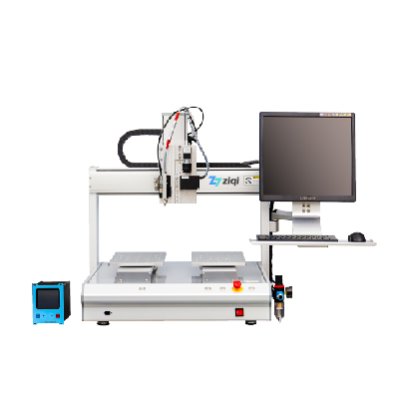
A three-axis automatic dispensing machine is suitable for conventional structural bonding, component fixation, and relatively straightforward sealing applications.
It uses programmable X, Y, and Z motion to control the dispensing position, path, and nozzle height.
This configuration is generally suitable for flat or relatively simple dispensing paths, such as frame assembly, temple bonding, and internal component fixation.
For manufacturers handling standard bonding applications, a three-axis machine can offer a practical balance between equipment investment, operating flexibility, and production efficiency.
However, when dispensing paths involve complex spatial surfaces or different application angles, additional motion axes may be necessary.
Vision Dispensing Machine
When component placement varies or dispensing positions are difficult to determine through fixed coordinates alone, a vision dispensing machine can provide greater positioning flexibility.
The vision system identifies predefined product features or reference points and provides positioning information for dispensing path correction.
This is particularly useful for camera module fixation, FPC bonding, and other applications involving small components, narrow dispensing areas, or variable workpiece positioning.
By combining image recognition with motion control, vision dispensing can help compensate for positioning deviations and improve the consistency of adhesive application.
The actual positioning performance depends on camera resolution, image recognition methods, calibration, motion control, and workpiece conditions.
Five-Axis Vision Dispensing Machine
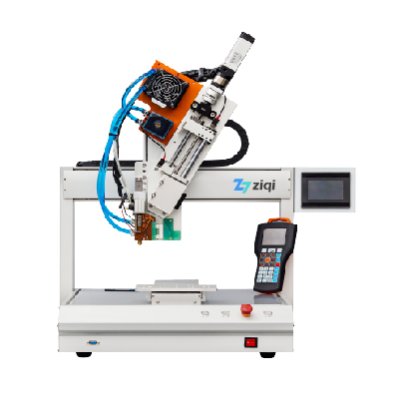
For smart glasses components with complex surfaces, different dispensing angles, or multi-directional bonding requirements, a five-axis vision dispensing machine may provide greater process flexibility.
Depending on the mechanical configuration, additional rotary axes can support different dispensing orientations and more complex motion paths.
Combined with vision positioning, this configuration can help address applications involving irregular structures, curved surfaces, inclined bonding areas, and precision adhesive application from different directions.
However, five-axis equipment is not necessary for every smart glasses application. Its suitability depends on the actual motion-axis arrangement, workpiece geometry, dispensing direction, available working range, and required process accuracy.
The right equipment configuration should be determined by the manufacturing process rather than simply choosing a machine with more motion axes.
Three Common Mistakes When Selecting Smart Glasses Dispensing Equipment
Selecting dispensing equipment based only on product appearance or machine specifications can lead to unsuitable configurations and unnecessary investment.
Manufacturers should avoid the following common mistakes.
Choosing Equipment Based on Price Alone
Low-cost equipment may not provide sufficient dispensing stability for small bonding areas, complex paths, or demanding sealing applications.
Inconsistent adhesive output, positioning deviations, and excessive adhesive application can increase material waste, rework, and production costs.
Equipment selection should consider not only the initial purchase price but also long-term production stability, maintenance requirements, and overall manufacturing efficiency.
Comparing Only Equipment Specifications
Repeatability, positioning accuracy, and motion speed are important specifications, but they do not fully represent actual dispensing performance.
The final result also depends on adhesive viscosity, dispensing valve characteristics, needle size, material pressure, workpiece positioning, and process parameters.
For example, a machine with high positioning accuracy does not automatically guarantee consistent adhesive width or volume if the material supply and dispensing parameters are not properly controlled.
Sample testing with the actual adhesive and workpiece is therefore essential.
Ignoring Future Product Development
Smart glasses are evolving rapidly, with new product structures, optical configurations, and component layouts being introduced.
Equipment selected only for current production requirements may have limited flexibility when manufacturers introduce new models or modify existing dispensing processes.
Considering programmable dispensing paths, vision positioning options, motion-axis configurations, and fixture adaptability can help improve equipment flexibility for future production needs.
What Should Be Evaluated Before Purchasing Dispensing Equipment?
Once the application and equipment configuration have been identified, manufacturers should evaluate the actual dispensing performance under realistic production conditions.
Several factors are particularly important.
Adhesive Dispensing Consistency
Evaluate whether the machine can maintain stable adhesive output throughout continuous operation.
The dispensing process should be tested for consistency in adhesive volume, bead shape, and application results.
Dispensing Position Accuracy
Check whether the equipment can accurately follow the required bonding path and compensate for workpiece positioning variations when necessary.
For small components and narrow bonding areas, positioning accuracy is particularly important.
Adhesive Width and Bondline Control
For precision bonding applications, evaluate the actual adhesive width, coating thickness, and bondline requirements using the specified material and production conditions.
These factors are especially important for optical component bonding and compact electronic assemblies.
Material Compatibility and Curing Requirements
Different adhesives have different viscosities, flow characteristics, and curing requirements.
Manufacturers should evaluate whether the dispensing valve, material supply system, and machine configuration are suitable for the selected adhesive.
The curing process should also be considered to ensure compatibility with the product structure and assembly requirements.
Curved-Surface and Multi-Angle Adaptability
For irregular or three-dimensional structures, verify whether the machine can maintain the required dispensing distance, angle, and path throughout the application.
If the process involves multiple dispensing directions, evaluate whether additional motion axes or specialized fixtures are necessary.
Production Cycle Time and Long-Term Stability
Equipment selection should also consider the required production output and operating conditions.
Continuous dispensing tests can help evaluate adhesive output stability, path consistency, cycle time, and repeatability before the equipment is introduced into production.
What Information Is Needed for a Customized Dispensing Solution?
To recommend a suitable automatic dispensing machine for smart glasses manufacturing, equipment manufacturers need to understand the actual product and dispensing process.
Providing the following information can help improve the accuracy of equipment evaluation:
·Product drawings or samples: Provide product dimensions, structural drawings, 3D models, or physical samples to help evaluate the workpiece geometry.
·Adhesive information: Specify the adhesive type, viscosity, and material properties.
·Dispensing requirements: Identify the required dispensing positions, paths, adhesive width, volume, or coating thickness.
·Positioning requirements: Describe the required positioning accuracy and whether vision recognition or position compensation is necessary.
·Production requirements: Provide the expected cycle time, production volume, and automation requirements.
·Special process requirements: Identify any requirements involving optical bonding, sealing, curved surfaces, or multi-angle dispensing.
Based on this information, the equipment manufacturer can evaluate the application, recommend an appropriate machine configuration, and conduct sample dispensing tests.
This process helps verify the actual dispensing results before confirming the final equipment solution.
Customized Smart Glasses Dispensing Solutions by Shenzhen Ziqi Technology
At Shenzhen Ziqi Technology, automatic dispensing machine selection starts with understanding the customer's product structure and actual manufacturing requirements.
Rather than recommending equipment based only on the product category, we focus on evaluating the dispensing application, adhesive characteristics, positioning requirements, and production process.
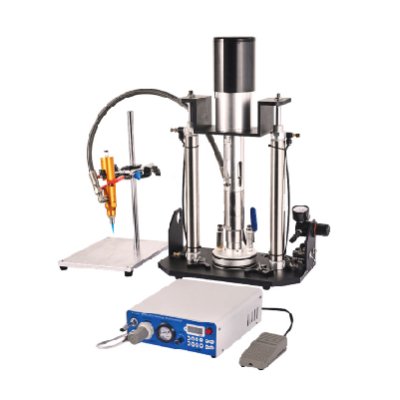
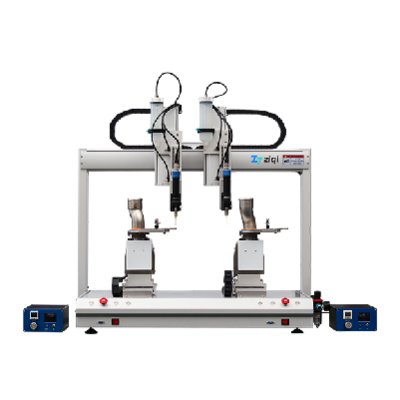
Based on these factors, we provide customized automated dispensing solutions, including three-axis dispensing machines, vision-guided dispensing systems, and five-axis dispensing machines for more complex applications.
Equipment configurations can be evaluated according to the required dispensing valve, material supply system, vision positioning method, motion control, and workpiece fixture.
Through product sample testing and process validation, we help determine a suitable dispensing configuration for different smart glasses manufacturing applications.
Whether the process involves structural bonding, camera module fixation, FPC reinforcement, optical component bonding, or precision sealing, choosing equipment according to actual process requirements is essential for achieving consistent and reliable dispensing results.
The right automatic dispensing machine is not necessarily the most advanced one. It is the one that best matches the product structure, adhesive application, and production requirements.