
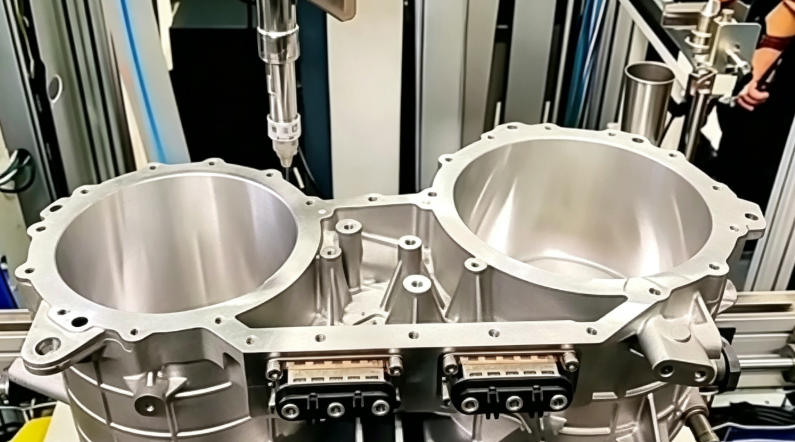
Engine oil pan sealing is an important step in automotive engine assembly. A reliable seal between the oil pan and the mating engine surface helps contain engine oil during operation. For manufacturers producing oil pans in medium- or high-volume production, the consistency of the sealant bead can directly affect process stability, material consumption, and assembly quality.
So, how can engine oil pan sealant dispensing be automated?
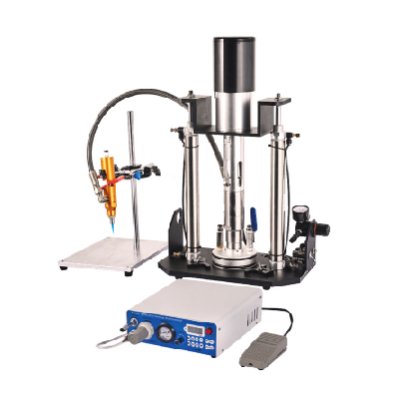
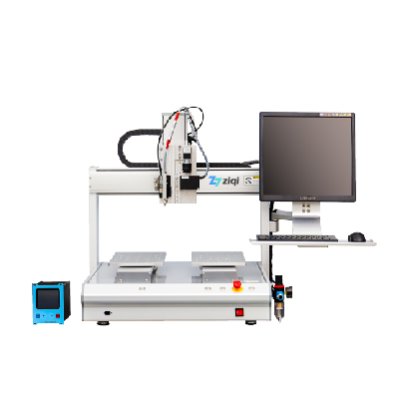
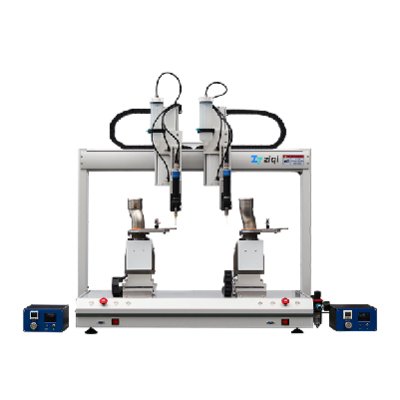
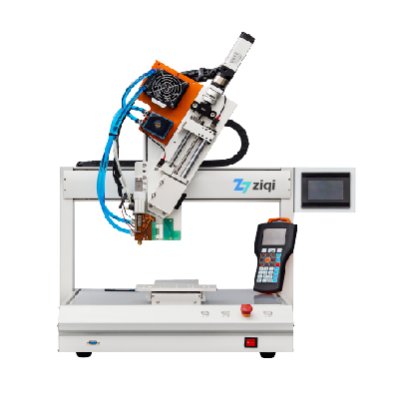
An automatic dispensing machine applies a controlled bead of liquid gasket or other compatible sealant along a programmed sealing path. By combining a precision motion system, suitable dispensing valve, material feeding system, and dedicated fixture, the process can be made more repeatable than manual sealant application. Vision positioning and bead inspection can also be integrated when the production process requires additional positioning or quality-control capabilities.
What Is Engine Oil Pan Sealant Dispensing?
Engine oil pan sealant dispensing is the automated application of a controlled bead of liquid sealant onto the designated sealing surface of an engine oil pan or its mating component before assembly.
Depending on the engine design and sealing process, manufacturers may use a liquid gasket, silicone, or another application-specific sealing material instead of a pre-formed gasket.
During automated dispensing, the oil pan is positioned in a fixture and the dispensing valve follows a programmed sealing path.
The material feeding system supplies sealant to the valve while the motion controller coordinates the dispensing speed, material flow, and valve operation.
The objective is to create a continuous, stable, and correctly positioned sealant bead along the required sealing contour.
Important process parameters may include:
·Sealant bead width
·Sealant bead height
·Dispensing volume
·Material flow rate
·Dispensing speed
·Material pressure
·Nozzle size
·Dispensing path
·Valve opening and closing
·Workpiece positioning
·Start and stop position
·Sealant temperature and material condition
The optimum parameters depend on the oil pan geometry, sealant properties, required bead dimensions, and production cycle time.
Why Automate Engine Oil Pan Sealant Dispensing?
Manual sealant application can be affected by differences in operator technique, dispensing speed, material quantity, and application position. These variations can make it more difficult to maintain a consistent sealing process across large production volumes.
An automatic oil pan dispensing machine standardizes the dispensing path and material delivery through programmed process parameters.
More Consistent Sealant Beads
A reliable sealing process requires the sealant bead to remain within the specified application area.
An automated dispensing system can coordinate the dispensing valve, material supply, and motion system to maintain a programmed dispensing path and speed.
This helps improve bead consistency from one oil pan to another, particularly when the sealing contour contains long edges, corners, curves, or multiple features.
Controlled Sealant Volume
Applying too little sealant may result in insufficient coverage, while excessive sealant can increase material consumption and may cause unwanted squeeze-out during assembly.
An automated dispensing system provides controlled material delivery based on the required bead dimensions and process conditions.
For high-volume automotive production, better control of sealant consumption can also help reduce unnecessary material waste.
Repeatable Dispensing Path
An engine oil pan may contain curved sealing contours, mounting holes, corners, and changes in geometry.
The dispensing system must therefore follow the actual sealing path rather than simply moving in a straight line.
A programmable XYZ system can handle many relatively standard dispensing paths. When the application involves inclined surfaces, changing dispensing directions, or more complex three-dimensional contours, additional motion axes may provide greater flexibility.
The required number of axes should be determined by the actual oil pan geometry and dispensing direction rather than assuming that a higher-axis system is always necessary.
Improved Production Repeatability
For automotive manufacturing, repeatability is a key consideration.
Once the dispensing path, material parameters, and process conditions have been configured, the machine can repeat the programmed operation for successive workpieces.
This reduces variation associated with manual operation and makes the dispensing process easier to standardize, monitor, and integrate into an automated production line.
Support for High-Volume Production
An automated dispensing machine can be designed around the required production cycle time.
Depending on the production line, the dispensing system can be combined with automatic loading and unloading, conveyors, robots, vision systems, and inspection equipment.
This allows oil pan sealant dispensing to become part of a larger automated engine component assembly process.
How Does an Automatic Oil Pan Dispensing Machine Work?
A typical automated engine oil pan sealing process consists of several stages.
Oil Pan Loading and Fixturing
The oil pan is placed into a dedicated fixture.
The fixture holds the workpiece in a repeatable position so that the dispensing valve can accurately follow the programmed sealing path.
For automated production, loading and unloading can be integrated with robotic handling or conveyor systems.
A properly designed fixture is important because even a high-precision motion system cannot compensate for every type of mechanical positioning error.
Workpiece Positioning
Before dispensing begins, the system confirms the position of the oil pan.
For a stable production process with accurate mechanical fixtures, fixed positioning may be sufficient.
When workpiece position or orientation varies between cycles, a vision positioning system can be added.
The camera identifies predefined reference features on the oil pan and provides positional information to the dispensing system. The dispensing path can then be adjusted to compensate for certain positioning deviations.
Automatic Sealant Dispensing
After positioning, the dispensing valve moves along the programmed sealing contour.
The system coordinates several parameters, including:
·Material flow rate
·Dispensing speed
·Material pressure
·Valve opening time
·Nozzle position
·Z-axis height
·Motion path
·Start and stop position
The goal is to maintain a continuous and stable sealant bead throughout the required sealing area.
Sealant Bead Inspection
After dispensing, the bead can be inspected before the oil pan is assembled.
Depending on production requirements, inspection can be performed manually or through an automated vision inspection system.
A vision inspection system may be configured to identify characteristics such as:
·Bead presence
·Bead continuity
·Approximate bead position
·Missing sections
·Obvious dispensing defects
The exact inspection capability depends on the camera system, lighting, sealant appearance, bead geometry, and required inspection criteria.
Oil Pan Assembly
After dispensing and inspection, the oil pan moves to the assembly process.
The mating component is assembled while the sealant remains within the specified process window.
The timing between dispensing and assembly is therefore an important production consideration, especially for sealants with a limited working or open time.
What Determines Oil Pan Sealant Bead Quality?
For automated oil pan sealing, machine accuracy is only one part of the process.
The final bead quality depends on the interaction between the sealant, material feeding system, dispensing valve, nozzle, motion system, and workpiece positioning.
Sealant Viscosity
Different sealants can have significantly different flow characteristics.
High-viscosity materials may require an appropriate pressure supply, pump, or metering system to maintain stable material delivery.
The material feeding system should therefore be selected according to the sealant's viscosity and application requirements.
Dispensing Valve
The dispensing valve controls when and how the sealant is deposited.
The appropriate valve type depends on factors such as:
·Sealant viscosity
·Required bead size
·Required dispensing speed
·Material characteristics
·Dispensing path
·Production cycle time
·Nozzle Size
Nozzle selection affects the achievable bead dimensions and material flow characteristics.
The nozzle should be selected according to the required bead width, material properties, and dispensing process.
Dispensing Speed
If the dispensing speed changes significantly without corresponding material-flow control, bead dimensions may vary.
The motion system and material delivery system should therefore work together to maintain a stable dispensing process.
Z-Axis Height
The distance between the nozzle and the sealing surface can affect the resulting bead.
Maintaining a suitable and repeatable dispensing height is particularly important when the sealing surface contains changes in height.
Workpiece Positioning
A stable fixture helps maintain the relationship between the oil pan and the dispensing path.
When positioning variation cannot be sufficiently controlled mechanically, vision positioning can provide additional compensation.
When Is Vision-Guided Oil Pan Dispensing Useful?
Vision-guided dispensing is useful when the workpiece cannot always be positioned in exactly the same location.
A typical vision-guided process is:
Detect → Calculate Position → Compensate → Dispense
The camera identifies predefined reference features on the oil pan. The control system calculates the actual position and applies the corresponding coordinate compensation to the dispensing path.
Vision positioning may be particularly useful when:
·Workpiece positioning has small variations
·Multiple oil pan models are produced
·The sealing contour requires accurate alignment
·Mechanical positioning alone is insufficient
·The production line requires flexible part handling
It is important to distinguish vision positioning from vision inspection.
Vision positioning helps determine where the workpiece is before dispensing.
Vision inspection checks the dispensing result after the sealant has been applied.
These two functions can be integrated into the same automated dispensing system when required.
Can Oil Pan Sealant Dispensing Be Integrated into an Automotive Production Line?
Yes.
An automatic oil pan dispensing machine can be configured as a standalone workstation or integrated into a larger automated production line.
Depending on the production requirements, the system may be connected with:
·Conveyors
·Industrial robots
·Automatic loading and unloading
·Vision positioning
·Vision inspection
·PLC control systems
·MES or production monitoring systems
·Other engine assembly equipment
The appropriate integration method depends on the factory layout, production takt time, workpiece handling method, and required level of automation.
ZiQi Solution for Automotive Engine Oil Pan Sealing
Shenzhen ZiQi Technology provides automated dispensing equipment and customized automation solutions for industrial manufacturing applications.
For automotive engine oil pan sealing, the dispensing system can be configured according to the customer's actual production requirements, including:
·Oil pan dimensions and geometry
·Sealant type and viscosity
·Required bead width and height
·Dispensing volume
·Production cycle time
·Workpiece positioning requirements
·Vision positioning requirements
·Inspection requirements
·Automation level
·Production line integration requirements
Depending on the application, a ZiQi dispensing solution can combine a precision dispensing valve, material feeding system, programmable motion platform, dedicated fixture, vision positioning, vision inspection, and automated handling equipment.
The objective is not simply to provide a faster dispensing machine, but to develop a stable and repeatable sealant dispensing process matched to the customer's oil pan sealing application.
For a customized solution, manufacturers can provide the oil pan drawing or sample, sealant information, required bead dimensions, and target cycle time. These details can be used to determine a suitable dispensing configuration.
FAQ
What machine is used for engine oil pan sealing?
An automatic sealant dispensing machine is used to silicone, or other compatible sealing materials along the designated oil pan sealing surface. The machine controls the dispensing path and material delivery to improve process consistency and repeatability.
How do you automate engine oil pan sealant dispensing?
A typical automated process uses a dedicated fixture to position the oil pan, a dispensing valve to apply the sealant, and a programmable motion system to follow the sealing contour. Vision positioning, inspection, and automated handling can be added when required.
Can vision positioning be added to an oil pan dispensing machine?
Yes. Vision positioning can detect predefined reference features on the oil pan and compensate for certain positional deviations before dispensing.
Can the dispensing system inspect the sealant bead?
Yes. A vision inspection system can be integrated when the production process requires automated verification of bead presence, continuity, or approximate position. The inspection capability depends on the specific bead and inspection criteria.
Can one dispensing machine handle different oil pan models?
It may be possible when the machine has sufficient working range and the different models can be accommodated through programmable dispensing paths, interchangeable fixtures, or recipe management. The feasibility depends on the geometry and production requirements of the different oil pan models.
Can the oil pan dispensing machine be integrated with a robot or conveyor?
Yes. The dispensing system can be designed for integration with conveyors, robotic handling, vision systems, and other automated production equipment, depending on the required production workflow.
Conclusion
Automating engine oil pan sealant dispensing can help manufacturers improve bead consistency, control material consumption, standardize dispensing paths, and increase production repeatability.
A complete oil pan sealing solution should not be selected based only on machine speed or positioning accuracy. The sealant, dispensing valve, material feeding system, nozzle, workpiece fixture, motion system, bead requirements, cycle time, and inspection requirements all influence the final dispensing process.
For applications with workpiece positioning variation or complex production requirements, vision positioning and automated inspection can provide additional process flexibility.
The best automatic dispensing machine for automotive engine oil pan sealing is therefore the one configured around the actual application—not simply a standard machine selected by specifications alone.
Looking for an automated oil pan sealant dispensing solution?
Provide your oil pan drawing or sample, sealant information, required bead size, and target cycle time. ZiQi can evaluate the application requirements and recommend a suitable dispensing system configuration.