
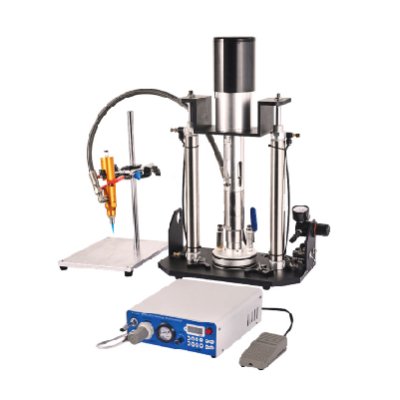
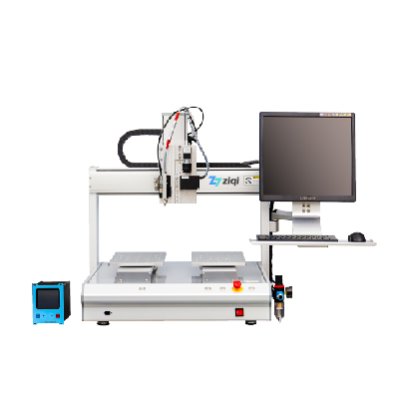
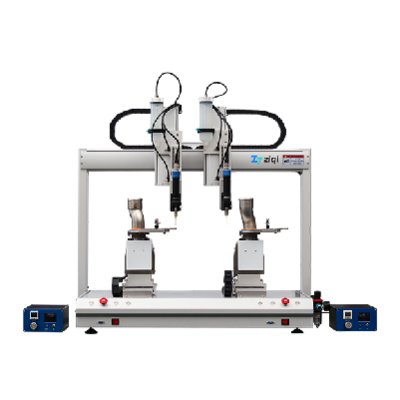
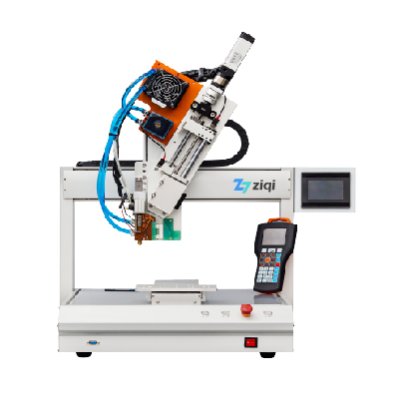
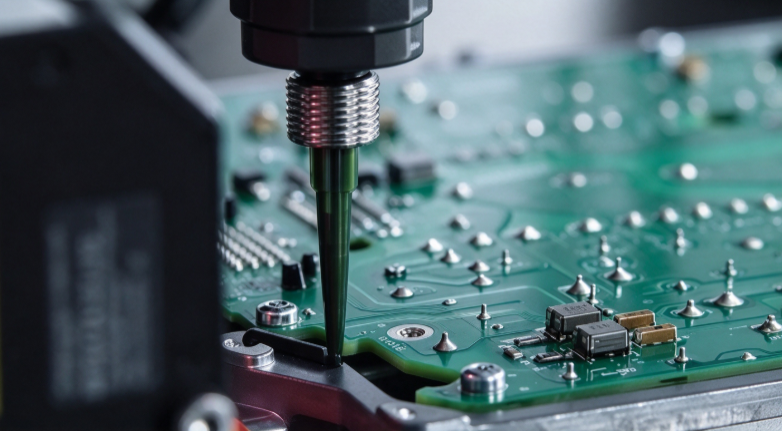
Electric vehicle (EV) manufacturing involves a range of material application processes, including battery pack sealing, thermal management, component bonding, and electronic assembly. These processes often require adhesives, sealants, thermal interface materials (TIMs), or potting compounds to be applied in controlled quantities and at specified locations.
Automated dispensing machines help manufacturers standardize these operations through programmable motion, controlled material delivery, and repeatable dispensing paths. Depending on the application, equipment can also incorporate vision positioning, customized fixtures, production-line automation, and Manufacturing Execution System (MES) integration.
Shenzhen ZiQi Technology Co., Ltd. provides automated dispensing equipment and customized dispensing solutions for industrial manufacturing. Its machines support MES integration, with specific communication functions and system configurations determined by project requirements.
This guide explores the main applications of automated dispensing in EV electronics manufacturing, common process challenges, MES integration considerations, and key factors to evaluate when selecting dispensing equipment.
What Is an Automated Dispensing Machine for EV Electronics?
An automated dispensing machine is an industrial system designed to apply a controlled amount of material to a designated area of a workpiece. Depending on its configuration, the machine can follow programmed paths, control material delivery, and support repeatable application across production cycles.
In EV electronics manufacturing, dispensing equipment may be used for several applications:
·Battery enclosure sealing: Applying compatible adhesives or sealants along battery enclosure edges, grooves, and joints.
·Thermal interface material dispensing: Applying suitable TIMs to designated areas of battery modules, cooling components, and other thermal management assemblies.
·Electronic component bonding: Applying adhesives to bond housings, brackets, connectors, and other components.
·Potting and encapsulation: Filling selected electrical or electronic assemblies with compatible protective compounds.
·Localized coating and material application: Applying suitable materials to specific areas of a component when the dispensing system is designed for that process.
Different applications require different dispensing methods. Material viscosity, flow characteristics, filler content, workpiece geometry, dispensing volume, and production requirements all influence equipment selection.
Before choosing a machine, manufacturers should evaluate the actual workpiece and material to determine the appropriate motion system, dispensing valve or pump, fixture design, and optional automation functions.
Automated Dispensing for EV Battery Pack Sealing
Battery pack enclosures must be designed to protect internal components against environmental influences such as moisture, dust, and other contaminants. Depending on the battery design, adhesives or sealants may be applied around enclosure perimeters, joints, and designated sealing areas.
Automated dispensing can help standardize the application of these materials by following a programmed path and controlling material delivery.
Common Challenges in Battery Sealing
Consistent bead dimensions
The width, height, volume, and continuity of a sealing bead can affect the performance of the completed assembly. Insufficient material, excessive material, gaps, or inconsistent bead geometry may contribute to sealing defects.
Workpiece positioning
Large battery enclosures and complex workpiece geometries can create positioning challenges. Fixture design, motion accuracy, and, where necessary, vision positioning can help the equipment follow the intended dispensing path.
Material flow control
Different sealants have different viscosity and flow characteristics. The dispensing system must be selected to deliver the material under suitable process conditions.
Production consistency
Repeated dispensing operations should follow defined process parameters. Programmable paths and suitable material delivery systems can help reduce variation between production cycles.
Possible Equipment Configurations
Depending on the application, an automated dispensing solution may include:
·Programmable motion control for dispensing along specified paths.
·Suitable valves or pumps selected for the sealant and required flow rate.
·Customized fixtures to hold the workpiece in a repeatable position.
·Vision positioning and correction when supported by the system configuration.
·Integration with compatible loading, unloading, inspection, or other production equipment.
The dispensing machine itself cannot guarantee the sealing performance of a completed battery enclosure. Final performance depends on the enclosure design, material selection, assembly conditions, curing process, and appropriate validation testing.
For applications requiring a specific ingress protection rating, such as IP67, the completed assembly must be tested against the applicable requirements. The rating cannot be established by the dispensing equipment alone.
TIM Dispensing for EV Thermal Management
Thermal management is an important consideration in EV battery and electronics design. Battery modules, cooling plates, heat sinks, and power electronic assemblies may use thermal interface materials to improve thermal contact between components.
Depending on the design, manufacturers may also need adhesives for bonding or sealants for sealing related assemblies.
These materials serve different purposes and should not be treated as interchangeable.
Why Does TIM Dispensing Require Careful Control?
TIM materials can differ significantly in viscosity, filler content, flow behavior, and dispensing requirements. Some formulations may contain substantial quantities of thermally conductive fillers, which can influence material flow and equipment compatibility.
The required application may involve a specific bead pattern, defined coverage area, or controlled material volume. Inconsistent application can affect the subsequent assembly process and the intended thermal interface.
Key Equipment Selection Factors
When selecting dispensing equipment for TIM applications, manufacturers should consider:
·Material properties: Review viscosity, filler characteristics, flow behavior, and compatibility with the dispensing system.
·Dispensing method: Determine whether the application requires a dispensing valve, pump, pressure-fed system, or another suitable material delivery method.
·Application pattern: Define the required bead dimensions, dispensing path, coverage area, and material quantity.
·Workpiece geometry: Evaluate component dimensions, surface features, positioning tolerances, and access limitations.
·Production requirements: Consider cycle time, repeatability, material handling, and downstream assembly conditions.
The appropriate configuration should be verified using the actual TIM and workpiece. Dispensing trials help determine whether the proposed system can meet the required application quality and production conditions.
Automated Dispensing for Automotive Electronics
EVs contain a wide range of electrical and electronic assemblies, including electronic control units (ECUs), sensors, connectors, power electronics, and other components.
Depending on the component design, these assemblies may require adhesive bonding, sealing, potting, or localized protective material application.
Automated dispensing can help manufacturers apply materials along defined paths and reduce variation associated with manual operations. The appropriate equipment depends on the material, component geometry, required dispensing quality, and production process.
Common Dispensing Applications
Adhesive bonding: Applying adhesives to designated bonding areas on housings, brackets, and electronic assemblies.
Potting and encapsulation: Filling selected cavities or enclosures with compatible compounds to provide the protection required by the component design.
Sealing: Applying sealants to specified joints and interfaces.
Localized material application: Dispensing material onto selected areas when the component design and process require controlled placement.
Potting, adhesive dispensing, sealing, and conformal coating are different processes. They may require different materials, dispensing methods, and equipment configurations.
Optional Automation Functions
Depending on the application, a customized dispensing solution may incorporate vision positioning, programmable dispensing paths, specialized valves or pumps, customized fixtures, and compatible production-line interfaces.
Vision positioning may be useful when workpiece locations vary or when the dispensing path needs to be corrected based on identifiable features. Whether it is necessary depends on the positioning tolerance, fixture accuracy, product variation, and required application quality.
Before selecting equipment, manufacturers should confirm the actual process requirements and validate the proposed configuration.
How Does MES Integration Support Automated Dispensing?
A Manufacturing Execution System (MES) supports the coordination and management of manufacturing operations through production information and connections with other manufacturing systems.
When automated dispensing equipment is integrated with an MES, specified machine or process data can be exchanged according to the agreed system architecture. This can help manufacturers connect dispensing operations with broader production management workflows.
Shenzhen ZiQi Technology Co., Ltd. provides automated dispensing machines that support MES integration. The specific integration scope depends on the machine configuration, controller, communication interfaces, MES platform, and project requirements.
Potential Functions of MES-Integrated Dispensing Equipment
Depending on the implemented solution, MES integration may support the following functions.
Production data exchange
Specified machine or process information can be transferred between the dispensing equipment and MES according to the agreed interface and data format.
Equipment status monitoring
Supported operating states can be made available to the production management system, helping authorized personnel monitor equipment operation.
Alarm reporting
Configured machine alarms and selected process abnormalities may be communicated to the MES or associated systems when supported by the integration.
Process parameter management
Selected dispensing parameters may be exchanged or managed through connected systems when the controller, equipment configuration, and MES support these functions.
Production traceability
Available machine records may be associated with specified products, production orders, or batches, depending on the collected data and traceability requirements.
These capabilities should be confirmed for each project. Functions such as recipe downloading, work-order verification, parameter locking, and product-level traceability should not be assumed to be standard features of every machine.
What Should Be Confirmed Before MES Integration?
Before implementation, manufacturers should define:
·The MES platform and overall system architecture.
·Supported communication protocols and hardware interfaces.
·Required data fields and data formats.
·Machine status and alarm information to be exchanged.
·Process parameter access and permission requirements.
·Product identification and traceability requirements.
·Data reporting, error handling, and integration testing procedures.
·Acceptance criteria for the completed integration.
Clear technical specifications help define the responsibilities of the equipment supplier, MES provider, and factory automation team.
With an appropriately designed and validated integration, MES-compatible dispensing equipment can help manufacturers access relevant production information and coordinate dispensing operations with their wider manufacturing systems.
Key Benefits of Automated Dispensing in EV Manufacturing
The benefits of automated dispensing depend on the application, material, equipment configuration, and production environment. When appropriately selected and validated, automation may offer several advantages.
More Consistent Material Application
Programmed dispensing paths and controlled material delivery can help reduce variation in material placement. Actual repeatability depends on equipment performance, material behavior, workpiece positioning, and process conditions.
Improved Production Efficiency
Automated movement, stored programs, and suitable fixture designs can reduce repetitive manual operations and support consistent production cycles. Actual cycle-time improvements should be evaluated against the existing process and required output.
Flexible Equipment Configuration
Different dispensing valves, pumps, motion systems, fixtures, and optional vision functions can be selected according to the material and application. This allows manufacturers to evaluate a configuration suited to their particular workpiece and production requirements.
Better Production Visibility
When supported by suitable monitoring functions and MES integration, selected machine and process data can be made available for production oversight and quality investigations.
Integration with Manufacturing Automation
Depending on project requirements, dispensing equipment may be configured to work with compatible conveyors, loading and unloading systems, curing equipment, and inspection stations.
The actual benefits should be established through application trials, equipment acceptance testing, and production validation rather than assumed from automation alone.
How to Choose the Right Automated Dispensing Machine
Selecting a suitable automated dispensing machine requires an assessment of the material, workpiece, process requirements, production targets, and factory integration needs.
Define the Application
Identify the intended process, such as battery enclosure sealing, TIM application, adhesive bonding, potting, or localized coating.
Each process may require a different dispensing method and machine configuration.
Evaluate the Material
Provide the material name or technical data sheet where available. Important information includes viscosity, flow behavior, filler characteristics where relevant, curing requirements, and compatibility with the dispensing system.
For challenging or highly filled materials, testing with the actual material is particularly important.
Assess Workpiece Geometry
Provide workpiece dimensions, drawings or sample parts, dispensing locations, groove geometry, and positioning tolerances.
Determine whether a programmed path is sufficient or whether vision positioning and correction are required.
Define Production Requirements
Establish the target cycle time, required output, operating schedule, product changeover frequency, and loading and unloading methods.
These requirements help determine the appropriate motion platform, fixture arrangement, and level of automation.
Confirm MES and Factory Integration
If the equipment must connect to an MES or production line, identify the MES platform, communication interfaces, required data fields, machine status information, and traceability requirements.
Discuss these requirements with the equipment supplier and MES provider before finalizing the configuration.
Conduct Application Trials
Where practical, evaluate the proposed configuration using actual materials and workpieces.
Trials can help assess:
·Dispensing path and material placement.
·Bead geometry or application coverage.
·Material delivery stability and repeatability.
·Compatibility between the material and dispensing system.
·Cycle time and production handling requirements.
·Curing, bonding, sealing, or other downstream process results.
Where MES integration is required, interface and data exchange tests should also form part of project validation.
A suitable dispensing solution should meet the application's technical requirements and production objectives while providing a clearly defined integration scope.
Customized Automated Dispensing Solutions from Shenzhen ZiQi Technology
Shenzhen ZiQi Technology Co., Ltd. provides automated dispensing equipment and customized dispensing solutions for industrial manufacturing applications.
Equipment configurations can be evaluated according to the customer's workpiece, material, dispensing path, positioning requirements, production capacity, and factory integration needs.
Depending on the application and confirmed project scope, a solution may incorporate:
·Automated dispensing systems for controlled material application.
·Vision positioning for supported workpiece identification and position correction.
·Specialized dispensing valves or pumps selected for material properties and flow requirements.
·Customized fixtures and motion mechanisms for different workpiece designs.
·Integration with suitable production equipment.
·MES integration support for specified production data exchange and manufacturing workflows.
For EV electronics manufacturing projects, equipment suitability should be assessed against the actual application rather than assumed from the industry category alone.
To evaluate a suitable solution, customers can provide a workpiece drawing or sample, material information, required dispensing path, target production output, and any MES integration specifications.
ZiQi Technology can use these details to assess the application and discuss an appropriate equipment configuration. Final suitability and supported functions should be confirmed through technical evaluation and, where applicable, dispensing trials.
Frequently Asked Questions
Can automated dispensing machines be used in EV electronics manufacturing?
Yes. Depending on the workpiece, material, and machine configuration, automated dispensing machines may be suitable for battery enclosure sealing, thermal management material application, adhesive bonding, and selected automotive electronics processes. Equipment suitability should be validated for the intended application.
Do ZiQi dispensing machines support MES integration?
Yes. Shenzhen ZiQi Technology's automated dispensing machines support MES integration. Communication interfaces, data exchange functions, and production management capabilities depend on the machine configuration and project requirements. Specific functions should be confirmed during technical evaluation.
Can one dispensing machine handle different adhesives and sealants?
It depends on the materials and machine configuration. Different materials may have different viscosity, flow behavior, curing requirements, and compatibility considerations. The dispensing valve or pump, material delivery system, and process settings must be suitable for the intended material. Testing is recommended when evaluating multiple materials.
Is vision positioning necessary for automated dispensing?
Not always. Vision positioning may be useful when workpiece positions vary or the dispensing path must be adjusted according to identifiable features. Whether it is necessary depends on positioning tolerances, fixture accuracy, product variation, and the required dispensing quality.
What information is needed to request a dispensing machine solution?
Manufacturers should provide workpiece dimensions or drawings, material information, the required dispensing area or path, target output, process quality requirements, and factory integration needs.If MES connectivity is required, the MES platform and expected data exchange functions should also be specified.
How can I verify whether a dispensing machine is suitable for my application?
The most reliable approach is to evaluate the actual workpiece and material. Dispensing trials can help assess material placement, repeatability, application quality, and cycle time. Any required sealing, bonding, curing, or other downstream performance should also be validated according to the intended process.
Conclusion
Automated dispensing machines can support a range of EV electronics manufacturing applications, including battery enclosure sealing, thermal management material application, adhesive bonding, and selected automotive electronic assembly processes.
Choosing the right equipment requires careful evaluation of material properties, workpiece geometry, dispensing requirements, production targets, and factory integration needs. Where MES connectivity is required, communication interfaces, data exchange functions, and acceptance criteria should be defined before implementation.
Shenzhen ZiQi Technology Co., Ltd. provides customized automated dispensing equipment with MES integration support for industrial manufacturing applications.
Contact ZiQi Technology to discuss your dispensing application. Share your workpiece details, adhesive or sealant information, dispensing requirements, production targets, and MES integration needs so that a suitable equipment configuration can be evaluated for your project.