
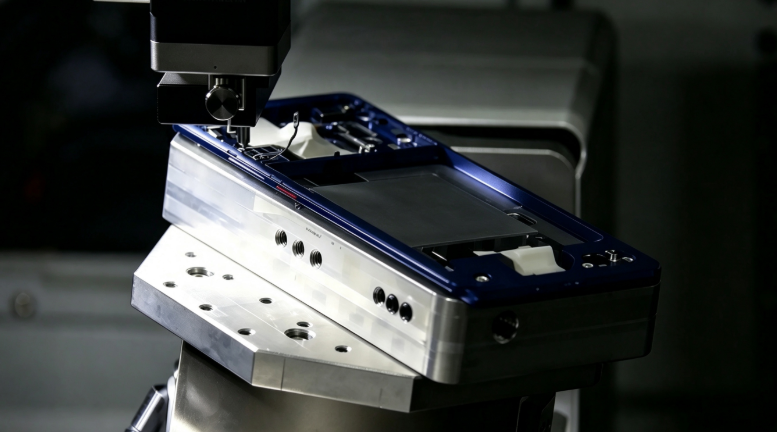
Smartphone screen bonding often requires precise adhesive application along narrow edges, curved contours, and designated bonding areas. As screen designs become more complex, manufacturers may face challenges in maintaining a consistent dispensing path, controlling adhesive bead dimensions, and aligning the nozzle with the actual workpiece position.
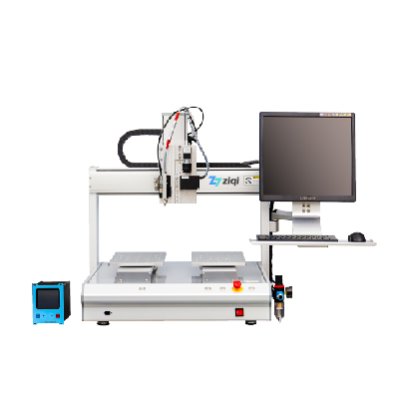
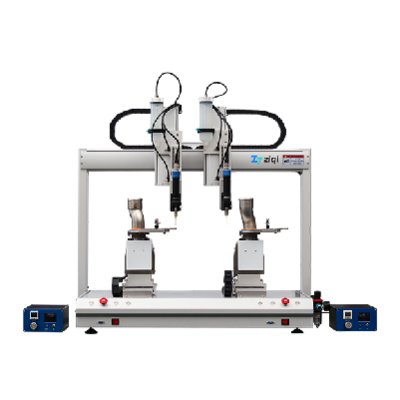
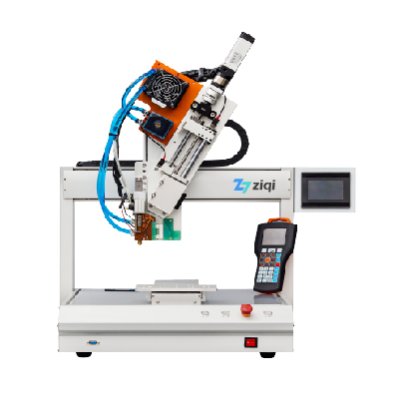
A 5-axis vision-guided dispensing machine combines multi-axis motion control with camera-based positioning to support adhesive dispensing applications that require flexible nozzle orientation and accurate workpiece alignment. When properly configured, this type of system can help manufacturers manage complex dispensing paths and improve adhesive placement consistency.
However, five-axis motion alone does not guarantee higher dispensing accuracy or eliminate adhesive overflow. The final result depends on the machine configuration, vision calibration, adhesive properties, dispensing parameters, and workpiece geometry.
This article explains how five-axis vision-guided dispensing works, when it may be suitable for smartphone screen bonding, and what manufacturers should evaluate before selecting an automated dispensing solution.
Why Is Precision Dispensing Challenging for Smartphone Screens?
Smartphone screen assembly may require adhesive to be applied along perimeter bonding areas, narrow grooves, curved edges, or inclined surfaces. Depending on the screen design and bonding process, the nozzle may need to follow a complex trajectory while maintaining a suitable working distance and orientation.
Several factors can affect dispensing quality.
Complex Screen Geometry
Curved screen edges and inclined bonding surfaces can make nozzle positioning more demanding. A dispensing system must follow the programmed path while maintaining an appropriate relationship between the nozzle and the workpiece.
Where nozzle orientation needs to change along the path, additional rotational axes may provide useful motion flexibility.
Narrow Bonding Areas
Limited bonding space leaves less room for positioning deviations and inconsistent adhesive application. If the dispensing path is not properly aligned, adhesive may extend beyond the intended bonding area or fail to cover the required region.
The appropriate nozzle size, bead dimensions, and dispensing trajectory should therefore be determined according to the actual workpiece and adhesive requirements.
Workpiece Positioning Deviations
Small differences in workpiece loading, fixture alignment, or component placement can cause the actual bonding area to deviate from its programmed coordinates.
A vision-guided dispensing system can identify selected workpiece features and, when supported by the control system, compensate for detected positional deviations before dispensing begins.
Adhesive Behavior and Process Variation
Adhesive viscosity, temperature, dispensing pressure, flow rate, nozzle dimensions, and dispensing speed can influence bead formation.
Even when the machine follows the correct trajectory, unsuitable process parameters may cause inconsistent bead width, excessive adhesive application, gaps, or overflow.
The key challenge is coordinating motion, positioning, and adhesive delivery—not simply moving the nozzle to a programmed point.
How Does a 5-Axis Vision-Guided Dispensing Machine Work?
A five-axis dispensing machine typically combines three linear motion axes with two rotational axes. The exact arrangement depends on the machine design: rotational movement may be applied to the dispensing head, the workpiece, or a combination of components.
These axes provide additional flexibility in controlling the nozzle position and orientation relative to the workpiece.
When integrated with machine vision, the system can also account for detected workpiece positioning deviations, provided that the necessary vision and coordinate-compensation functions are available.
Five-Axis Motion Control for Complex Dispensing Paths
Five-axis motion control allows the machine to coordinate linear positioning with rotational movement. This can be useful when the nozzle needs to approach a bonding area from different angles or follow a path with changing surface orientation.
For smartphone screen bonding, potential applications include:
·Dispensing along selected curved or inclined edge sections.
·Following bonding paths that require changes in nozzle orientation.
·Accessing certain geometries that are difficult to reach with simpler motion configurations.
·Maintaining a suitable nozzle approach angle along a programmed trajectory.
The actual capability depends on axis arrangement, rotational limits, travel range, mechanical design, and motion-control programming.
A five-axis configuration should therefore be selected according to the workpiece geometry and required dispensing path rather than axis count alone.
Machine Vision for Workpiece Positioning and Alignment
A vision-guided dispensing system uses a camera and image-processing software to identify reference features on the workpiece. Depending on the configuration, these features may include fiducial marks, edges, or other recognizable geometric details.
The system can determine the workpiece position relative to the machine's coordinate system. If automatic coordinate compensation is supported, the detected offset can be used to adjust the programmed dispensing path.
This can help when workpieces are not loaded in exactly the same position during successive production cycles.
The achievable positioning performance depends on several factors, including:
·Camera resolution and optical configuration.
·Lighting conditions and image-processing reliability.
·Camera-to-machine calibration.
·Fixture stability and workpiece variation.
·Motion-system accuracy and coordinate transformation.
·The number and arrangement of detected reference features.
Vision positioning should not be confused with automatic inspection of the finished adhesive bead. Bead inspection requires suitable inspection hardware and software.
Precision Motion and Repeatable Positioning
Servo systems, precision linear guides, mechanical rigidity, and motion-control calibration all contribute to machine positioning performance.
Repeatable motion helps the machine execute a programmed trajectory consistently. However, repeatability does not by itself establish the absolute accuracy of the dispensing path or the final adhesive bead.
The complete process also depends on nozzle alignment, workpiece positioning, vision calibration, adhesive behavior, and dispensing parameter stability.
Manufacturers should therefore evaluate the machine's documented motion specifications alongside actual dispensing results obtained from representative workpieces.
How Can Manufacturers Improve Adhesive Bead Consistency and Reduce Overflow?
A five-axis vision-guided dispensing machine can help address certain positioning and nozzle-orientation challenges. However, adhesive overflow and inconsistent bead formation cannot be eliminated by adding motion axes alone.
Reliable dispensing requires coordinated control of the dispensing path, material delivery, and workpiece alignment.
Optimize the Dispensing Path
The programmed trajectory should match the intended bonding area and account for changes in curvature, corners, narrow edges, and surface orientation.
Path planning should also consider acceleration and deceleration near corners, where changes in motion or dispensing speed may affect bead formation.
Match Dispensing Parameters to the Adhesive
Pressure, flow rate, dispensing speed, nozzle dimensions, and material viscosity should be evaluated together.
The correct settings depend on the adhesive type, required bead dimensions, bonding geometry, and production conditions.
Parameters should be established through application-specific testing rather than assumed from the machine configuration alone.
Compensate for Workpiece Positioning Deviations
Where vision-based coordinate correction is available, detected workpiece offsets can be used to align the dispensing path with the actual workpiece position.
This is particularly useful when loading or fixture alignment introduces variations that would otherwise affect adhesive placement.
Vision compensation cannot automatically correct every source of error. For example, changes in the workpiece shape, an incorrectly calibrated coordinate system, or an unsuitable dispensing trajectory may require additional process adjustments.
Validate the Process Using Actual Production Materials
Sample testing is essential before production implementation.
Manufacturers should evaluate:
·Adhesive placement relative to the intended bonding area.
·Bead width, continuity, and dimensional consistency.
·Adhesive overflow and incomplete coverage.
·Repeatability across multiple workpieces.
·Cycle time and process stability.
·Performance under representative production conditions.
This approach helps determine whether the selected machine configuration and process parameters meet the required acceptance criteria.
3-Axis vs. 4-Axis vs. 5-Axis Dispensing Machines: Which Is Suitable?
The appropriate dispensing system depends on the required path, nozzle orientation, workpiece geometry, positioning tolerance, and production process.
When Is a 3-Axis Machine Sufficient?
A three-axis system may be suitable when the workpiece is securely fixtured and the dispensing path can be completed without additional nozzle rotation.
For applications involving flat surfaces or relatively simple bonding trajectories, adding rotational axes may not provide a meaningful production benefit.
When Should Manufacturers Consider a 4-Axis Machine?
A four-axis configuration may be appropriate when the process requires one additional rotational degree of freedom beyond three-axis positioning.
Whether this is sufficient depends on the required motion and the relationship between the nozzle, workpiece, and bonding path.
When Is a 5-Axis Machine Worth Evaluating?
A five-axis system is worth evaluating when complex contours, changing surface orientations, or multi-angle dispensing paths create limitations for simpler configurations.
The decision should be based on actual motion requirements and sample testing. Not every curved smartphone screen requires a five-axis machine, and a more complex configuration does not automatically guarantee better adhesive placement.
What Should Manufacturers Check Before Purchasing a Vision-Guided Dispensing Machine?
Before selecting an automated dispensing system for smartphone screen bonding, manufacturers should define the application requirements and evaluate whether the proposed machine can meet them.
Workpiece geometry: Provide drawings or representative samples showing the bonding areas, curved sections, edge profiles, and dimensional variations.
Adhesive characteristics: Specify the adhesive type, viscosity range, curing requirements where applicable, and any material-handling constraints.
·Required bead dimensions: Define the target bead width, continuity, coverage, and acceptable deviations.
·Motion requirements: Determine whether the path requires only linear movement or additional rotational control.
·Vision requirements: Clarify whether the process needs workpiece identification, positional correction, feature-based alignment, or post-dispensing inspection.
·Production requirements: Establish the target cycle time, production volume, and quality acceptance criteria.
·Process validation: Conduct sample dispensing tests using representative workpieces and production adhesive. Review the results before finalizing the machine configuration.
These checks help manufacturers select a solution based on actual production needs rather than assuming that a particular axis count or vision configuration will solve every dispensing challenge.
ZiQi's Customized Dispensing Solutions for Smartphone Screen Assembly
Shenzhen ZiQi Technology Co., Ltd. provides industrial dispensing equipment and customized automation solutions for manufacturing applications that require controlled adhesive application.
For smartphone screen bonding applications involving curved edges, narrow bonding areas, or complex dispensing trajectories, a suitable dispensing solution can be evaluated according to the workpiece geometry and process requirements.
Depending on the selected equipment configuration, relevant considerations may include multi-axis motion control, vision-based positioning, nozzle orientation, dispensing components, and customized automation integration.
The equipment selection process should begin with the customer's actual application rather than a predefined assumption about which machine configuration is required.
Key evaluation factors include:
·Workpiece drawings and designated bonding areas.
·Adhesive specifications and required bead dimensions.
·Required dispensing path and nozzle orientation.
·Workpiece positioning and vision-alignment requirements.
·Production cycle time and quality acceptance criteria.
Where appropriate, sample testing can help establish whether the proposed configuration meets the application's technical requirements.
Looking for a Dispensing Solution for Smartphone Screen Bonding?
Share your workpiece drawings, adhesive specifications, target bead dimensions, and positioning requirements with ZiQi. Our team can evaluate the suitable dispensing configuration and discuss sample testing based on your application.
Contact ZiQi to discuss your precision dispensing requirements.
Frequently Asked Questions
What is the advantage of a 5-axis dispensing machine for smartphone screen bonding?
A five-axis dispensing machine provides additional flexibility in controlling nozzle or workpiece position and orientation. This can be useful for complex bonding paths that require changing approach angles or access to difficult-to-reach areas.
Can a vision-guided dispensing machine improve adhesive placement accuracy?
It can help compensate for workpiece positioning deviations when the system supports calibrated vision-based coordinate correction. Actual performance depends on the camera, calibration, mechanical system, motion control, and dispensing process.
Does a 5-axis dispensing machine prevent adhesive overflow?
No. Five-axis motion can help with path following and nozzle orientation, but overflow also depends on adhesive viscosity, dispensing pressure, flow rate, nozzle dimensions, speed, and path planning. Process validation remains necessary.
What is the difference between positioning repeatability and dispensing accuracy?
Positioning repeatability describes how consistently a machine returns to a position under specified conditions. Dispensing accuracy concerns how closely the actual adhesive application matches the intended path and placement requirements. These are related but different performance measures.
Is a vision system necessary for every dispensing application?
No. A vision system is particularly useful when workpiece positioning varies or when the dispensing path must be aligned with detected product features. Applications with stable fixtures and consistent workpiece positioning may not require vision guidance.
Should smartphone screen manufacturers always choose a 5-axis dispensing machine?
No. A three-axis or four-axis system may be sufficient for simpler paths. Five-axis dispensing is worth considering when the required nozzle or workpiece orientation exceeds the practical capabilities of a simpler configuration.
How can manufacturers verify dispensing performance before purchasing a machine?
Manufacturers should conduct sample tests using representative workpieces and production adhesive. Evaluation should include adhesive placement, bead dimensions, overflow, coverage, repeatability, and cycle time under defined test conditions.
Conclusion
Precision smartphone screen bonding depends on the coordination of motion control, workpiece positioning, nozzle orientation, and adhesive delivery.
A 5-axis vision-guided dispensing machine can provide additional motion flexibility for applications involving complex screen contours and multi-angle bonding paths. Vision-based positioning can further help align the dispensing path with the actual workpiece when the required functions are supported by the selected configuration.
However, the most suitable machine is determined by the application—not simply by the number of axes. By defining the workpiece geometry, adhesive requirements, quality criteria, and production targets, manufacturers can select an appropriate dispensing solution and validate its performance through application-specific testing.