
Introduction
As modern products become smaller and more complex, manufacturers face increasing challenges in precision adhesive dispensing. Traditional 3-axis dispensing machines are suitable for many standard applications but may have limitations when handling curved surfaces, inclined areas, irregular geometries, and hard-to-reach positions.
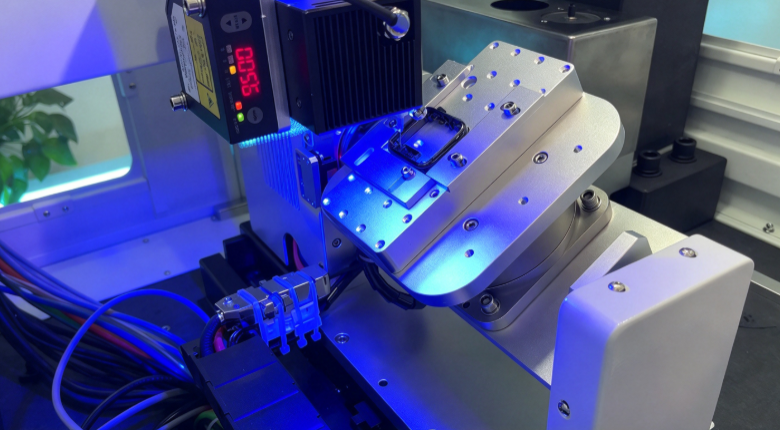
A 5-axis vision-guided dispensing machine combines multi-axis motion control and machine vision positioning to support more flexible adhesive application. By coordinating three linear axes and two rotary axes, it can adjust the dispensing valve's orientation and follow complex three-dimensional paths while compensating for workpiece positioning deviations.
This makes it a suitable solution for precision manufacturing applications that require multi-angle dispensing and flexible process control.
What Is a 5-Axis Vision-Guided Dispensing Machine?
A 5-axis vision-guided dispensing machine is an automated adhesive dispensing system that integrates five-axis motion control with an industrial machine vision system.
Unlike conventional 3-axis equipment, which operates along the X, Y, and Z linear axes, a 5-axis machine adds two rotary axes. Their configuration depends on the machine's mechanical design.
The five axes work together to control the dispensing valve's position and orientation, allowing it to approach workpieces from different angles and follow complex three-dimensional dispensing paths.
A typical system integrates three key technologies:
·5-Axis Motion Control: Coordinates linear and rotary movements for multi-angle dispensing.
·Machine Vision Positioning: Identifies workpiece features and detects positional deviations.
·Intelligent Dispensing Control: Coordinates motion paths and dispensing operations to improve process consistency.
Three Key Advantages of 5-Axis Vision-Guided Dispensing
Flexible Multi-Angle Dispensing
One of the main advantages of a 5-axis dispensing machine is its ability to adjust the dispensing valve's orientation during operation.
By coordinating three linear axes with two rotary axes, the machine can follow complex contours and approach surfaces from different directions.
It is particularly useful for:
·Curved and irregular surfaces.
·Inclined edges and side walls.
·Deep cavities and recessed areas.
·Components requiring multi-angle adhesive application.
Compared with conventional 3-axis equipment, five-axis motion provides greater flexibility when dispensing on complex three-dimensional components. Actual accessibility depends on the machine's rotary range, working envelope, and mechanical configuration.
Vision-Based Positioning and Deviation Compensation
In automated production, workpieces may have slight positioning deviations during loading. These variations can affect adhesive placement and process consistency.
A vision-guided dispensing machine uses an industrial camera and image-processing software to identify reference points, patterns, or product features. The system calculates the workpiece's actual position and applies coordinate compensation to adjust the dispensing path.
Key benefits include:
·Automatic workpiece recognition.
·Compensation for positioning deviations.
·Reduced dependence on precise manual alignment.
·More consistent adhesive placement.
Actual positioning accuracy depends on camera resolution, lighting conditions, calibration, image processing, and mechanical repeatability.
Improved Dispensing Path Consistency
For complex three-dimensional components, maintaining a suitable dispensing angle and nozzle-to-surface distance is important for achieving consistent adhesive application.
A properly configured 5-axis dispensing system can coordinate nozzle orientation with the programmed dispensing trajectory, helping maintain a suitable working angle along curved surfaces and inclined contours.
When combined with an appropriate dispensing valve, stable material delivery, and optimized process parameters, the system can help achieve:
·More consistent adhesive bead width.
·Improved dispensing path accuracy.
·Better coverage along complex contours.
·Reduced uneven application and material overflow.
Actual dispensing quality also depends on adhesive viscosity, dispensing pressure, valve response, nozzle selection, and process settings.
5-Axis vs. 3-Axis Dispensing Machines
Choosing between a 3-axis and a 5-axis dispensing machine depends on product geometry, dispensing direction, and production requirements.
A 3-axis dispensing machine moves along the X, Y, and Z linear axes. It is suitable for conventional applications such as PCB dispensing, flat-surface bonding, component fixing, and standard sealing processes.
A 5-axis dispensing machine adds two rotary axes, allowing the dispensing valve to change its orientation during operation.
This provides greater flexibility for curved surfaces, inclined areas, complex three-dimensional paths, and multi-angle adhesive application.
The main difference is motion flexibility. While 3-axis equipment is an effective and economical solution for many standard dispensing tasks, 5-axis equipment is more suitable for applications that require flexible nozzle orientation and access to complex surfaces.
The final choice should be based on actual workpiece samples, adhesive materials, dispensing paths, and production requirements.
Key Applications of 5-Axis Vision-Guided Dispensing
5-axis vision-guided dispensing technology can support various industries where complex geometries and precise adhesive application are required.
Consumer Electronics
Smartphones, camera modules, smart glasses, and compact electronic assemblies often contain irregular structures and limited dispensing space.
Typical applications include camera module bonding, electronic component sealing, smart glasses frame bonding, and precision adhesive application on complex housings.
Automotive Electronics
Automotive electronic components require reliable bonding and sealing to withstand vibration and changing environmental conditions.
Potential applications include ECU sealing, sensor housing bonding, automotive camera module dispensing, and adhesive application on complex electronic housings.
Medical Device Manufacturing
Small and delicate medical components may require controlled adhesive application in confined areas.
Applications include microfluidic device assembly, precision component bonding, and specialized medical device housing assembly. Materials and processes must meet applicable biocompatibility and validation requirements.
Semiconductor Packaging
Depending on the packaging structure and process requirements, automated dispensing systems can support selected semiconductor adhesive applications, including chip underfill and precision bonding. Specialized equipment configurations may be required.
New Energy Batteries
Battery manufacturing involves structural bonding, sealing, insulation, and thermal material application.
Potential applications include battery module bonding, battery pack sealing, busbar protective coating, and thermal interface material dispensing. Five-axis configurations are particularly relevant when components require multi-angle adhesive application.
How to Choose the Right 5-Axis Dispensing Machine?
Not every dispensing application requires a 5-axis system. Before selecting equipment, manufacturers should evaluate the following factors:
Workpiece Geometry
Determine whether the product has curved surfaces, inclined edges, deep cavities, or complex structures that require multi-angle dispensing.
Dispensing Path Requirements
Evaluate whether the adhesive needs to follow three-dimensional contours or be applied from different directions.
Vision Positioning Requirements
Consider whether automatic workpiece recognition and coordinate compensation are necessary to handle loading deviations.
Adhesive Material Characteristics
Different adhesives have different viscosities and flow properties. The dispensing valve and material delivery system should be selected according to the specific material requirements.
Production Efficiency
Consider cycle time, production volume, dispensing consistency, and automation integration requirements.
Sample Testing
Before finalizing equipment selection, conduct dispensing tests using actual workpieces and adhesives. Testing helps verify path accessibility, positioning performance, adhesive application quality, and process stability.
Frequently Asked Questions
What Is the Main Advantage of a 5-Axis Dispensing Machine?
Its main advantage is the ability to adjust the dispensing valve's orientation through two additional rotary axes. This allows more flexible adhesive application on curved surfaces, inclined areas, and complex three-dimensional components.
How Does Vision-Guided Dispensing Work?
An industrial camera captures images of the workpiece, while image-processing software identifies reference features and calculates positional deviations. The system then adjusts the dispensing path through coordinate compensation.
Can a 5-Axis Dispensing Machine Handle Curved Surfaces?
Yes. With suitable mechanical configuration and programmed motion paths, a 5-axis dispensing machine can follow curved surfaces and adjust the nozzle orientation to match the target geometry.
Which Industries Use 5-Axis Dispensing Machines?
Typical industries include consumer electronics, automotive electronics, medical devices, semiconductor packaging, and new energy batteries. Actual suitability depends on the product structure and dispensing requirements.
Is a 5-Axis Dispensing Machine Always Better Than a 3-Axis Machine?
Not necessarily. A 3-axis machine is suitable for many conventional dispensing applications. A 5-axis machine is more appropriate when multi-angle movement, complex three-dimensional paths, or difficult-to-access surfaces are involved.
Conclusion
5-axis vision-guided dispensing technology combines multi-axis motion control, machine vision positioning, and automated adhesive application to support complex manufacturing processes.
By providing greater flexibility in dispensing orientation and workpiece positioning, it offers an effective solution for applications involving curved surfaces, irregular geometries, and multi-angle adhesive paths.
For manufacturers seeking to improve dispensing flexibility and process consistency, selecting the right 5-axis dispensing machine starts with understanding the product structure, adhesive material, and production requirements.
Looking for a customized 5-axis dispensing solution? Contact our team to discuss your application and arrange sample testing.