
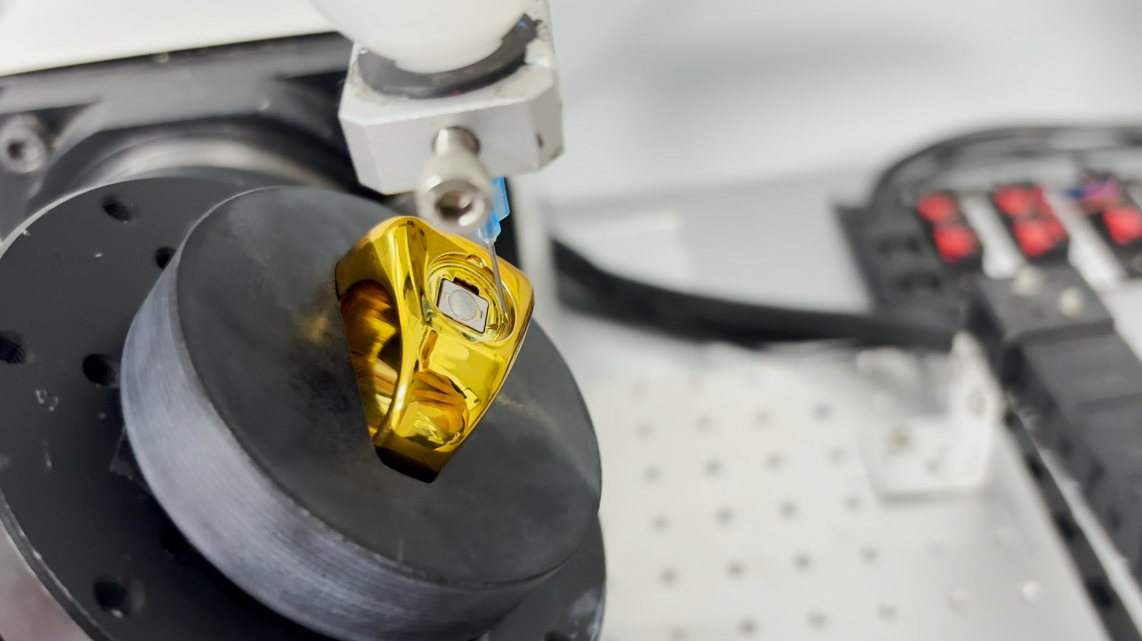
Summary:A 5-axis vision-guided dispensing machine helps manufacturers apply adhesive to smart rings with complex contours, curved surfaces, and narrow grooves. By combining multi-axis motion control with machine vision positioning, it supports flexible dispensing paths and more consistent adhesive application.
What Is a 5-Axis Vision-Guided Dispensing Machine?
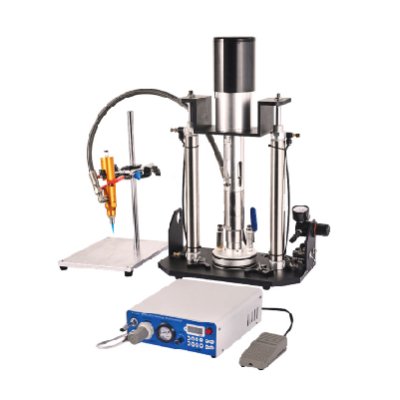
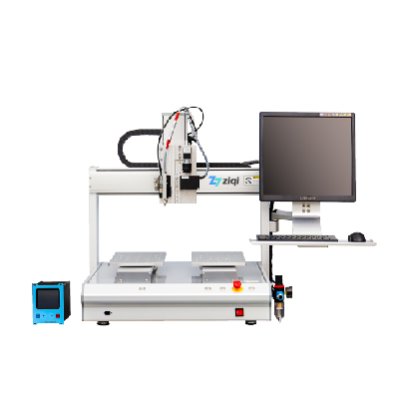
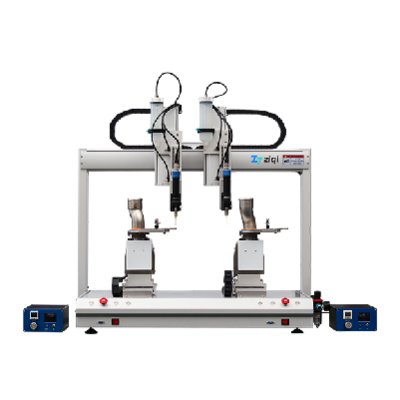
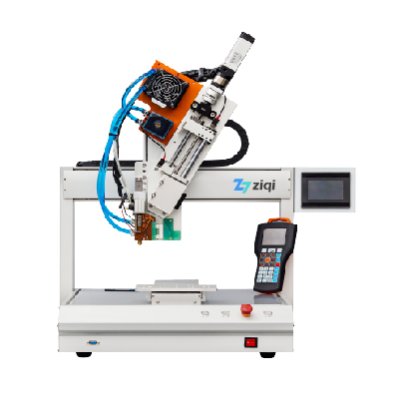
A 5-axis vision-guided dispensing machine is an automated system that combines multi-axis motion control, machine vision positioning, and precision adhesive dispensing. It is designed for applications that require controlled adhesive application along complex paths or on workpieces with challenging geometries.
For smart ring manufacturing, the system can help address dispensing challenges associated with compact components, curved surfaces, narrow grooves, and limited working space.
Unlike a conventional dispensing system designed primarily for simpler paths, a properly configured five-axis machine can provide additional freedom to position and orient the dispensing nozzle. When integrated with a suitable vision system, it can also identify workpiece positioning deviations and apply supported corrections to the dispensing path.
The actual capabilities depend on the machine's axis configuration, vision system, dispensing mechanism, and application requirements.
Why Is Precision Adhesive Dispensing Challenging for Smart Rings?
Smart rings are compact electronic devices that may contain internal components, curved housings, narrow channels, and complex three-dimensional features. These characteristics can make adhesive application more demanding than dispensing on flat or easily accessible surfaces.
Common manufacturing challenges include:
Difficult-to-Reach Dispensing Areas
Narrow grooves, curved edges, and confined spaces can limit nozzle access. If the nozzle cannot reach the target area at a suitable angle, adhesive coverage may become inconsistent.
Inconsistent Adhesive Bead Formation
Changes in surface geometry, nozzle orientation, dispensing speed, and adhesive flow characteristics can affect bead width, continuity, and placement.
Workpiece Positioning Variations
Small differences in workpiece placement or fixture positioning can cause the programmed dispensing path to deviate from the intended application area.
Adhesive Waste and Rework
Excessive dispensing, missed areas, and inconsistent adhesive coverage can increase material consumption and lead to additional inspection or rework.
Production Efficiency Challenges
Manual alignment, repeated adjustments, and quality checks can reduce throughput when the dispensing process is difficult to standardize.
To address these issues, manufacturers should evaluate the complete dispensing process, including motion capability, workpiece positioning, adhesive properties, fixture design, and quality requirements.
Why Consider a 5-Axis Dispensing Machine Instead of a 3-Axis or 4-Axis System?
The main difference between three-axis, four-axis, and five-axis dispensing equipment is the available movement and orientation flexibility. However, the practical capabilities of each machine depend on its mechanical architecture and control system.
For smart ring manufacturing, a five-axis system may be beneficial when the dispensing path requires the nozzle to approach a curved surface or narrow groove from different directions.
However, five-axis equipment is not automatically the best choice for every application. A three-axis or four-axis system may be sufficient when the dispensing path is simple and the workpiece can be positioned appropriately.
The appropriate solution should be selected according to the actual workpiece geometry, required nozzle orientation, dispensing path, and production targets.
How Does a 5-Axis Vision-Guided Dispensing Machine Work?
A vision-guided dispensing system typically combines workpiece positioning, image processing, motion control, and adhesive dispensing.
The workflow generally includes the following stages:
Workpiece Loading and Positioning
The smart ring or its component is placed in a suitable fixture. The fixture helps maintain the workpiece in a stable position during dispensing.
Machine Vision Inspection
A camera captures images of the workpiece and identifies designated features or reference points. The vision system uses these features to determine the workpiece's position relative to the machine coordinate system.
Position Compensation
When the system is configured for vision-based correction, the detected position information is used to compensate for supported workpiece placement deviations.
The available compensation range and accuracy depend on camera calibration, image processing, motion control, and machine configuration.
Multi-Axis Dispensing
The controller coordinates the machine's available axes to follow the programmed dispensing trajectory. Where the mechanical design supports it, the nozzle can adjust its position and orientation to access selected three-dimensional contours.
Dispensing parameters such as flow rate, pressure, speed, and nozzle clearance must also be matched to the adhesive and workpiece.
Process Inspection and Downstream Operations
After dispensing, the workpiece can proceed to the designated inspection, curing, assembly, or other downstream process, depending on the production requirements.
The exact workflow varies with the equipment configuration and the manufacturing process.
Key Benefits of Vision-Guided Five-Axis Adhesive Dispensing
Greater Flexibility for Complex Dispensing Paths
Five-axis motion can provide additional control over nozzle position and orientation. When the workpiece geometry and machine configuration are compatible, this flexibility can help process curved surfaces, narrow grooves, and selected three-dimensional contours.
Vision-Based Workpiece Positioning
Machine vision can identify reference features and provide position information to the motion controller. With appropriate calibration and integration, this can help compensate for supported workpiece placement variations.
Vision positioning does not eliminate every source of error. Mechanical repeatability, fixture stability, image quality, and calibration must also be considered.
More Consistent Adhesive Application
Consistent adhesive application depends on coordinated motion, stable dispensing parameters, suitable nozzle design, and compatible adhesive materials.
A properly validated automated process can help reduce missed dispensing areas and inconsistent bead formation, provided these defects are addressed by the selected system.
Reduced Manual Adjustment
Automated positioning and programmed dispensing paths can reduce repetitive manual alignment and dispensing operations. This may help standardize production workflows and reduce operator intervention.
Potential Improvements in Yield and Material Utilization
When positioning errors, missed adhesive application, or excessive dispensing are significant sources of production loss, process optimization may improve yield and reduce unnecessary adhesive consumption.
The actual results depend on the original production process, product design, adhesive characteristics, equipment configuration, and inspection criteria.
How to Choose the Right Dispensing Machine for Smart Rings?
Selecting an automated dispensing machine requires more than comparing the number of axes or a single positioning accuracy specification. The complete system should be evaluated against the intended application.
Motion Range and Nozzle Orientation
Confirm that the machine can reach all required dispensing areas and maintain a suitable nozzle orientation along the programmed path.
Review the available axis configuration, rotational range, fixture arrangement, nozzle dimensions, and potential interference with the workpiece.
Machine Vision Positioning Performance
Determine whether the vision system can reliably identify the required reference features under actual production conditions.
Ask the supplier about camera calibration, lighting requirements, positioning performance, compensation capabilities, and the limitations of the proposed vision configuration.
Adhesive Compatibility
Different adhesives have different viscosity, flow, curing, and material compatibility requirements.
The dispensing system should be evaluated with the actual adhesive whenever possible. Testing should examine bead continuity, adhesive volume, coverage, and the finished product's functional requirements.
Dispensing Repeatability and Quality
Evaluate whether the system can maintain the required dispensing position, bead width, and adhesive coverage over repeated cycles.
Where applicable, test multiple workpieces and repeat the process under representative production conditions rather than relying on a single successful sample.
Cycle Time and Production Throughput
Confirm that the proposed machine can meet the required production targets.
Consider the entire process, including loading and unloading, vision inspection, dispensing, downstream curing where applicable, and quality inspection.
Distinguish between machine cycle time, total line throughput, and the number of finished products that pass inspection.
Fixture Design and Production Integration
A suitable fixture helps stabilize the workpiece and maintain a repeatable relationship between the product and the machine.
For automated production, also consider material handling, communication with upstream and downstream equipment, operator access, and maintenance requirements.
Sample Testing and Process Validation
Before purchasing equipment, provide the supplier with representative workpieces, adhesive specifications, dispensing drawings or paths, and quality requirements.
A structured sample test should evaluate:
·Adhesive coverage on the intended dispensing areas
·Bead continuity and consistency
·Vision positioning and compensation performance
·Dispensing repeatability across multiple cycles
·Cycle time and production throughput
·Adhesive consumption and material waste
·Finished product quality against defined acceptance criteria
These tests help manufacturers make equipment decisions based on actual application requirements rather than general specifications alone.
Applications Beyond Smart Ring Manufacturing
A five-axis vision-guided dispensing machine may also be considered for other precision manufacturing applications that require complex dispensing paths or additional nozzle orientation flexibility.
Potential applications include:
·Precision electronic components: Adhesive application in confined areas or along selected three-dimensional features.
·Curved plastic and metal housings: Dispensing along non-flat surfaces where nozzle orientation is important.
·Consumer electronics: Selected bonding and sealing applications that require controlled adhesive placement.
·Specialized electronic assemblies: Dispensing along complex contours or paths with limited nozzle access.
Suitability must be confirmed for each application. Different products may require different motion ranges, dispensing valves, fixtures, adhesives, vision configurations, and process parameters.
Why Work with Shenzhen Ziqi Technology Co., Ltd.?
Shenzhen Ziqi Technology Co., Ltd. provides automation equipment solutions for industrial dispensing and precision manufacturing applications.
For smart ring dispensing projects, the equipment evaluation process should begin with the product geometry, target dispensing area, adhesive properties, positioning requirements, and production targets.
By discussing these requirements with the technical team and arranging application testing where appropriate, manufacturers can evaluate dispensing feasibility and identify a suitable equipment configuration before making a purchasing decision.
The recommended solution should be based on the actual workpiece, required process performance, and production environment.
Frequently Asked Questions
What is a 5-axis vision-guided dispensing machine?
A 5-axis vision-guided dispensing machine combines multi-axis motion control, machine vision positioning, and controlled adhesive dispensing. It is designed for applications that require additional nozzle positioning or orientation flexibility along complex dispensing paths.
Why use a five-axis dispensing machine for smart rings?
Smart rings may have curved surfaces, narrow grooves, and confined dispensing areas. A properly configured five-axis machine can provide additional nozzle orientation flexibility for selected three-dimensional paths. Its suitability depends on the actual product geometry and dispensing requirements.
What does machine vision do in an automated dispensing system?
Machine vision identifies designated workpiece features and determines their position. When integrated with the motion controller, the vision system can provide correction data for supported positioning deviations. Its performance depends on calibration, image quality, system integration, and operating conditions.
Can a five-axis dispensing machine improve production yield?
It may improve yield when dispensing defects are caused by positioning errors, missed adhesive application, or inconsistent dispensing paths. Actual improvements depend on the original process, equipment configuration, adhesive properties, and quality requirements. Sample testing is recommended to establish achievable results.
How can dispensing accuracy be evaluated before purchasing?
Request a sample test using representative workpieces and production materials. Evaluate dispensing position, bead consistency, repeatability, adhesive coverage, cycle time, and finished product quality against agreed acceptance criteria.
Conclusion
Precision adhesive dispensing for smart rings presents challenges associated with compact components, curved surfaces, narrow grooves, and complex three-dimensional geometries.
A properly configured 5-axis vision-guided dispensing machine combines flexible multi-axis motion with machine vision positioning to support controlled adhesive application and repeatable production processes.
For manufacturers evaluating automated dispensing equipment, the most important considerations are actual nozzle accessibility, positioning performance, adhesive compatibility, dispensing consistency, cycle time, and finished product quality.
Shenzhen Ziqi Technology Co., Ltd. can discuss your smart ring dispensing requirements and evaluate application feasibility through sample testing where appropriate.
Contact our team to discuss your application and explore a suitable automated dispensing solution.