
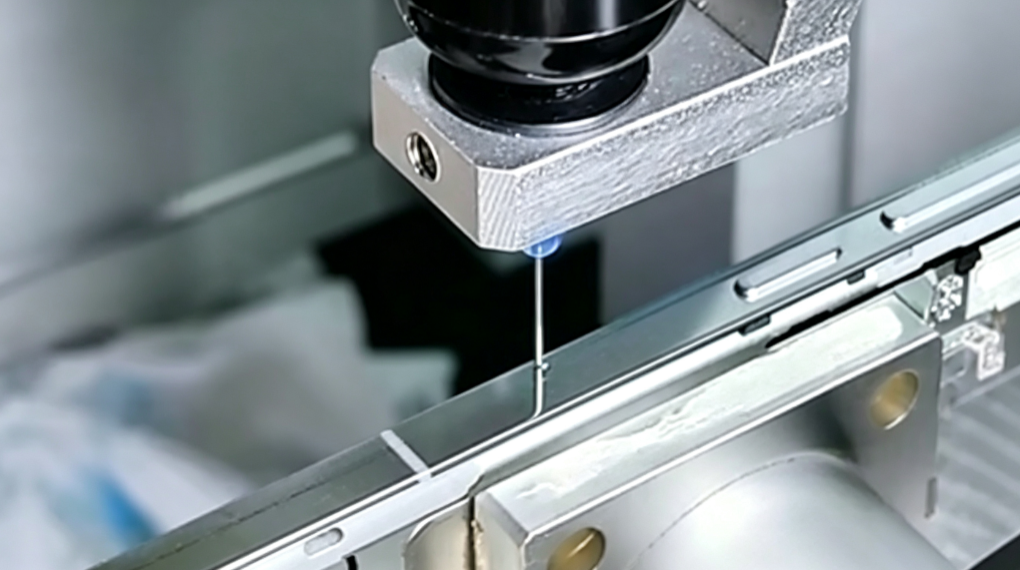
As smartphone components become smaller, thinner, and more three-dimensional, adhesive dispensing is becoming increasingly difficult. Curved surfaces, recessed areas, narrow sealing paths, and tight tolerances can make conventional dispensing processes difficult to control.
If you are choosing an adhesive dispensing machine for smartphone components, you may be asking:
How can I dispense adhesive accurately on curved surfaces?
How can I prevent adhesive overflow and uneven glue lines?
Can automated dispensing improve waterproof sealing?
Should I use a 3-axis or 5-axis dispensing machine?
Do I need 3D vision for my application?
How can I dispense adhesive into recessed or inclined areas?
The right solution depends on the component geometry, adhesive, dispensing path, accuracy requirements, and production target.
Quick Answer: When Is 5-Axis Dispensing Useful?
A 5-axis adhesive dispensing machine is particularly useful when a smartphone component has curved, inclined, recessed, or other complex 3D surfaces.
Compared with a conventional 3-axis system, 5-axis motion allows the dispensing valve to change its orientation while following the programmed dispensing path. When combined with vision positioning and a suitable precision dispensing valve, this can help maintain more consistent nozzle orientation, dispensing distance, and adhesive bead placement.
For simple flat components, however, a 3-axis dispensing machine may provide a more cost-effective solution.
The key is to match the machine configuration to the actual dispensing application.
Why Is Adhesive Dispensing Difficult for Smartphone Components?
Modern smartphone assemblies often have very limited space for adhesive. The dispensing path may run around curved edges, narrow grooves, corners, or recessed structures.
Small variations in adhesive volume or nozzle position can cause:
·Uneven adhesive bead width
·Adhesive overflow
·Insufficient bonding or sealing
·Contamination of nearby components
·Inconsistent assembly quality
·Increased rework and material waste
This means dispensing accuracy is not determined by positioning accuracy alone. Adhesive viscosity, pressure, valve response, dispensing speed, nozzle height, and material flow also affect the final result.
Precision dispensing systems therefore need to control both motion and material delivery.
How Does 5-Axis Dispensing Improve Adhesive Accuracy?
For a flat component, the nozzle can usually maintain a relatively fixed orientation during dispensing.
For a curved or inclined component, the relationship between the nozzle and the surface changes along the dispensing path. A fixed nozzle angle may result in changes in dispensing distance or bead placement.
A 5-axis system adds rotational movement to the conventional XYZ motion system. This allows the dispensing valve to adjust its orientation while following complex paths.
This can be useful for:
·Curved smartphone frames
·Inclined surfaces
·Recessed areas
·Complex sealing paths
·Three-dimensional electronic components
The goal is not simply to add more axes. The goal is to maintain a more suitable dispensing orientation as the component geometry changes.
How Can 3D Vision Improve Dispensing Accuracy?
A fixed dispensing program assumes that every workpiece is positioned exactly as expected. In actual production, however, component position and height can vary.
A vision-guided dispensing system can detect the actual component position before dispensing and provide information to the motion system.
The basic process can be summarized as:
Detect → Identify → Calculate → Compensate → Dispense
Depending on the application, vision systems can help compensate for:
·X/Y position deviation
·Component orientation
·Height variation
·Feature position
·Dispensing path location
For applications with significant height variation or complex 3D geometry, 3D vision can provide additional height and surface information.
Vision-guided dispensing is already used in electronics manufacturing where accurate bead placement and repeatability are important.
How Can I Prevent Adhesive Overflow?
Adhesive overflow is usually a process-control problem rather than a positioning problem alone.
The final adhesive bead is affected by several factors:
Adhesive properties + pressure + valve response + dispensing speed + nozzle height + dispensing path
For narrow smartphone sealing paths, the dispensing system should provide stable material delivery and precise valve control.
Important parameters include:
·Adhesive flow rate
·Dispensing pressure
·Valve opening and closing
·Nozzle height
·Dispensing speed
·Adhesive volume
·Bead width
A precision dispensing valve can help provide repeatable material delivery, while vision and motion control help maintain accurate placement.
The actual adhesive and component should always be tested before production. Theoretical machine accuracy alone cannot guarantee the required dispensing result.
Can 5-Axis Dispensing Improve Smartphone Waterproof Sealing?
Yes, automated dispensing can be used for waterproof sealing applications, but the dispensing machine itself does not guarantee waterproof performance.
Reliable sealing depends on the complete process:
Adhesive selection → Surface preparation → Dispensing → Assembly → Curing → Waterproof testing
The adhesive must form a continuous and sufficiently consistent sealing path. For components with curves, corners, inclined surfaces, or recessed sealing grooves, 5-axis motion can provide greater flexibility when the dispensing orientation needs to change.
For applications requiring a specific IP protection level, the final assembly should be validated using the applicable waterproof testing method.
Therefore, instead of asking:
“Can this machine dispense waterproof glue?”
A better question is:
“Can this dispensing system consistently produce the required sealing bead and meet our actual waterproof test requirements?”
This is a more practical criterion when selecting equipment.
How Can 5-Axis Dispensing Improve Production Efficiency?
Production efficiency is not simply about moving the dispensing head faster.
For smartphone assembly, a stable automated process can reduce manual positioning, process variation, adhesive waste, and rework.
A suitable automated dispensing system can help improve:
·Dispensing consistency
·Cycle-time stability
·Material utilization
·Production repeatability
·Automation level
·Integration with production lines
For high-volume manufacturing, manufacturers should evaluate the complete process, including dispensing speed, vision inspection, material supply, curing requirements, loading and unloading, and line integration.
Industrial dispensing systems commonly combine automated motion, precision material delivery, and vision or sensing technologies to improve process consistency and production efficiency.
What Should You Consider When Choosing a Smartphone Dispensing Machine?
Before selecting a machine, evaluate the application from six areas.
Adhesive
Consider:
·Viscosity
·One-part or two-part material
·Curing method
·Required dispensing volume
·Temperature sensitivity
Component Geometry
Determine whether the surface is:
·Flat
·Curved
·Inclined
·Recessed
·Three-dimensional
Dispensing Requirements
Define the required:
·Bead width
·Adhesive volume
·Positioning accuracy
·Repeatability
·Dispensing speed
Vision Requirements
2D vision may be sufficient for simple position recognition.
3D vision becomes more useful when the application requires height compensation or involves complex 3D surfaces.
Production Requirements
Consider:
·Cycle time
·Daily output
·Automation level
·Line integration
·Operator requirements
Actual Application Testing
This is one of the most important steps.
Before purchasing equipment, test actual components and adhesive to verify:
·Dispensing accuracy
·Bead consistency
·Adhesive volume
·Bonding or sealing performance
·Waterproof performance, when required
·Cycle time
·Long-term process stability
FAQ
What is a 5-axis dispensing machine?
A 5-axis dispensing machine combines XYZ linear movement with two additional rotational axes. This allows the dispensing valve to change its orientation while following complex component geometries.
Why use 5-axis dispensing for smartphone components?
5-axis dispensing is useful for smartphone components with curved surfaces, inclined sections, recessed areas, or complex 3D adhesive paths where a conventional 3-axis system may have limited flexibility.
Is 3D vision necessary for adhesive dispensing?
Not every application requires 3D vision. It becomes more valuable when components have height variation, complex 3D surfaces, or positioning requirements that cannot be handled effectively by fixed coordinates.
How do I choose between 3-axis and 5-axis dispensing?
Start with the component geometry and adhesive path. Simple flat applications may only require 3-axis dispensing, while complex 3D applications may benefit from 5-axis motion.
Smartphone Adhesive Dispensing Solutions from ZiQi
Shenzhen ZiQi Technology provides customized automated dispensing solutions for electronics and precision manufacturing applications.
Depending on the product and process requirements, a dispensing system can be configured with precision dispensing valves, vision positioning, multi-axis motion, and customized automation.
For smartphone components with curved, recessed, inclined, or complex 3D structures, ZiQi can evaluate the actual component geometry, adhesive, dispensing path, accuracy requirements, and production target to determine whether a 3-axis, 5-axis, or vision-guided dispensing solution is appropriate.
Conclusion
Precision adhesive dispensing for smartphone components is no longer simply about placing glue at the correct X/Y position.
Manufacturers also need to control adhesive volume, bead width, nozzle orientation, dispensing height, component variation, and process consistency.
For simple flat applications, a 3-axis dispensing machine may be sufficient. For curved, inclined, recessed, or complex 3D components, 5-axis dispensing combined with vision positioning and precision adhesive control can provide greater process flexibility.
The best dispensing solution should ultimately be selected according to the component geometry, adhesive, dispensing path, accuracy requirements, waterproofing requirements, and production target.
Not sure whether your application requires 3-axis or 5-axis dispensing? Testing the actual component and adhesive is the best way to determine the right machine configuration.